
Lieferung heute & morgen

Qualitätsgarantie

Willkommens-Angebote freischalten: KOSTENLOSE Lieferung | Bis zu 80 % RABATT | Kostenlose 30-Tage-JoyPlus-Testphase
App herunterladen
Outdoor solar lights promise a simple, cost-effective, and eco-friendly way to illuminate your garden, driveway, or balcony. But the reality is often different: lights that fail after a rain shower, barely last an hour in winter, or deliver disappointing brightness. As a Joybuy Product Recommendation Officer, I see daily what features separate a great product from a subpar one.
This guide reveals the three most common pitfalls when buying solar lights and explains which technical specs you need to look for to find a durable and functional solution for your home.
Many products on the market lure you in with attractive pictures and bold claims. Watch out for these three points to avoid disappointment:
To avoid the problems mentioned above, you should check three core parameters before buying. These determine the function, durability, and reliability of your new garden lighting.
The actual brightness of a light is measured in lumens (lm). This value is the only reliable indicator of light output. For reference:
The IP rating indicates how well an electrical device is protected against the ingress of foreign objects and water. For solar lights that need to be waterproof, this is a critical feature.
The combination of the battery and solar panel determines the runtime, especially during the darker months.
Based on these criteria, we have put together some models for different needs.
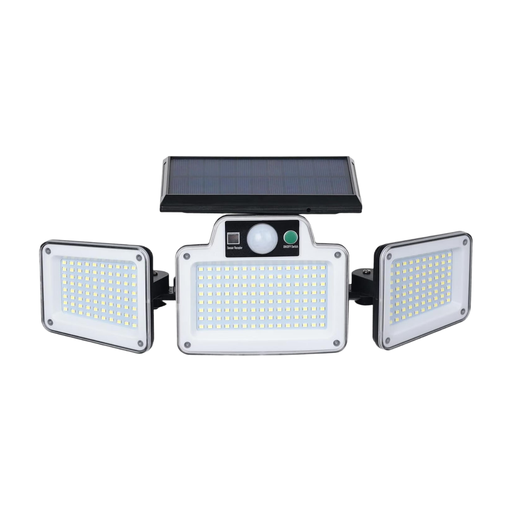
Why This Fits Their Persona: Ideal for illuminating driveways, garages, or dark garden corners. The three adjustable heads and motion sensor provide flexible, on-demand security.
The separate solar panel with a 4.7-meter cable solves the problem of short winter runtimes. The panel can be mounted in the sunniest spot, while the light remains in the shade.
IP65 rating for high weather resistance. Three operating modes (including steady-on and sensor mode) are adjustable via remote control. The 2400mAh battery ensures reliable performance.
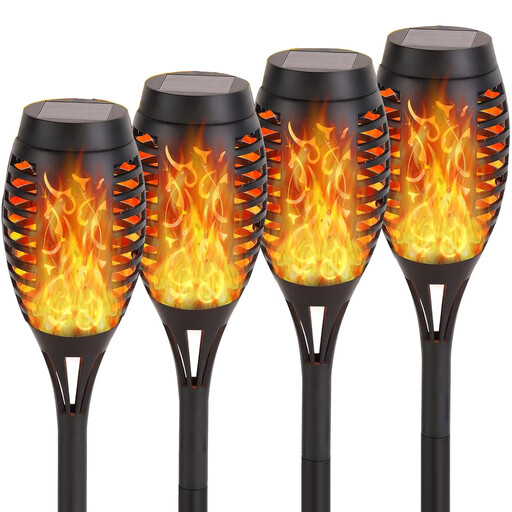
Why This Fits Their Persona: Perfect for anyone looking to create a warm and inviting atmosphere in the garden or on the patio. The realistic flickering effect of these solar garden torches provides a cosy ambiance.
With an IP65 rating, these torches are significantly more robust than many purely decorative lights and can withstand the elements. They avoid the pitfall of poor weather resistance.
Easy, wire-free installation with ground stakes. The dusk-to-dawn sensor provides automatic on/off functionality. The 4-pack allows for a cohesive design.
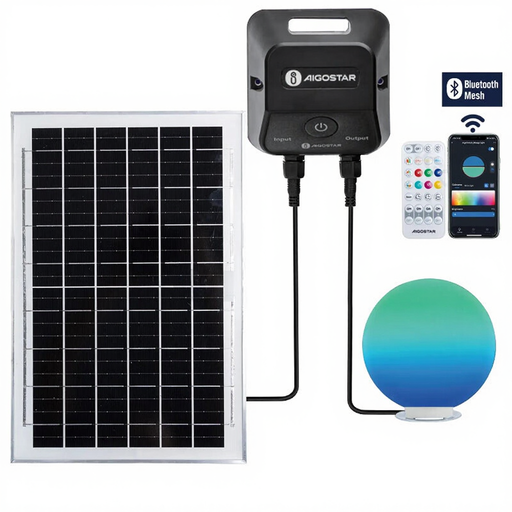
Why This Fits Their Persona: For users who want more than just light. This fixture offers full control over colours (RGBCCT), brightness, and schedules via an app, enabling a connected, smart garden lighting system.
With an 8000mAh battery and a high-performance monocrystalline solar panel, it's designed for a long runtime of up to 24 hours, thus avoiding the pitfall of weak winter performance.
Bluetooth Mesh technology allows for networking over 200 lights. The IP65 certification and modern design make it a durable and stylish choice.
We have compiled a complete, up-to-date list of products that fully meet these strict selection criteria and safety standards.
Yes, but their performance is limited. On short, overcast days, the batteries don't fully charge, which shortens the runtime. Models with high-efficiency monocrystalline solar panels, large batteries, and a motion-sensor mode are better suited for winter use as they conserve energy and only illuminate at full brightness when needed.
The IP rating indicates its weather resistance. For a wall light exposed to direct rain, IP65 or higher is recommended. This guarantees the light is dust-tight and protected against strong water jets from all directions, which is essential for durability in all weather conditions. A lower rating like IP44 is only suitable for sheltered locations.
The lifespan is determined by two components. The LEDs themselves are very durable, often lasting 15,000 hours or more. The limiting factor is the rechargeable battery. Depending on quality and usage intensity, a battery has a lifespan of about 2 to 4 years. On many higher-quality models, the battery can be replaced, which significantly extends the life of the entire unit.