
Lieferung heute & morgen

Qualitätsgarantie

Willkommens-Angebote freischalten: KOSTENLOSE Lieferung | Bis zu 80 % RABATT | Kostenlose 30-Tage-JoyPlus-Testphase
App herunterladen
Outdoor solar lights don’t need a permanent mains connection and can be used in all sorts of places: on house walls, along paths, in the garden, on a balcony or beneath a gazebo. However, models vary considerably in light output, battery technology, weather resistance and controls.
If you focus only on wattage, colour-changing features or an especially long run time, it’s easy to overlook important details. Three common buying misconceptions are particularly worth bearing in mind:
For a solar-powered LED light, the wattage mainly indicates its electrical power consumption. Luminous flux, measured in lumens (lm), gives you a better idea of brightness. A light with 200 lm may be bright enough for a decorative wall or pendant light, while paths and security areas may need a different spread of light.
Also consider:
According to the product specification, IP65 means the unit is dust-tight and protected against water jets. IP66 offers greater protection against powerful water jets. Both ratings are relevant for many outdoor areas, but they don’t remove the need for sheltered installation.
For example, an IP65 weatherproof solar light may suit a house wall, a covered seating area or a spot in the garden. An IP66 solar light may be worth considering for more exposed exterior walls. Still, check the installation instructions, as some models only meet the stated rating for certain parts of the housing. Products rated IP66 are not automatically designed to be submerged in water.
For reliable operation, the panel should ideally receive at least several hours of direct, unshaded sunlight. With lights that have a separate panel, you can install the light in a shadier spot and place the panel somewhere sunnier.
Important details to check include:
A solar light with a motion sensor can help conserve power and battery life by only switching to a brighter setting when it detects movement. For smart models, also check whether they require a direct Bluetooth connection, Bluetooth Mesh or Wi-Fi. A solar light with app control can manage schedules, brightness or colours, but you’ll need a compatible smartphone and, in some cases, a specific network.
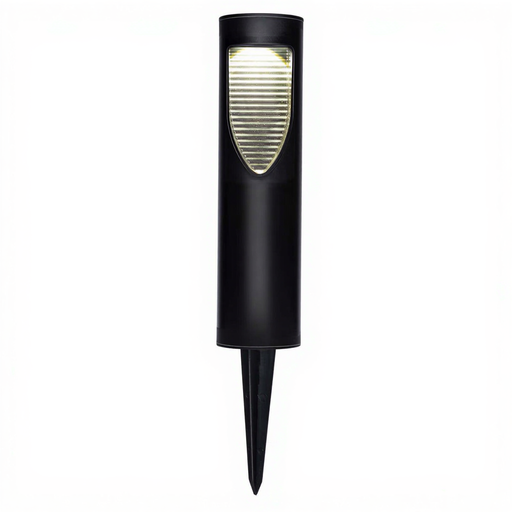
Why this product suits this profile: This freestanding solar garden light doesn’t need to be connected to a wall and is designed for paths, flower beds, balcony planters or smaller patio areas.
The product details specify automatic switching on and off, as well as an integrated solar panel. No professional electrical installation is needed.
Warm white SMD LED, 600-mAh Ni-MH battery, and a compact size measuring 8 cm in diameter and 31 cm in height.
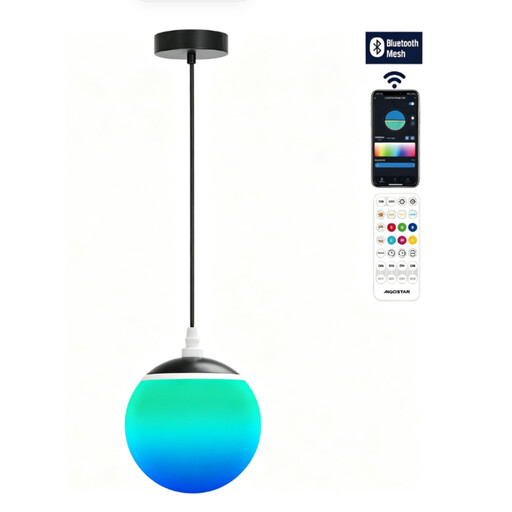
Why this product suits this profile: This solar pendant light combines flexible positioning of the separate panel with adjustable lighting, making it a good fit for gazebos, patios or covered seating areas.
According to the product description, the solar panel can be positioned separately from the light. This means the pendant doesn’t have to hang in direct sunlight.
200 lm, RGBCCT from 2700–6500 K, RGB colour selection, Bluetooth Mesh 5.0, an IP65 rating and a 4 Ah lithium iron phosphate battery, according to the manufacturer’s specifications.
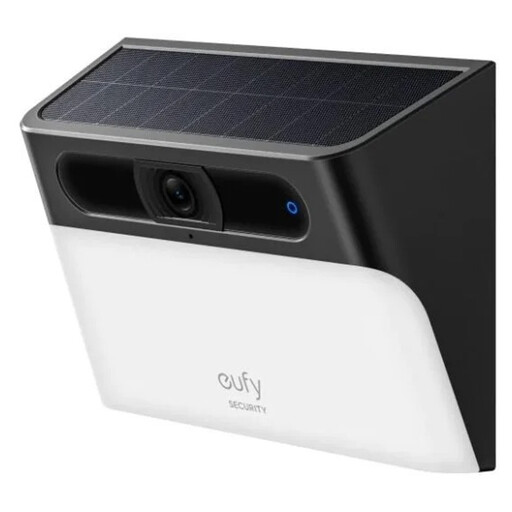
Why this product suits this profile: This outdoor solar wall light is designed for anyone who wants to combine lighting and security on an exterior wall without a permanent mains connection.
The product description specifies IP66, motion detection, app connectivity and local storage without monthly cloud storage fees. The camera should not be pointed at private areas.
Solar-powered, with a light that can be activated when movement is detected, person detection according to the product details, 2.4 GHz Wi-Fi and local recording.
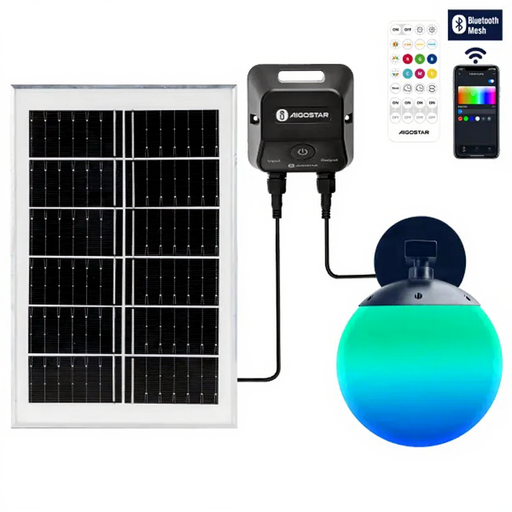
Why this product suits this profile: This solar wall light is suited to anyone who wants to group several lights, synchronise colours and manage different white tones in an app.
The separate 5 m solar cable makes it easier to position the panel. Bluetooth Mesh is designed to control multiple compatible devices.
RGB plus adjustable white from 2700–6500 K, 4000-mAh battery, 5 W monocrystalline panel and up to 24 hours of operation according to the product details.
We’ve put together a complete, regularly updated list of products that meet these strict selection criteria and fully comply with the safety regulations in force in the EU.
Their lifespan depends on the battery, LED, charging conditions, temperature and maintenance. Manufacturer claims such as 30,000 hours usually refer to the LED component, not necessarily the battery or the complete light. Clean the solar panel regularly and only replace batteries in accordance with the instructions.
During normal operation, they get their energy from the solar panel, so there’s no need for a permanent mains connection. However, you should still take the purchase price, possible replacement batteries and maintenance into account when considering the overall cost.
Choose a spot that gets as much direct sunlight as possible and avoid shade from trees, walls or roof overhangs. If the light has a separate panel, you can hang the light itself in a sheltered or shadier spot and position the panel somewhere sunnier. Before installation, also check the cable route, mounting surface and stated IP rating.