
Lieferung heute & morgen

Qualitätsgarantie

Willkommens-Angebote freischalten: KOSTENLOSE Lieferung | Bis zu 80 % RABATT | Kostenlose 30-Tage-JoyPlus-Testphase
App herunterladen
Outdoor solar lights don’t need a mains connection, and many models switch on automatically at dusk. However, garden solar lights vary considerably in colour temperature, IP rating, battery capacity and installation method. If you focus only on design or the number of LEDs, you could end up with a light that doesn’t charge properly in its intended position or illuminate the area as you’d hoped.
This guide explains which details to check before you buy and which models suit different needs.
Claims such as ‘8 to 12 hours’ generally assume suitable charging conditions. In the shade, with limited sunlight or after several cloudy days, the actual running time may be shorter. That’s why a spot in direct sunlight matters more than an especially decorative design.
The IP rating describes protection against solid objects and water. IP44 typically means protection against splashing water from various directions. A light with this rating shouldn’t be placed in a permanently wet dip or submerged in water. Products rated IP65 are described as offering better protection against dust and water jets, but they should still be installed in accordance with the manufacturer’s instructions.
RGB solar lights create colourful accents for flower beds, lawns or patios. For steps, entrances and frequently used paths, clear light, careful positioning and minimal glare are more important. Colour-changing solar lights are therefore best suited to decorative use.
Solar lights use a built-in solar panel and rechargeable battery. Before you buy, check:
For the Aigostar models featured here, the stated charging time is around 4 to 6 hours, with a running time of around 8 to 12 hours in suitable conditions. Treat these figures as a guide, as performance depends on the weather and location.
A rating such as Ra ≥ 70 refers to the colour rendering index. It indicates how natural colours look under the light, not how bright the light is overall.
A stainless steel look may come from genuine stainless steel or from coated plastic. So, check the product details to distinguish the material from the surface finish. Battery type and capacity matter too. For example, the Aigostar lights mentioned here use Ni-MH batteries rated at 40 mAh or 200 mAh.
Solar ground lights and solar lights with ground spikes also need a stable surface. Don’t force the spike into hard, stony ground, as this could damage the housing or connection.
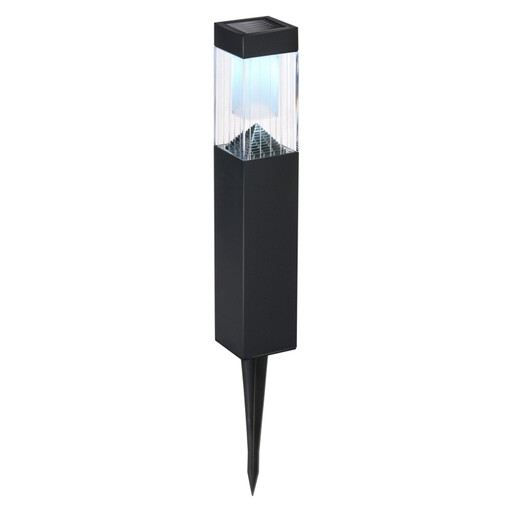
Why this product suits this need: At 34 cm tall, this compact solar light is a good first option for lighting garden paths, driveways or flower bed borders. Two LEDs and a built-in AAA battery allow for cable-free installation.
The key specifications are straightforward: two LEDs, ground-spike installation and automatic switching on and off. This makes it easy to assess whether it’s right for your needs before you buy.
Cable-free installation, a black design and a weight of 402 g according to the product description.

Why this product suits this need: The stated colour temperature of 6500 K and stainless steel finish work well along neat paths, borders and in modern outdoor spaces.
The IP44 rating is clearly stated, so you won’t mistake it for a fully waterproof light. The installation instructions also recommend direct sunlight and regular cleaning of the panel.
6500 K light, NiMH battery, IP44 rating and a stated lifespan of 15,000 hours.
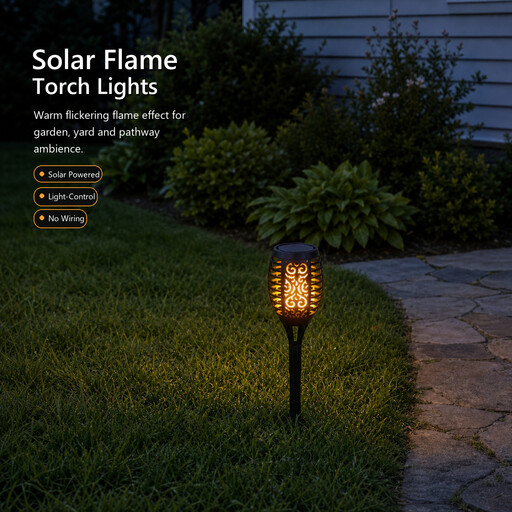
Why this product suits this need: A set of four solar torches is ideal for larger garden areas, paths or patio borders if you’re looking for a consistent torch-style design.
The product name specifies the pack size, number of LEDs, automatic switching and IP65 rating. This helps you check that the intended use is suitable for the conditions at your chosen location.
Four lights in the set, 12 LEDs per torch according to the product name and a stated IP65 rating.
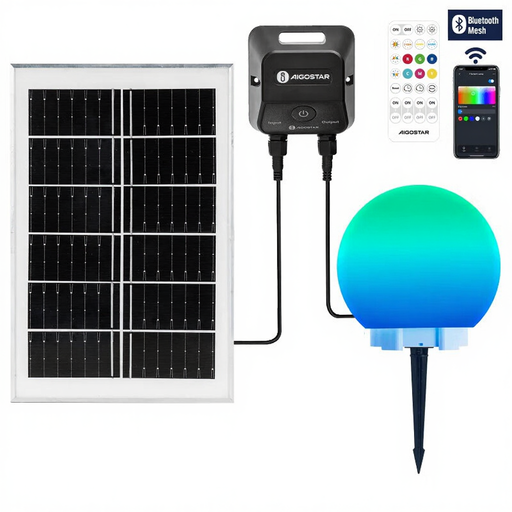
Why this product suits this need: If you want to combine RGB and white light using an app, this model offers Bluetooth Mesh connectivity and an adjustable colour temperature of 2700 to 6500 K.
The product details clearly state the IP54/IP44 ratings and warn against submerging the light. This makes it easier to plan realistically for outdoor use.
RGB+CCT light, app control, Bluetooth Mesh and a built-in lithium battery according to the product description.
For reliable automatic garden lighting, let the lights charge fully before use. Regularly wipe dust and pollen from the solar panel with a soft, slightly damp cloth. Abrasive cleaners can damage the surfaces and transparent covers.
Only push ground spikes into suitable soil or lawns. If the ground is hard, pre-drilling a hole may help. After strong winds, check that each light is still upright and that its panel is unobstructed. At the end of their service life, batteries and electronic components should be disposed of as electrical waste in accordance with local guidelines.
We’ve put together a complete, regularly updated list of products that meet these strict selection criteria and fully comply with the safety regulations in force in the EU.
It depends on the battery, panel, time of year and location. With suitable sunlight, some models state a running time of around 8 to 12 hours. This may be shorter in winter or during prolonged cloudy weather.
Not all lights are fully waterproof. Check the IP rating: IP44 means splash protection, while IP65 indicates a higher level of protection against dust and water jets. The models mentioned aren’t designed to be submerged.
While in use, they draw power from the battery charged during the day. No socket is needed. They don’t use electricity from the mains while running, but the battery needs to be recharged regularly and may need replacing after extended use.