
Lieferung heute & morgen

Qualitätsgarantie

Willkommens-Angebote freischalten: KOSTENLOSE Lieferung | Bis zu 80 % RABATT | Kostenlose 30-Tage-JoyPlus-Testphase
App herunterladen
As your Joybuy Product Recommendation Officer, I see how many customers struggle with choosing outdoor solar lights every day. The market is flooded with promises that often go unfulfilled. Energy-efficient, wire-free garden lighting is an excellent idea, but the excitement can quickly fade when the lights fail after the first downpour or the promised brightness is nothing more than a faint glow.
This guide is designed to help you avoid the common pitfalls. We'll focus on the three most frequent problems that lead to a bad purchase and show you which technical features you really need to pay attention to.
To make an informed decision, don't be swayed by marketing buzzwords; rely on hard facts. Here are the three most important technical specifications to check before you buy.
The IP (Ingress Protection) rating indicates how well an electrical device is protected against the intrusion of foreign objects (first digit) and water (second digit). For outdoor solar lights, the following values are relevant:
The performance of your solar light depends directly on the installed battery. Pay attention to two key figures:
Forget the wattage rating; it only tells you about power consumption. The actual brightness is measured in lumens (lm).
Based on these objective criteria, we have identified products that are well-suited for specific needs in modern households.
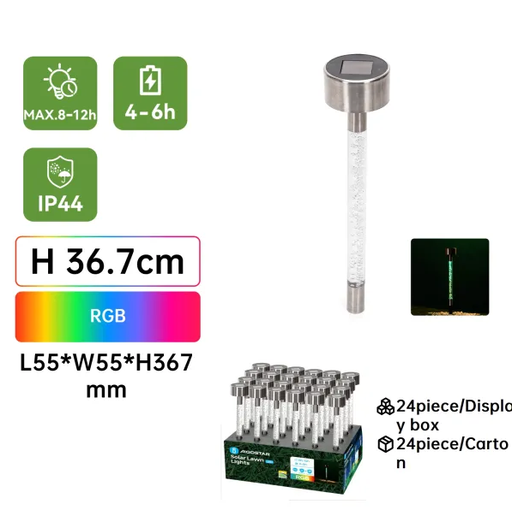
Why This Fits Their Persona: Ideal for users who want to create accents with light. The RGB solar light, with its decorative bubble design, is perfect for illuminating flower beds, lawns, or patio areas with colourful, atmospheric light without being intrusively bright.
The focus is clearly on the decorative effect, not high brightness. The IP44 rating is sufficient for its intended use in flower beds or along sheltered paths and is not advertised as all-weather protection for exposed locations.
Colour-changing RGB light source for a dynamic atmosphere; simple installation with a ground stake; low energy consumption.
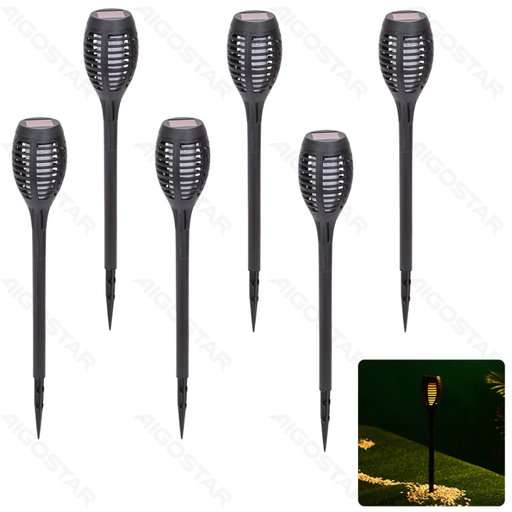
Why This Fits Their Persona: Perfect for homeowners who want to create stylish and straightforward solar path lighting or an atmospheric feel in their garden. The solar light set of 6 solar torches produces a warm white flame effect that is both welcoming and elegant.
The 2700K colour temperature and flame effect are clearly designed for ambiance, which prevents false expectations regarding brightness. The 200mAh Ni-MH battery per light is appropriately sized for this decorative purpose.
Realistic flame effect for a warm atmosphere; practical 6-pack for uniform garden design; CE and RoHS certified.
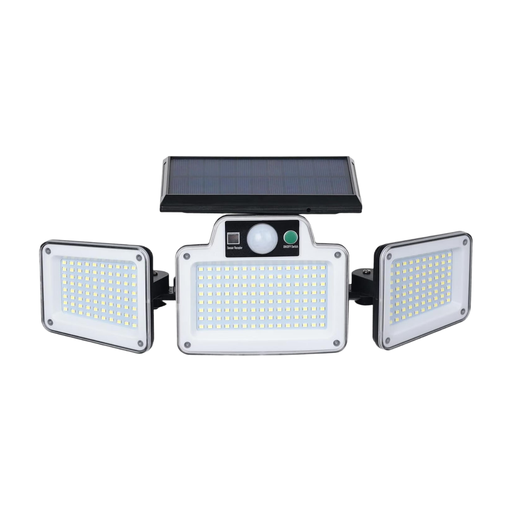
Why This Fits Their Persona: This solar-powered motion sensor light is designed for users who prioritise security and functionality. With 280 LEDs, three adjustable heads, and a remote control, it's ideal for reliably illuminating driveways, garages, or dark corners of the property.
The high IP65 rating ensures it functions even in heavy rain. The powerful 2400mAh battery and separate solar panel with a long cable bypass the poor charging trap, as the panel can be optimally positioned to face the sun.
High brightness from 280 LEDs; flexible illumination with 3 adjustable heads; 3 operating modes selectable via remote control.
We have compiled a complete, up-to-date list of products that fully meet these strict selection criteria and safety regulations.
The lifespan of LED solar lights is largely determined by the quality of the LEDs and the battery. The LEDs themselves often have a stated lifespan of 15,000 hours or more. The battery is typically the component that loses performance first. A high-quality Ni-MH or lithium-ion battery can last for several years with proper care (especially avoiding deep discharge). On many models, the battery can be replaced, which significantly extends the life of the light.
Yes, but with reduced performance. Modern solar panels can generate energy even in diffuse light, though significantly less than in direct sunlight. During winter, with its short days and often overcast skies, the runtime will be noticeably shorter. Models with large, efficient solar panels and high battery capacity have a clear advantage here. For security-critical lighting in winter, a model with a separate, optimally positionable panel may be the best solution.
Installation is usually very simple, as no wiring is required. The most important factor is the placement of the solar panel. It should be south-facing and receive as many hours of direct sunlight as possible, without being shaded by trees, eaves, or other parts of a building. Clean the panel regularly to remove dust, pollen, or snow to ensure maximum charging efficiency.