
Lieferung heute & morgen

Qualitätsgarantie

Willkommens-Angebote freischalten: KOSTENLOSE Lieferung | Bis zu 80 % RABATT | Kostenlose 30-Tage-JoyPlus-Testphase
App herunterladen
Securing your home no longer requires complex wiring or professional installations. An Outdoor Solar Security Camera offers a flexible and self-sufficient solution to keep an eye on entrances, gardens, or driveways. By combining battery power with solar energy, these cameras operate independently from the power grid, making them exceptionally low-maintenance.
This article serves as your guide. It explains the key technical features you should consider when making your choice and presents a selection of models with different specialisations to provide you with an informed basis for your decision.
Selecting the right model depends on the specific requirements of your property and your security needs. The following three criteria are essential for making an informed choice.
High resolution is crucial for identifying relevant details like faces or license plates during an event. A 4K security camera (3840 x 2160 pixels) offers four times the pixel density of Full HD, allowing you to digitally zoom into the image without significant loss of detail.
Performance in the dark is just as important. A modern outdoor camera with color night vision uses either integrated spotlights or highly sensitive image sensors to produce full-color images even in low ambient light. This provides significantly more contextual information than traditional black-and-white infrared recordings.
The core feature of this camera category is its independence from the power grid. A wireless outdoor battery camera combined with a solar panel ensures continuous operation. The battery's capacity, measured in milliampere-hours (mAh), and the solar panel's power output, measured in watts (W), determine how long the camera can operate without direct sunlight.
High durability is essential for outdoor use. The IP66 weatherproof rating provides this assurance. The first digit (6) signifies complete protection against dust ingress. The second digit (6) certifies protection against powerful water jets. A device with this classification is therefore well-equipped for harsh weather conditions, including heavy rain and snow.
To minimise false alarms from falling leaves or passing animals, video surveillance with AI detection (Artificial Intelligence) is essential. Such systems can differentiate between people, vehicles, and pets, sending notifications only for relevant events.
There are two primary models for data storage. Many cameras offer a microSD card slot, enabling local storage of recordings. This makes it a security camera without a subscription, as there are no recurring fees for its core functionality. Alternatively, or as a supplement, manufacturers offer cloud storage, which often provides additional features but typically involves a monthly fee.
Based on the criteria mentioned, we have compiled a selection of models that highlight different technical strengths.
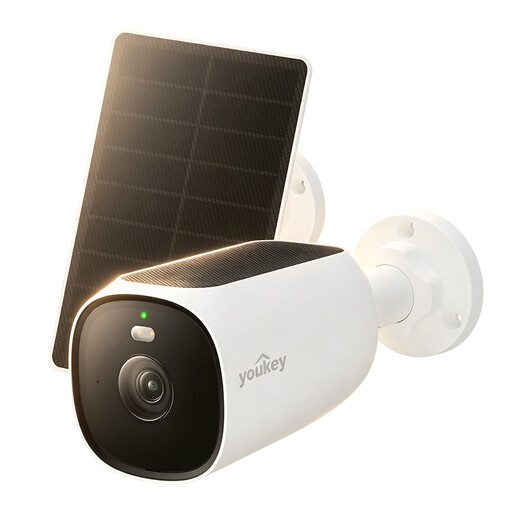
Why It Stands Out The UNIVIEW Youkey S420 Pro is distinguished by its capacity for 24/7 continuous recording, a rare feature for battery-powered cameras. Dual solar panels maximise energy intake to power the 10,000 mAh battery. Its IP67 certification offers an even higher level of protection than IP66, making it extremely resilient.
Pros
Who It's For This model is designed for users who require uninterrupted surveillance without recording gaps and who value maximum autonomy and durability. It is particularly suitable for securing critical areas where no event can be missed.

Why It Stands Out The key feature of the COCOCAM is its motorized pan and tilt function. With a 355° pan and 90° tilt, the camera can be remotely controlled via an app to cover a very large area. This can potentially replace multiple fixed-position cameras.
Pros
Who It's For Ideal for users who need to monitor large, open areas like a garden, yard, or a wide driveway. The flexibility to adjust the camera's viewing angle at any time offers significant added value.
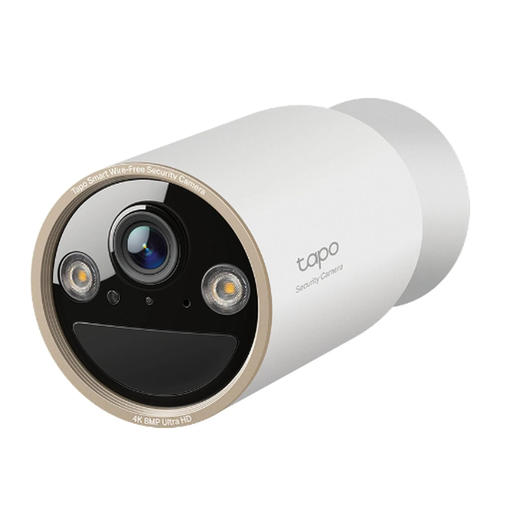
Why It Stands Out The Tapo C460 focuses on long battery life and excellent nighttime image quality. According to the manufacturer, the 10,000 mAh battery allows for up to 200 days of use on a single charge. Its Starlight sensor ensures clear color images even in very low light. A solar panel is available as an optional extra and is not included in the standard package.
Pros
Who It's For This model is aimed at users who prefer an especially simple and flexible wire-free installation, such as renters. The long battery life and the option to add a solar panel later offer a high degree of flexibility.
Haven't found the right model for your needs yet? Discover more options in our Outdoor Battery Security Camera category to find a solution that fits your security setup perfectly.
A solar-powered security camera has an integrated battery that is continuously charged by a connected solar panel. During the day, the panel converts sunlight into electrical energy and feeds it into the battery. The camera itself draws power from the battery, ensuring operation even at night or on cloudy days. Its effectiveness depends on the panel's power output and the intensity of sunlight at the installation location.
Not necessarily. Many models, including those featured here, offer the option to store recordings locally on a microSD card. This option makes you independent of monthly fees and ensures the camera's basic functions. Cloud storage is often offered as an optional service, which can provide benefits like access to a longer recording history or advanced analytics, but it usually comes with a fee.
IP stands for "Ingress Protection." The first digit (6) indicates that the housing is completely dust-tight. The second digit (6) certifies that the device is protected against powerful water jets from any direction. A camera with an IP66 certification is therefore robust enough to withstand weather conditions like heavy rain, snow, or being cleaned with a garden hose.