
Lieferung heute & morgen

Qualitätsgarantie

Willkommens-Angebote freischalten: KOSTENLOSE Lieferung | Bis zu 80 % RABATT | Kostenlose 30-Tage-JoyPlus-Testphase
App herunterladen
A solar string light transforms any outdoor space—be it a garden, patio, or balcony—into an atmospheric oasis, all without additional electricity costs or complicated wiring. But the market is flooded with products whose promises prove hollow after the first downpour or just a few weeks of use. To ensure your investment in sustainable solar garden lighting doesn't end in disappointment, we'll show you what to look for and which pitfalls to avoid.
As your Joybuy Product Recommendation Officer, I filter the essential information for you, so you can make an informed decision based on facts, not marketing hype.
Many buyers are drawn in by appealing product photos, overlooking critical technical flaws that lead to rapid failure.
To avoid these problems, you should check three technical features before buying. These define the durability and reliability of your outdoor solar string lights.
The IP (Ingress Protection) rating is an international standard that classifies the suitability of electrical devices for different environmental conditions. For outdoor use, two digits are relevant: the first for protection against foreign objects (like dust), the second for protection against water.
The performance of a solar LED string light depends directly on the quality of its energy system.
Modern string lights offer more than just a steady-on mode. A string light with 8 modes (e.g., flashing, waves, slow fade) allows for flexible atmosphere adjustments. An integrated memory function that remembers the last setting is an added convenience that simplifies daily use.
Based on the criteria above, we have identified several products from our range that are suitable for specific user profiles and requirements.
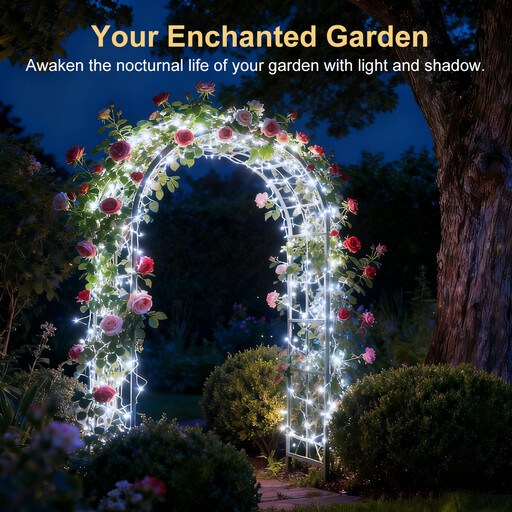
Why This Fits Their Persona: Ideal for users seeking flexible, cost-effective, and self-sufficient lighting for their garden, balcony, or parties. The 2-pack of solar lights offers excellent value for decorating multiple areas.
With an IP65 rating, it's armed against heavy rain. The improved solar panel ensures a runtime of 8–14 hours, thus avoiding the short-runtime trap.
Flexible copper wire, 8m cool white string light with 80 LEDs, and 8 modes including a memory function for versatile decorating possibilities.
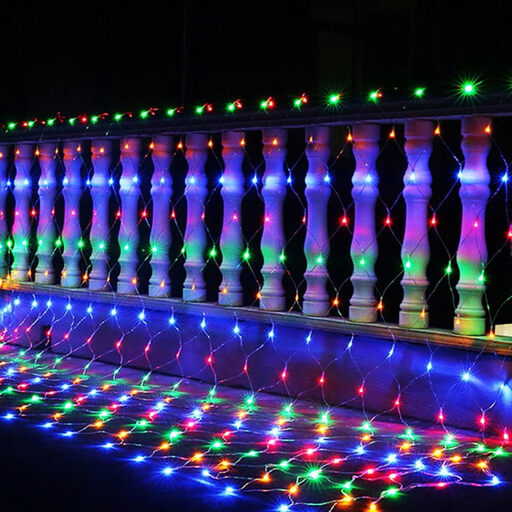
Why This Fits Their Persona: Perfect for users who need uniform illumination for large areas like hedges, bushes, or facades, where a standard string light would produce uneven results. Note: This model is mains-powered.
As a mains-powered solution, it bypasses the solar-related trap of inconsistent runtime. The IP44 rating is sufficient for sheltered outdoor areas, though the adapter must be kept dry.
Provides even coverage over a 4 m? area with 200 multi-coloured LEDs. Offers 8 different light modes for dynamic effects at parties or during the holiday season.

Why This Fits Their Persona: For users who need durable, high-performance lighting with a classic bulb look for festivals, weddings, or a year-round, bistro-style patio atmosphere. Note: This model is mains-powered.
Mains power guarantees consistent brightness. The shatterproof G40 LED bulbs and high IP65 rating directly address the common problems of poor durability and weather resistance.
Generous 15.24 m length with 50 G40 bulbs. Multiple strings can be connected to cover even very large areas. Each bulb is replaceable.
We have compiled a complete, up-to-date list of products that fully meet these strict selection criteria and safety regulations.
1. How long does a solar string light last in winter? The runtime in winter is significantly reduced due to shorter days and less sunlight. Instead of 8–14 hours, you can realistically expect 4–6 hours of runtime. To maximise performance, position the solar panel to catch as much direct midday sun as possible, and keep it clear of snow and debris.
2. Do I need to bring my solar string lights inside when it rains? No, as long as the product has an IP65 rating or higher. These models are specifically designed to withstand jets of water and adverse weather conditions. For a lower rating like IP44, it is advisable to use the string lights in an area protected from direct rain.
3. Can you replace the battery in a solar string light? In most budget-friendly models, the battery is built-in and not intended for user replacement. Some higher-end products offer this option. The typical lifespan of a built-in battery is about one to three years, depending on quality and frequency of use.