
Lieferung heute & morgen

Qualitätsgarantie

Willkommens-Angebote freischalten: KOSTENLOSE Lieferung | Bis zu 80 % RABATT | Kostenlose 30-Tage-JoyPlus-Testphase
App herunterladen
Outdoor solar string lights promise atmospheric lighting for your garden, balcony, or patio—with zero electricity costs and no complex installation. However, the market is flooded with products whose promises quickly prove to be empty. Before you invest, it's crucial to understand the typical pitfalls that often lead to disappointment.
As a Joybuy Product Recommendation Officer, my job is to filter market information and provide you with objective, practical guidance. This guide will show you what to look for to make an informed decision and avoid buyer's remorse.
Many buyers find that their new lights lose performance after just a few weeks or fail completely after the first heavy rain. This is often due to three specific weaknesses:
To avoid these problems, focus on verifiable technical specifications instead of marketing promises. Three parameters are of central importance here.
The IP (Ingress Protection) rating indicates how well an electrical device is protected against the ingress of foreign objects and water. For outdoor solar string lights, two ratings are relevant:
The runtime depends directly on the amount of energy that can be stored. Pay attention to the battery capacity, specified in milliampere-hours (mAh). A higher value generally means a longer runtime. Equally important is the efficiency of the solar panel. Monocrystalline solar cells offer higher efficiency compared to polycrystalline or amorphous cells, which is particularly advantageous on days with less sunshine.
These two values determine the atmosphere your lighting creates.
Instead of making a one-size-fits-all recommendation, we have identified products tailored to specific needs and user profiles.
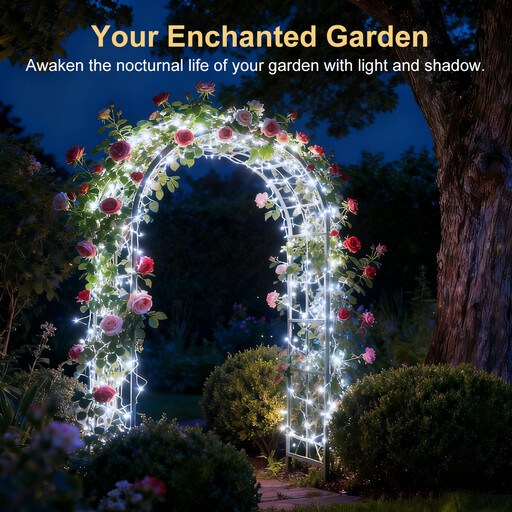
Why it's a good fit: Ideal for anyone looking for a simple and budget-friendly start. The flexible copper wire can be easily wrapped around balcony railings, plants, or decorative objects. The 2-pack also offers excellent value for money for initial decorating projects.
The explicit IP65 rating guarantees high weather resistance, going far beyond vague "waterproof" promises and protecting the product from heavy rain.
The set includes two separate string lights, allowing for flexible design possibilities. The 8 lighting modes with a memory function provide variety.
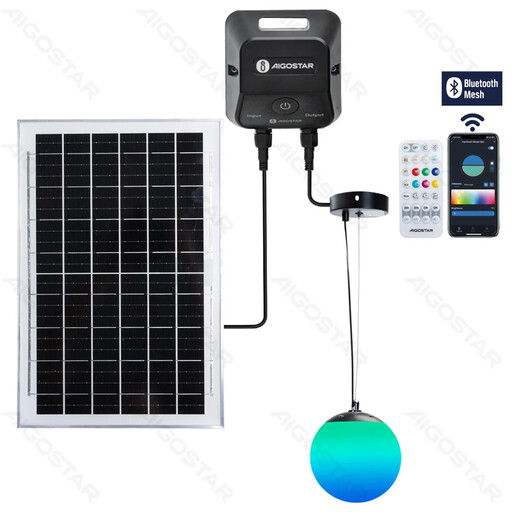
Why it's a good fit: For users who want full control and a high-quality, connected lighting solution. Bluetooth Mesh allows multiple lights to be connected and controlled, ideal for illuminating larger gardens or patios.
This model provides transparent performance data: 350 lumens of brightness, a large 8Ah LiFePO4 battery, and an efficient monocrystalline solar panel. This counters vague performance promises with hard facts.
Smart control via an app allows for adjustments to brightness, schedules, and light colour (RGBCCT), offering maximum flexibility for any mood or occasion.
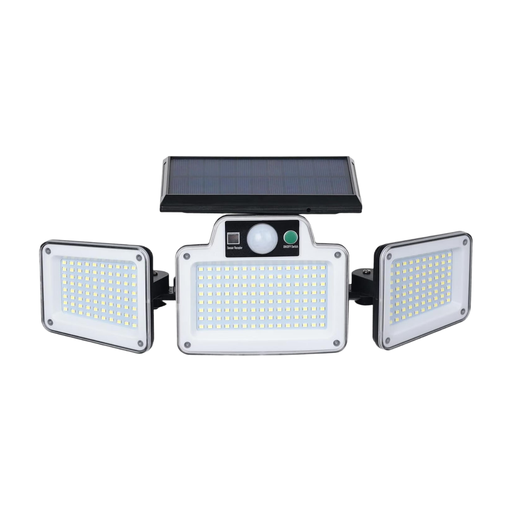
Why it's a good fit: Designed for functional illumination of driveways, garages, or dark corners of the garden. The motion sensor enhances security while saving energy, as the light is only activated at full brightness when needed.
The separate solar panel with a long cable solves the problem of suboptimal sun exposure. The light can be mounted in the shade while the panel is placed in a sunny spot, ensuring a reliable charge.
Three individually adjustable light heads with a total of 280 LEDs allow for wide and targeted illumination. The remote control offers added convenience.
We have compiled a complete, up-to-date list of products that fully meet these strict selection criteria and UK safety regulations.
1. Do solar string lights work in winter? Yes, solar lights do work in winter, but their performance is limited. The shorter days and lower angle of the sun result in less battery charging. Consequently, the runtime per night will be significantly shorter than in summer. Models with high-efficiency monocrystalline solar panels and large battery capacities are better suited for winter use.
2. What is the lifespan of a solar string light? The lifespan depends on the quality of the individual components. The LEDs themselves are very durable, lasting up to 15,000 hours or more. The critical component is typically the battery, which can lose capacity after 2 to 4 years, depending on its type and usage intensity. High-quality construction and a high IP rating also help extend the overall lifespan by protecting the electronics from weather damage.
3. Does the solar panel always need to be in direct sunlight? For optimal charging, the panel needs to be positioned in direct sunlight for several hours a day. Shade from trees, buildings, or awnings can significantly reduce charging performance. If the desired lighting location is in the shade, models with a separate solar panel connected to the light via a long cable are an excellent solution. This allows the panel to be mounted in a sunny spot while the light itself is placed flexibly.