
Lieferung heute & morgen

Qualitätsgarantie

Willkommens-Angebote freischalten: KOSTENLOSE Lieferung | Bis zu 80 % RABATT | Kostenlose 30-Tage-JoyPlus-Testphase
App herunterladen
Outdoor solar string lights promise atmospheric lighting without the electricity costs or complicated wiring. But the reality is often different: many products disappoint after just a short time. To help you make an informed decision, we'll show you the typical weaknesses of budget-friendly models and which technical features really matter.
As your Joybuy Product Recommendation Officer, I'll help you find objective criteria for your selection and distinguish marketing promises from genuine product features.
Many buyers are frustrated by products that don't live up to their promises. These three problems are particularly common and can be avoided with a careful product selection:
To avoid the problems mentioned above, you should check three technical specifications before buying. These provide reliable information about the quality and durability of a solar garden light.
The IP rating (Ingress Protection) is an international standard that indicates how well a device is protected against the ingress of foreign objects (first digit) and water (second digit).
The performance of the solar system determines how long your string lights will stay lit. Pay attention to the interplay between panel efficiency and battery capacity. A high-quality monocrystalline solar panel can generate energy even in diffused light, while a battery with sufficient capacity (measured in milliampere-hours, mAh) stores this energy for a long runtime. Models with a specified runtime of 8 hours or more indicate solid technical specifications.
The light colour has a major impact on the atmosphere.
Additional lighting modes like flashing, dimming, or smooth transitions offer more creative freedom.
Here are some recommendations tailored to different needs and use cases.
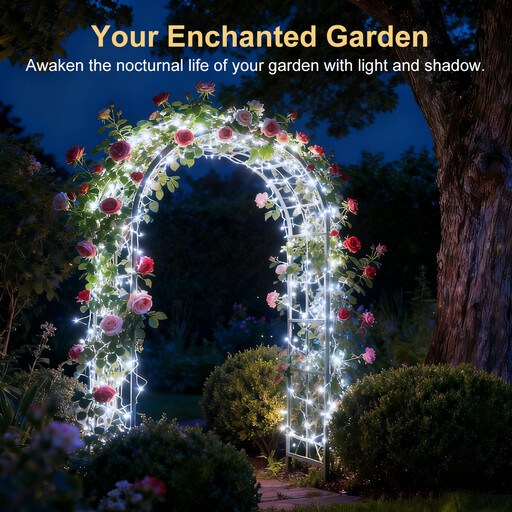
Why this model is a good fit: Ideal for beginners or for decorating balconies and smaller garden areas. The set of two string lights offers great value for money for straightforward and effective lighting.
The IP65 certification ensures the string light can withstand heavy rain. The improved solar panel provides reliable charging and a runtime of 8 to 14 hours.
Offers 8 different lighting modes with a memory function, so the last setting is retained. The flexible copper wire is easy to wrap around plants, railings, or objects.
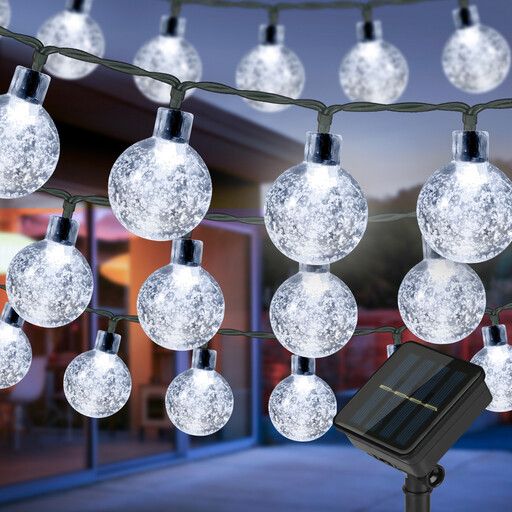
Why this model is a good fit: For users seeking a more decorative look than simple wire string lights. The crystal ball design creates a special visual effect for patios, parties, or year-round garden design.
At 11 metres long with 60 LEDs, it offers generous coverage and brightness, avoiding the impression of weak lighting. The IP65 rating guarantees the necessary weather resistance.
The unique "Bubble Ball" design provides an appealing aesthetic. The solar panel's high energy conversion efficiency of over 17% (according to the manufacturer) ensures a long runtime.
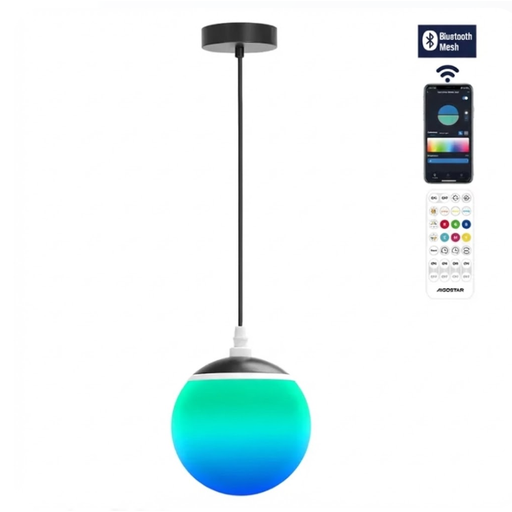
Why this model is a good fit: Perfect for smart home users who want full control over their garden lighting. The split design allows for lighting in shaded areas like covered patios, gazebos, or garden sheds.
It solves the core problem of solar lights: the solar panel can be placed in direct sunlight while the light itself hangs in the shade. Control via Bluetooth Mesh is more stable than with simple remote controls.
Smart control via app using Bluetooth Mesh, including an RGBCCT colour spectrum (over 16 million colours), adjustable white tones (2700K–6500K), and programmable schedules.
We have compiled a complete, up-to-date list of products that fully meet these strict selection criteria and safety regulations.
The lifespan depends on several factors. The LEDs themselves often have an operating life of 15,000 hours or more. The critical point is usually the battery, which can lose capacity after one to three years. However, in many higher-quality models, the battery can be replaced. The material quality of the housing and cables (UV resistance, corrosion protection) also plays a significant role in longevity.
Yes, but with limited performance. Modern, efficient solar panels can generate energy even in diffused light, but significantly less than in direct sunlight. The runtime is noticeably shorter on short, overcast winter days. For optimal performance in winter, the solar panel should be placed in an unshaded, south-facing location.
IP stands for "Ingress Protection". The first digit (0-6) describes the protection against solid foreign objects like dust, while the second digit (0-9) describes the protection against water. For outdoor use, IP44 (protection against splashing water) and IP65 (protection against water jets) are relevant. While IP44 is sufficient for a sheltered area, IP65 provides the necessary security for lighting that is exposed to the elements without protection.