
Lieferung heute & morgen

Qualitätsgarantie

Willkommens-Angebote freischalten: KOSTENLOSE Lieferung | Bis zu 80 % RABATT | Kostenlose 30-Tage-JoyPlus-Testphase
App herunterladen
Outdoor solar string lights can transform gardens, balconies, and patios into atmospheric oases—all without electricity costs or complex installation. However, the market is flooded with products whose promises often prove empty after the first downpour or within a few weeks. Many buyers are left frustrated by short runtimes, poor weather resistance, or low-quality materials.
This guide will show you which technical features truly matter and how to sidestep the most common purchasing pitfalls. As your Joybuy Product Recommendation Officer, I'll help you apply objective criteria to make an informed decision.
Before we dive into the important specifications, let's look at the three most common problems that lead to disappointment:
To avoid buyer's remorse, focus on verifiable technical data instead of marketing promises.
The IP (Ingress Protection) rating is an international standard that indicates how well an electrical device is protected against the ingress of foreign objects (first digit) and water (second digit).
For a durable solar garden string light or solar patio light intended for permanent installation, an IP65 rating is highly recommended.
The runtime of a solar LED string light depends directly on two factors: the solar panel's ability to convert sunlight into energy, and the battery's capacity to store that energy. Look for products with larger solar panels and a battery capacity (often specified in milliampere-hours, mAh) that is appropriate for the number of LEDs. A high-quality panel can generate energy even on overcast days, ensuring illumination in the evening.
The design possibilities are endless. Consider in advance what purpose the lighting should serve:
Here are some product recommendations tailored to different needs and use cases.
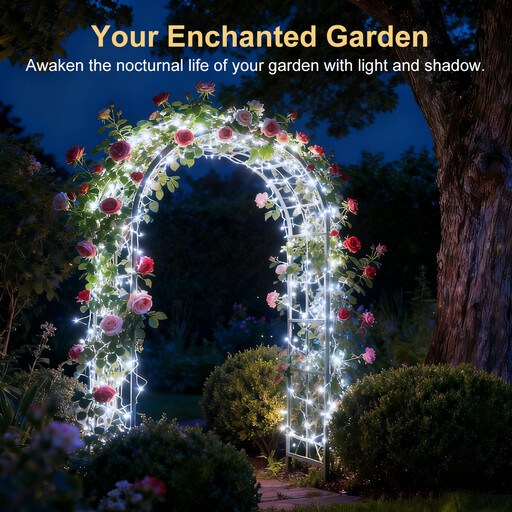
Why This Fits Their Persona: Ideal for users looking for a cost-effective and flexible solution for balconies, vases, or small shrubs. The flexible copper wire can be easily bent into any desired shape.
With its IP65 certification, this set is protected against water jets, sidestepping the trap of inadequate weather resistance common in many budget models.
The 2-pack offers excellent value for money. The 8 lighting modes with a memory function provide variety without needing to be reset daily.
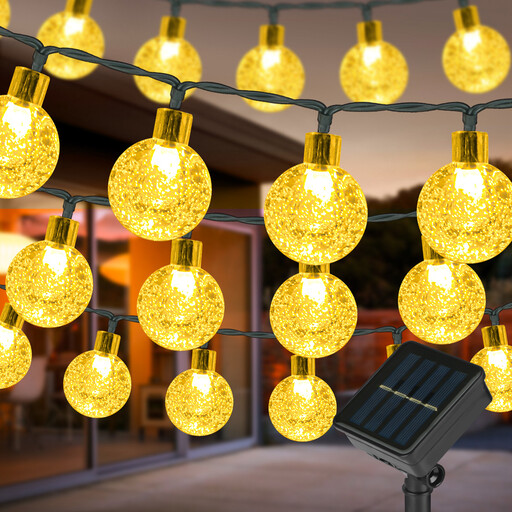
Why This Fits Their Persona: Perfect for those who value a unique aesthetic. The crystal balls create a soft, diffused light and look decorative on a patio or in the garden, even during the day.
Made from durable ABS plastic and featuring an IP65 rating, it counters the problem of poor material quality and ensures long-lasting outdoor durability.
The warm white light creates an especially inviting atmosphere. The decorative bubble ball design stands out from standard string lights.
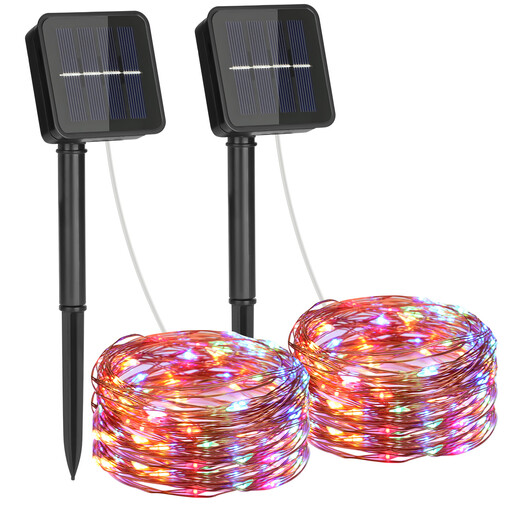
Why This Fits Their Persona: With a total length of 24 metres (2x 12m) and colourful LEDs, this set is ideal for decorating larger areas for parties, weddings, or holidays.
The upgraded solar panel with a larger surface area addresses the pitfall of unrealistic runtimes. It ensures more efficient charging, providing reliable lighting throughout an entire evening event.
The extensive length and multi-colour LEDs make it the perfect solar party string light. The 8 lighting modes allow for dynamic and festive light displays.
We've compiled a full, up-to-date list of products that fully meet these strict selection criteria and UK safety regulations.
Yes, solar string lights do work in winter, but with some limitations. Due to shorter days and a lower sun angle, solar radiation is weaker. This results in a shorter runtime in the evening. To optimise performance, the solar panel should be placed where it receives as much direct sunlight as possible and be regularly cleared of snow or debris.
No, a string light with an IP65 rating is specifically designed to withstand rain and snow. It does not need to be taken down or brought inside during bad weather. However, models with a lower rating like IP44 should be installed in a location protected from direct precipitation. The solar panel itself should never be submerged in water.
The lifespan depends on the quality of the components. The LEDs themselves have a very long life of many thousands of hours. The critical component is the rechargeable battery. In most models, its capacity will diminish after about 1 to 3 years and may need to be replaced, if the model allows for it. The durability of the housing and cables depends on the material quality and UV resistance.