
Lieferung heute & morgen

Qualitätsgarantie

Willkommens-Angebote freischalten: KOSTENLOSE Lieferung | Bis zu 80 % RABATT | Kostenlose 30-Tage-JoyPlus-Testphase
App herunterladen
An outdoor string light can transform a balcony, a patio, or an entire garden into an atmospheric oasis. However, the market is flooded with products whose promises quickly prove to be empty. Before you invest, it's crucial to understand the typical weak points that often only become apparent after purchase, leading to disappointment. This guide will help you separate the wheat from the chaff and find a string light that meets your needs and lasts for more than just one season.
Many products look appealing at first glance but fail under real-world outdoor conditions. Pay close attention to these three points to avoid a bad investment.
To make the right choice, focus on verifiable technical specifications rather than marketing promises. These three criteria are crucial for the longevity and functionality of your garden string light.
The choice of power source depends directly on your intended use.
The IP (Ingress Protection) rating is a two-digit code that indicates how well an electrical device is protected against the ingress of foreign objects (first digit) and water (second digit).
The type of lighting determines the atmosphere.
Here are some recommendations tailored to specific use cases that take the aforementioned pitfalls into account.
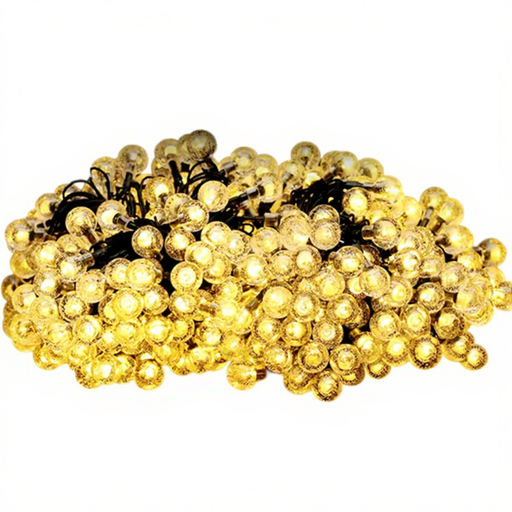
Why This Fits Their Persona: Ideal for anyone who wants to create a cosy atmosphere on their balcony or for a small party without the hassle of finding a socket. The battery operation allows for placement anywhere.
The product description explicitly states to protect the battery compartment (IP44) from direct water exposure. This transparent information prevents the typical "hidden" water damage common in battery-operated models.
Features 8 light modes, a timer function to conserve battery life, and a memory function that saves the last setting.
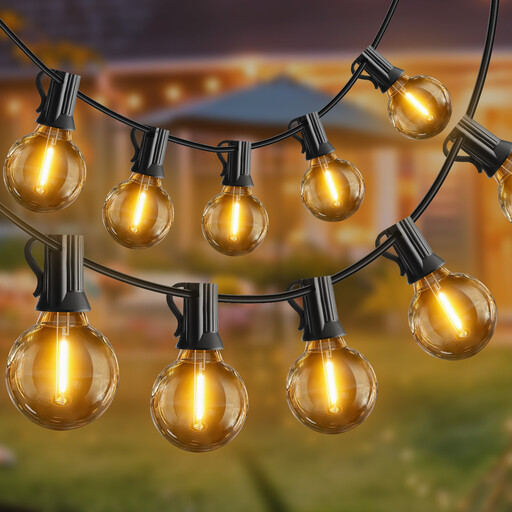
Why This Fits Their Persona: Perfect for homeowners looking for durable, robust, and extendable lighting for large areas like patios, pergolas, or the entire garden.
With an IP65 rating, it is protected against water jets, making it suitable for unprotected outdoor use. The shatterproof ABS plastic bulbs bypass the problem of fragile materials.
Multiple strings can be connected to cover very large areas. Additionally, the individual LED bulbs are replaceable, which significantly extends the product's lifespan.
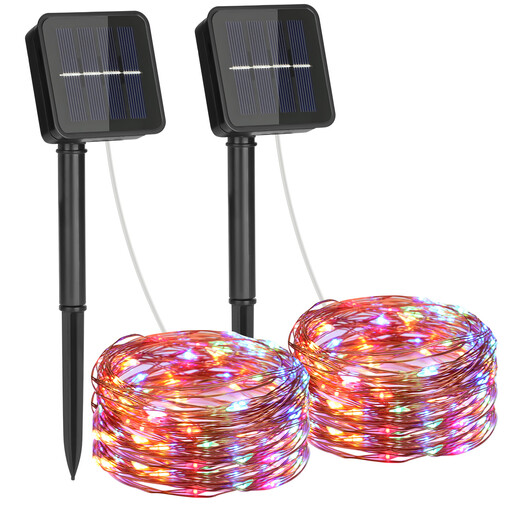
Why This Fits Their Persona: For those who want a "set it and forget it" solution with no electricity costs or manual switching. The flexible copper wire is ideal for wrapping around plants or railings.
The product features an upgraded, high-efficiency solar panel and provides realistic charging and operating times (8–14 hours of light after 6–8 hours of charging), which avoids false expectations about solar performance.
No running costs and automatic operation thanks to a dusk-to-dawn sensor. The IP65 rating ensures high weather resistance for year-round use.
We have compiled a complete, real-time list of products that fully satisfy these strict selection criteria and UK safety regulations.
The IP rating indicates how well the device is protected against the ingress of foreign objects and water. For outdoor use, IP44 (protection against splashing water) is the minimum for sheltered areas. For unprotected areas exposed to heavy rain, IP65 (protection against water jets) is recommended. Always check if the rating applies to the entire string light, including its power supply.
Yes, it is possible, but with limitations. Modern solar panels have become more efficient and can charge even on cloudy days. However, the runtime will be shorter in winter than in summer due to fewer and weaker hours of sunlight. For continuous, bright illumination over many hours, a mains or battery-powered string light is often the more reliable choice during the winter months.
Roughly measure the area you want to illuminate (e.g., the length of the balcony railing, the circumference of a tree, or the edges of a pergola) with a tape measure. It's a good idea to plan for a little extra length so the string can hang loosely or be wrapped. Also, pay attention to the length of the lead cable from the last LED to the plug or solar panel to ensure it can reach the power source.