
Lieferung heute & morgen

Qualitätsgarantie

Willkommens-Angebote freischalten: KOSTENLOSE Lieferung | Bis zu 80 % RABATT | Kostenlose 30-Tage-JoyPlus-Testphase
App herunterladen
Choosing the right outdoor sun protection can be a challenge. The market offers a wealth of options, but not all deliver on their promises. Inadequate protection can lead not only to a financial loss but also make your time outdoors unpleasant. Before you make a decision, it's crucial to understand the common pitfalls often hidden behind appealing product images.
Many buyers focus on aesthetics and price, overlooking critical technical flaws. Here are two common problems that can render a sunshade unusable after a short time:
A well-considered purchase is based on understanding the core parameters that ensure durability and functionality.
To make an informed choice that meets your needs for sun protection for your balcony or shade for your garden, you should examine three core aspects. These criteria will help you objectively evaluate a product's quality.
The Ultraviolet Protection Factor (UPF) indicates how effectively a fabric protects against UVA and UVB rays. A sunshade with a UV protection 50+ label blocks more than 98% of UV radiation, according to the standard. This is the highest protection factor available for textiles and should be considered the minimum standard for any high-quality outdoor sun protection. Ensure this value is explicitly stated by the manufacturer.
The durability of your sun protection depends directly on its materials.
A wind-resistant parasol is not a marketing promise but the result of thoughtful design.
To make your choice easier, we have compiled products for different user profiles. Each of these models meets the quality criteria mentioned above in its own way.
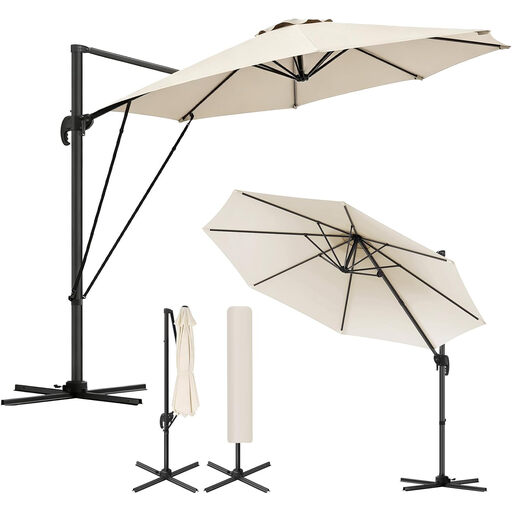
Why this model is a great fit: Ideal for homeowners with a larger patio or garden who need a flexible solution to adjust the shade throughout the day—whether over the dining table or the lounge area.
The parasol offers an explicitly stated UV protection 50+. The integrated wind vent and included guy ropes increase stability and counteract the risk of wind damage.
The combination of a 360° rotation function via a foot pedal and 5 tilt levels allows for precise, all-day shade alignment. The 200 g/m? polyester canopy with a PA coating is robust and water-repellent.
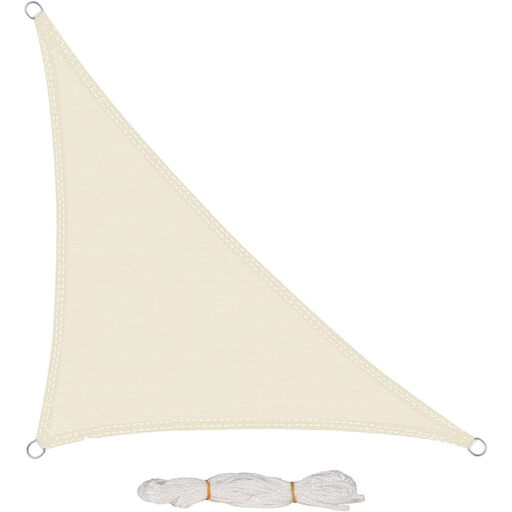
Why this model is a great fit: For users seeking a semi-permanent, architecturally pleasing shade solution for their patio, balcony, or a corner of the garden. Ideal as a stylish sunshade for the patio.
The sail is made of high-density polyethylene (HDPE) at 200 g/m?, making it tear-proof and weather-resistant. Reinforced seams and stainless steel eyelets prevent material fatigue at the attachment points.
The breathable material prevents heat build-up under the sail. At the same time, it is water-permeable, which prevents water pockets from forming when installed correctly with a 15-30° tilt. According to the manufacturer, it offers over 90% UV protection.
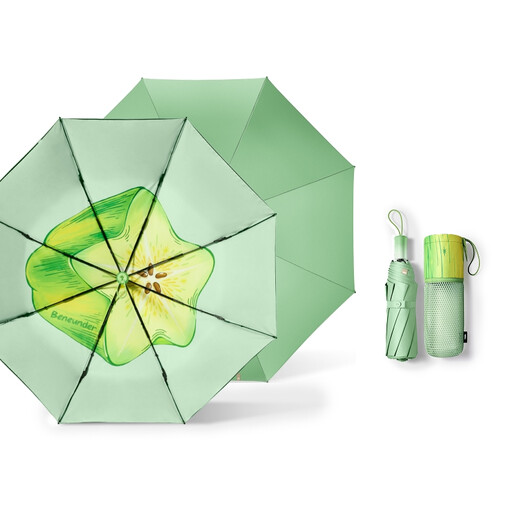
Why this model is a great fit: Perfect for individuals who need reliable, personal UV protection on the go—whether strolling through the city, commuting to work, or on a spontaneous trip to the park.
This pocket umbrella with UV protection features a special L.R.C black coating for effective sun protection. According to the manufacturer, the fibreglass-aluminium alloy frame offers level 5 wind resistance, making it very robust for a compact umbrella.
The double-layer canopy provides a high level of shielding from sunlight and heat. Despite its robustness, the umbrella is compact and lightweight, making it a practical everyday companion.
We have compiled a complete, up-to-date list of products that fully meet these strict selection criteria and applicable safety regulations.
1. How do I securely fasten a parasol or sun shade sail in windy conditions? For a cantilever or garden parasol, a suitable base with sufficient weight (often 50 kg or more, depending on the parasol's size) is essential. Many models come with additional guy ropes that should be used for stabilisation. For a sun shade sail, taut tensioning and installation at a 15-30° angle are crucial to allow wind and rain to run off. In case of storm warnings, parasols and sails should be taken down or closed as a precaution.
2. What does UPF 50+ mean, and is it really necessary? UPF 50+ is the highest certified protection factor for textiles, meaning the material blocks more than 98% of harmful UV radiation. This high level of protection is not just a comfort feature but an important contribution to health safety, especially for children and individuals with sensitive skin.
3. Can I leave my sun protection outside during the winter? It is generally recommended to store sun protection products in a dry, sheltered place during the winter. For parasols, the included protective cover should be used. Sun shade sails should be taken down. This protects the material from frost, prolonged moisture, and dirt, significantly extending the product's lifespan.