
Lieferung heute & morgen

Qualitätsgarantie

Willkommens-Angebote freischalten: KOSTENLOSE Lieferung | Bis zu 80 % RABATT | Kostenlose 30-Tage-JoyPlus-Testphase
App herunterladen
An outdoor tent can serve as a sleeping space, sun shelter, storage area or a protected spot for bicycles, depending on how you plan to use it. It’s precisely this wide range of choice that makes the buying decision so tricky. A compact camping tent for one person has to meet very different requirements to a family tent, a pop-up tent for short trips, or a shelter for a motorbike and garden tools.
The label waterproof tent alone tells you very little about the actual construction. What really matters is the hydrostatic head, coated fabrics, sealed seams and a sufficiently high bathtub groundsheet. A PU coating with PU2000 mm indicates a defined water pressure rating, but it doesn’t replace careful groundsheet selection and correctly tensioned guy lines.
Even a waterproof outer tent can feel damp if the doors are left open, condensation builds up, or there’s heavy side rain. That’s why ventilation openings and mesh panels are a practical feature.
A pop-up tent can usually be pitched faster than a classic camping tent. However, that doesn’t mean you can skip the pegs and guy lines. Wind direction, ground conditions and anchoring are still important. In stronger winds, the tent should be secured not just at the corners but also at the designated guying points.
A stated floor area doesn’t automatically tell you how much sleeping or storage space is actually available. Sloping walls, a low ridge height or a lack of porches can limit how you use it. For families and longer stays, internal height, door width, ventilation and room for luggage are all important factors.
For changeable weather, the following details are especially useful:
Compare the external and packed dimensions with your mode of transport. A tent with a 240 × 240 cm floor area offers more room to move, but it also needs a sufficiently large, level pitch. For hiking, on the other hand, a low packed weight is key. A pop-up tent can be convenient, but its folded shape is often less compact than a classic dome tent.
A camping groundsheet protects the tent floor from moisture and abrasion. It shouldn’t extend much beyond the tent’s footprint, as rainwater can collect underneath. A camping sleeping mat provides insulation from the cold ground and improves sleeping comfort; a thin foil mat, on the other hand, is only intended as a basic moisture barrier.
For garden owners, different criteria apply: a bicycle garage, a motorbike shelter or a garden tool tent needs a stable anchor, adequate access and a suitable internal height. A children’s play tent, meanwhile, should primarily be checked for age-appropriate use, ventilation, stable setup and safe materials.
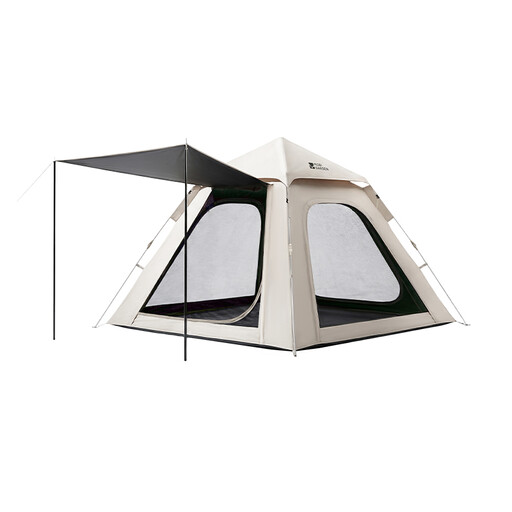
Why this product fits the profile: This tent is aimed at beginners who want a straightforward setup for camping, picnics or festival visits. The stated capacity is 2 to 5 people.
The specifications give concrete dimensions, a PU2000 mm coating, taped groundsheet seams and an automatic frame construction, rather than just advertising “quick” setup.
240 × 240 × 155 cm when open, packed size 77 × 15 × 15 cm, mesh panels and UPF50+ according to the product information.
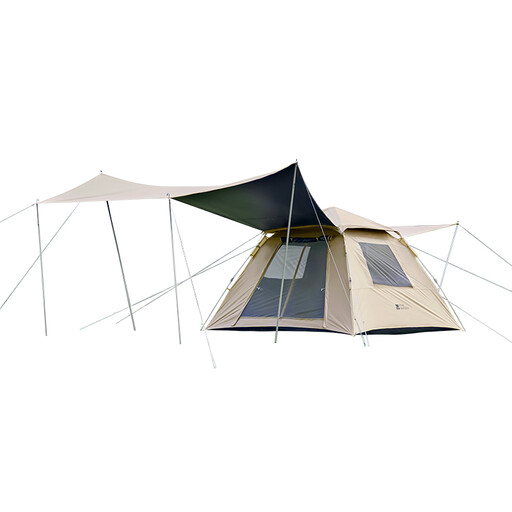
Why this product fits the profile: If you value shade and separate use areas during longer stays, you also get a tarp with a stated area of 338 × 300 cm.
The construction gives separate dimensions for the sleeping area and the tarp. This makes it easier to assess the actual space needed before you buy.
PU2000 mm, taped groundsheet seams, 240 × 240 × 155 cm inner tent and approx. 7.8 kg weight according to the product description.
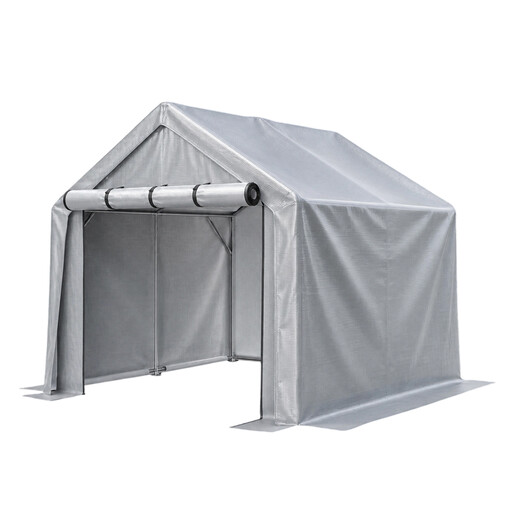
Why this product fits the profile: This shelter is designed for garden owners who want to store bicycles, motorbikes or larger garden tools under cover.
The external dimensions of approx. 244 × 241 × 217 cm and the stated capacity for 4 to 7 bicycles make the required space clear.
Galvanised steel frame, 170 g PE fabric, zip door and tool-free assembly according to the product information.
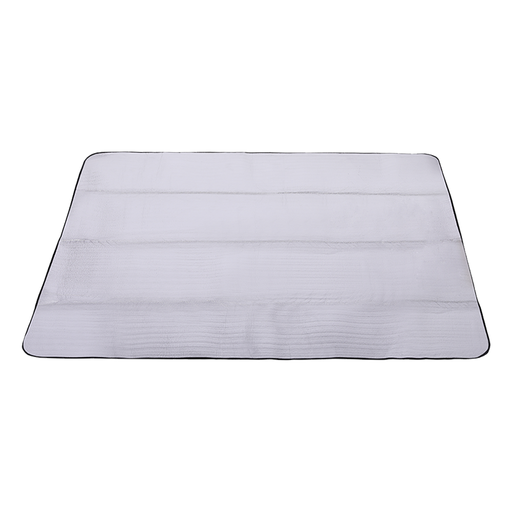
Why this product fits the profile: For picnics, the beach and as an extra groundsheet inside the tent, this lightweight mat is a space-saving addition.
The mat is explicitly described only as a moisture barrier. This means it won’t be mistakenly relied on as a sole sleeping surface for cold nights.
180 × 200 cm area, packed size 52 × 18 × 18 cm and approx. 0.3 kg weight; clean with a soft cloth.
We’ve put together a full, regularly updated list of products that fully meet these strict selection criteria and the safety regulations in force in the EU.
Choose a level, preferably wind-sheltered spot and remove any sharp objects. Unfold the tent without twisting the pole connections, secure the corners with pegs and then tension the guy lines. In rain, the outer tent should sit correctly over the inner tent.
The lifespan depends on UV radiation, moisture, how often it’s pitched, material quality and care. Dry storage, careful folding and avoiding sharp surfaces reduce wear. Coatings can be affected by heat, friction and prolonged sunlight.
In addition to the purchase price, you may need replacement pegs, guy lines, repair kits or a new camping groundsheet. There are normally no ongoing energy costs. For a garden tent, you should also factor in regular cleaning, checking the anchoring and, if necessary, replacing damaged covers.