
Lieferung heute & morgen

Qualitätsgarantie

Willkommens-Angebote freischalten: KOSTENLOSE Lieferung | Bis zu 80 % RABATT | Kostenlose 30-Tage-JoyPlus-Testphase
App herunterladen
Outdoor toys for children should encourage movement, be easy to use and suit their age. In practice, however, unclear age recommendations, delicate materials or an unsuitable surface can quickly lead to disappointing purchases. Parents, grandparents and families should therefore look beyond colourful designs or supposedly versatile features and consider the actual conditions in which the toy will be used.
A toy may be described as suitable from the age of 3 or 5 and still contain small balls, magnets or other individual parts. The specific safety information on the packaging and product page is what matters. Games with small parts should only be used under direct supervision, particularly by younger children.
Many garden games can also be used indoors. However, this says little about their long-term resistance to rain, UV radiation or damp storage. Wooden toys should be stored somewhere dry after being used outdoors. Plastic parts also benefit from not being left permanently in direct sunlight or wet conditions.
A toy with multiple game modes may sound appealing, but it will not always be used regularly. For outdoor games for children, a clear game concept is often more practical: one objective, easy-to-understand rules and quick set-up. Electronic products also involve charging times, battery costs and maintenance.
Pay attention to the age recommendation, the recommended number of players and any warning notices. For toys suitable from 3 years, large, easy-to-grip components and straightforward set-up are sensible choices. Toys suitable from 5 years may involve more complex rules or more precise movements, but should still be matched to the child’s abilities.
For children’s throwing games, dart games and kites, sufficient distance, a clear play area and adult supervision are essential. Eyes, faces, animals and bystanders should never be used as targets or be positioned in the direction of a throw.
For wooden products, details about the type of wood, construction and, where applicable, FSC certification are useful points of reference. The Outdoor Play Garden Tic Tac Toe, for example, is described as being made from FSC-certified wood and supplied with nine 7 cm cubes. The set should be stored somewhere dry and clean after play.
For plastic toys, material details such as PP plastic, flexible plastics or ABS can be helpful. Also check whether the parts can be washed and whether the manufacturer recommends using the toy on level surfaces.
Before buying, consider whether the toy needs to fit in the garden, park, on the beach or in a rucksack. Foldable throwing games are practical for trips, while larger garden games require more space to play.
Electronic outdoor toys for children, such as a remote-controlled vehicle, need a power source and a safe place for charging. For battery-operated games, check whether batteries are included and how they can be replaced. Manual games generally involve lower ongoing costs.
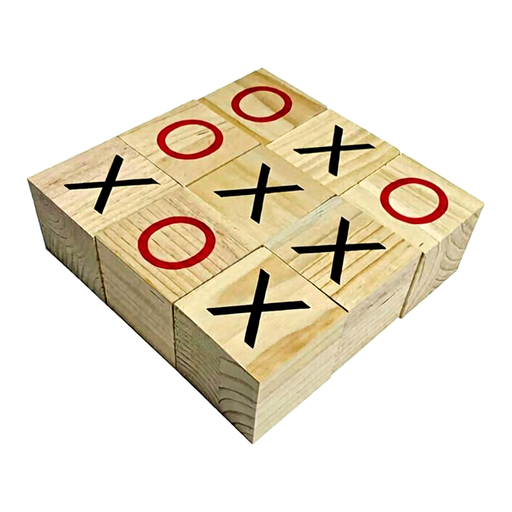
Why this product suits this profile: This classic two-player game needs neither batteries nor complicated set-up, and is suitable for the garden, playground or indoors. According to the product description, it is suitable for children aged 5 and over.
The nine wooden blocks and clear rules make it easy to understand what is included. The game does not rely on electronic functions or ongoing battery costs.
FSC-certified wood according to the product details; nine easy-to-handle cubes with a 7 cm edge length.
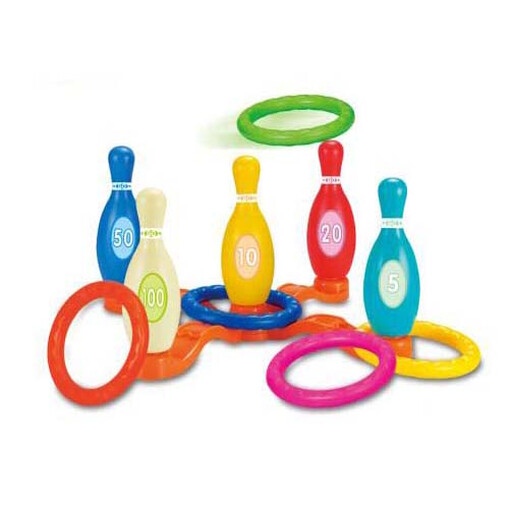
Why this product suits this profile: This set combines bowling and ring toss and can be used on level surfaces indoors, in the garden or in the park. According to the product details, it is intended for children aged 3 and over.
The two game variations are clearly described. Manual operation reduces reliance on batteries; according to the product details, cleaning only requires a damp cloth and mild soap.
Ten pins and five rings; PP plastic and stated suitability for flat, stable playing surfaces.
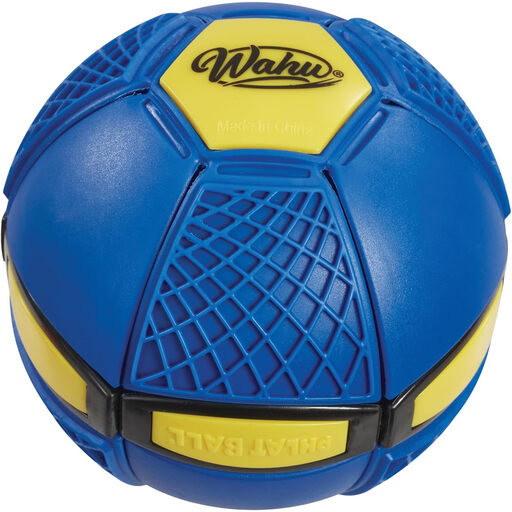
Why this product suits this profile: This compact combination of flying disc and ball is suitable for the park, garden, beach or travelling. The model is described as suitable for children aged 5 and over and weighs 150 g according to the product details.
The dimensions make it easy to assess whether it is suitable: 15.2 cm as a disc and 10.2 cm as a ball. Sufficient distance and a clear area remain important before play begins.
Foldable 2-in-1 format; manual use without batteries and dimensions that make it easy to transport.
We have put together a complete, regularly updated list of products that fully meet these strict selection criteria and the safety regulations applicable in the EU.
For children aged 3 and over, straightforward garden games with large components are suitable options, such as simple throwing, ring toss or bowling sets. The relevant warning notices always take precedence. Small parts require direct adult supervision.
Their lifespan depends on the material, use and storage conditions. Wooden toys should be stored somewhere dry and not left permanently exposed to rain. Plastic toys should be checked regularly for cracks, sharp edges and loose parts. Damaged toys should no longer be used.
Manual family games for outdoor use, such as tic-tac-toe, ring toss, bowling, kites or flying discs, generally need neither batteries nor electricity. Electronic indoor-outdoor toys, on the other hand, may involve charging, replacement batteries and suitable storage.