
Lieferung heute & morgen

Qualitätsgarantie

Willkommens-Angebote freischalten: KOSTENLOSE Lieferung | Bis zu 80 % RABATT | Kostenlose 30-Tage-JoyPlus-Testphase
App herunterladen
Outdoor toys for children should encourage movement, offer a range of ways to play and withstand everyday use outside. In practice, however, it is often clear that eye-catching design says little about age suitability, materials, space requirements or the ways the toy can actually be used. If you choose based only on colour or advertising claims, you may end up with a toy that is left unused after a short time.
“For children” is not specific enough. A toy with small figures or accessories may be unsuitable for children’s toys aged 3 and over, while a larger active-play toy may only be suitable for children from the age of 5. The official age recommendation, warnings and the child’s abilities are all important.
For example, several PLAYMOBIL products from the City Action range are recommended for ages 4 and over. Because they contain small parts that could be swallowed, these sets are not suitable for children under 36 months and should be used under supervision.
Plastic may be suitable for the garden, park or beach, but that does not mean it should be left permanently in the sun, rain or frost. Water, sand and UV radiation put strain on moving parts and surfaces. After playing, the products should be cleaned, dried and stored in a dry place.
Throwing games for children, kites for children and ball games for children require a safe distance. A Frisbee ball or a dart game with hook-and-loop balls is suitable for an open area, but not necessarily for a cramped balcony or a living room containing breakable objects. Before buying, you should decide where the toy will be used.
Check the age marking directly on the product page and packaging. Small parts are particularly relevant for sets containing figures, rings or accessories. Even where a toy is marked as suitable from age 3, adult supervision is advisable when throwing, climbing or playing with moving mechanisms.
Look for specific material details such as PP plastic, flexible plastic or ABS. According to the product information, the 2-in-1 bowling and ring toss game made from PP plastic is described as low in harmful substances and associated with the toy safety standards EN71 and ASTM F963. Even so, this information should be checked against the details on the packaging.
Toys with moving parts should be checked regularly. This includes wheels, levers, telescopic arms, flaps and fastenings. Damaged parts should no longer be used.
Compact, battery-free games are suitable for small gardens, such as ring toss, skittles or a foldable Frisbee ball. Sets with several functions are appealing for role play. The PLAYMOBIL construction range, for example, includes an excavator, road roller and construction lorry with crane. Water or foam-bubble toys, on the other hand, require you to follow the care instructions carefully and consider where they will be used.
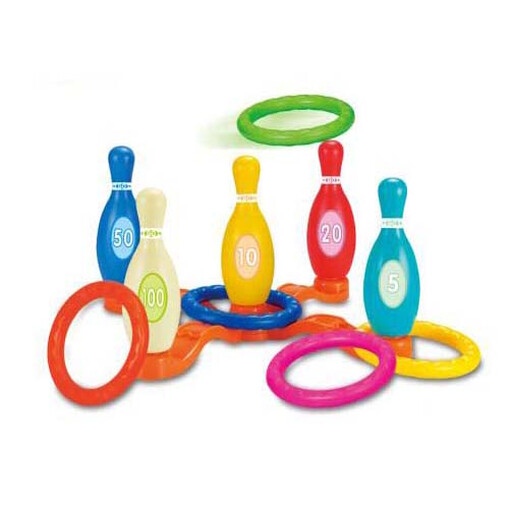
Why this product suits this profile: This set combines skittles and ring toss in one product and can be used on level surfaces indoors and outdoors. It is suitable for family games, trips to the garden and simple gift ideas for children aged 3 and over.
The ways it can be used are clear. It requires no batteries and can be cleaned with a damp cloth after playing.
Two ways to play, 10 skittles and 5 rings; total weight of approximately 530 g according to the product details.
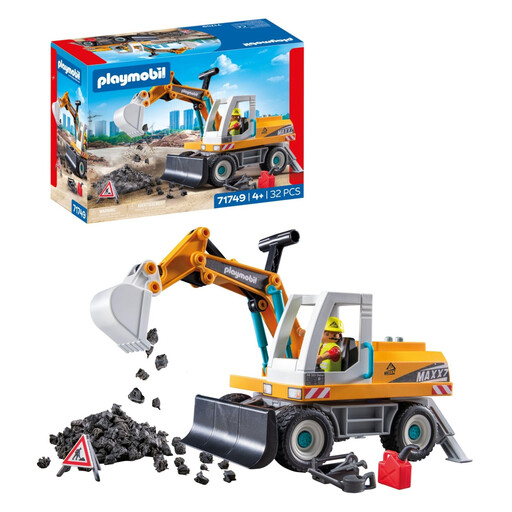
Why this product suits this profile: This set is designed for children aged 4 and over who enjoy creative construction toys and realistic role play. The excavator arm, large bucket and additional hand shovel offer clear, realistic play scenarios.
The functions are mechanical and clearly described. The excavator requires no batteries; small parts and the age limit should still be taken into account.
Movable excavator arm, 39 × 29 × 16 cm and compatible with other PLAYMOBIL worlds.
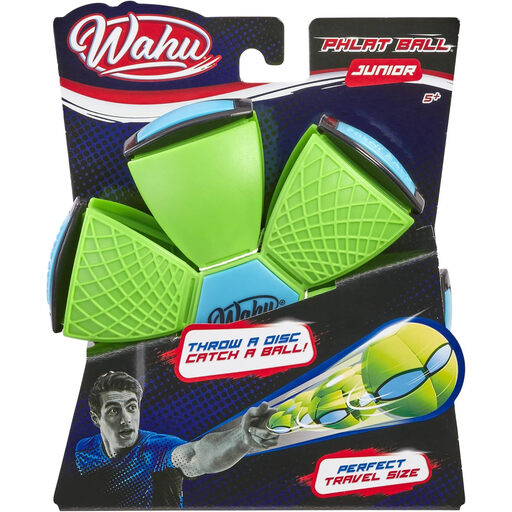
Why this product suits this profile: When thrown, the Frisbee ball changes from a flat disc into a ball that is easy to catch. With a diameter of approximately 15 cm and a low weight, it is easy to take to the garden, park or on trips.
The game can be played without batteries and requires no assembly. It is not suitable for children under 36 months because of possible small parts; check the recommended age range before buying.
Soft, flexible plastic; disc and ball functions in one compact product.
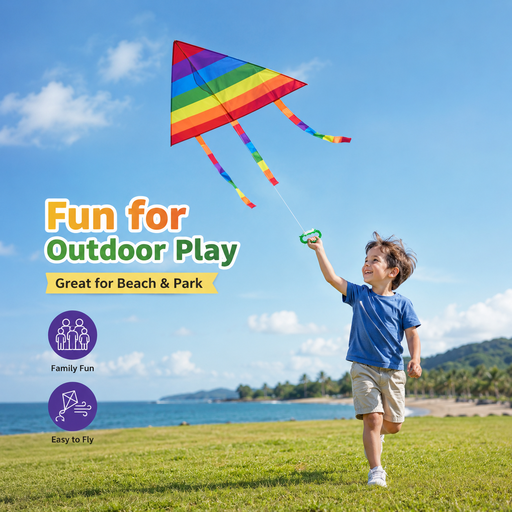
Why this product suits this profile: The Delta kite is suitable for parks, beaches and family activities. It combines creative play with observing wind direction and flight behaviour.
Use depends on clear conditions: an open area, suitable wind and supervision. The kite must not be pointed at anyone’s eyes or face.
One piece in a colourful rainbow design; intended for creative outdoor activities.
For a child aged 3 and over, simple garden games with large, easy-to-grip parts may be suitable. From age 4, more complex role-play toys such as a PLAYMOBIL construction set may be an option. For ball games and throwing games, the size should suit the child’s hand and the throwing distance should match the available space.
Electronic products such as remote-controlled vehicles also require batteries and should not come into contact with water. With a battery-powered vehicle, hair and loose clothing should also be kept away from the wheels. If you prefer to keep ongoing costs low, you can choose manual active-play toys for children.
After every use outdoors, we recommend a quick check:
We have put together a complete, regularly updated list of products that fully meet these strict selection criteria and the safety regulations applicable in the EU.
Large, straightforward games without small parts that can easily come loose may be suitable, such as a skittles and ring toss game. The specific age recommendation, warnings and recommended supervision are always decisive. For toys with small figures or accessories, the age marking should be checked particularly carefully.
Durability depends on the material, use and storage. PP or flexible plastic may be suitable for regular play, but should not be exposed permanently to rain, frost or intense sunlight. Moving parts should be checked regularly and replaced if damaged.
Manual toys such as kites, ring toss games or a Frisbee ball generally require neither batteries nor electricity. Electronic active-play toys incur battery costs. Some products may also require consumables; check these details on the product page before buying.