
Lieferung heute & morgen

Qualitätsgarantie

Willkommens-Angebote freischalten: KOSTENLOSE Lieferung | Bis zu 80 % RABATT | Kostenlose 30-Tage-JoyPlus-Testphase
App herunterladen
Outdoor toys for children should encourage movement, imagination and playing together. In practice, though, shopping for them can throw up a few problems: a play tent may not fit in the space you had in mind, a bouncy castle may need more supervision than expected, or a mud kitchen may prove impractical after a short time because its materials are delicate.
To find something that suits your family, garden and storage space, it’s worth looking at the specific product details rather than relying on eye-catching marketing claims.
Product photos can make an item look more compact than its actual measurements suggest. A pop-up play tent with a tunnel may take up considerably more room when set up than a single children’s play tent. Before you buy, check not only the product dimensions but also allow extra space for movement and safety.
This is particularly important with a bouncy castle for children. The model featured here measures 364 × 315 × 239 cm when inflated. You’ll also need to leave space between it and walls, fences, trees and other objects.
“For children” doesn’t automatically mean a product is suitable for every age. A ball pit or play tent may be intended for children from a certain age, while bouncy castles are often approved for children aged 3 and over.
Check the following:
For toys for children aged 3 and over, check that the age recommendation matches your child’s development. For younger children, a stated minimum age of 18 months doesn’t mean they can use the toy unsupervised.
A product might work well in the garden but prove impractical day to day if it needs to be thoroughly dried or taken apart after every use. With a mud kitchen for children, you’ll need to empty out the water after play. An inflatable bouncy castle needs a blower running while it’s in use, and after water play it must be fully emptied and dried.
So, check:
For textiles, durable polyester fabrics and well-ventilated mesh panels are practical features. For wooden products, check the surfaces, edges, stability and care instructions. The CE mark is an important formal indication on many toys; information about relevant standards such as EN 71 may also be useful. Always refer to the specific information provided with the product and the accompanying safety instructions.
Don’t assume a product is certified based on marketing wording alone. For example, the Roba product is described as being made from FSC-certified solid wood. This information relates to the material and doesn’t automatically say anything about all the product’s features.
A small playhouse is ideal for quiet imaginative play, reading or having a little time to themselves. A larger 5-in-1 play tent with a tunnel and ball pit, on the other hand, offers several play areas and can be used by multiple children. The key is to choose something that fits into your everyday life, rather than an item that ends up taking up space permanently after a short time.
Don’t assume outdoor toys can be left outside all the time. Even products designed for outdoor use can wear out more quickly when exposed to moisture, UV rays and dirt. Wooden toys should be left to dry after rain, textiles should be completely dry before being stored, and water containers must be emptied after use.
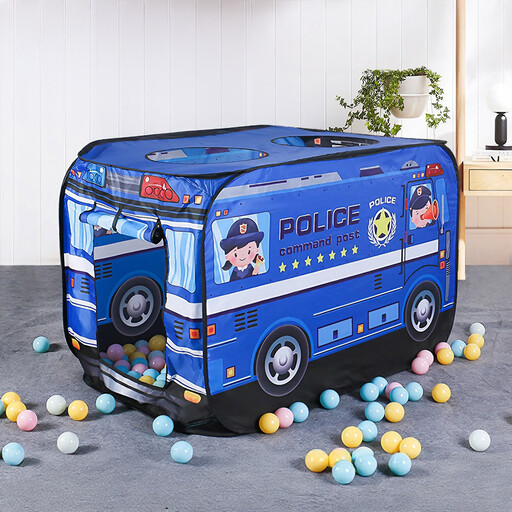
Why it suits this family: Measuring 115 × 75 × 70 cm, this compact play tent is designed for one or two children and folds away for use at home, in the garden or on days out.
The clearly stated dimensions make it less likely you’ll buy a playhouse that’s too large for a small room. The pop-up design means there’s no complicated assembly.
Folding design, two round roof windows, a rear entrance and breathable polyester fabric.

Why it suits this family: This wooden outdoor play kitchen is designed for children aged 18 months and over, combining imaginative play with water and mud activities.
The care instructions specifically say to empty and dry the water container and tub. This makes it easier to understand the maintenance involved before you buy.
124 × 89 × 34 cm, plastic tub, water container with tap and accessories including a pot, ladle and two cups.
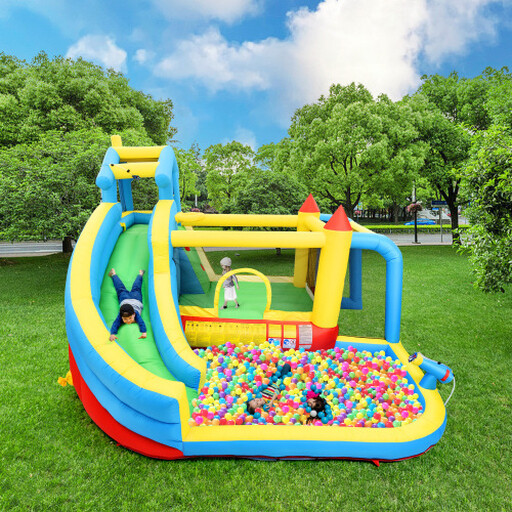
Why it suits this family: Families with plenty of garden space get several play areas for children aged 3 to 10, including a bouncing area, slide, water area and football net.
The product details specify a maximum load of 135 kg, up to three children and the need to keep the blower running continuously. This makes the space and operating requirements clear.
Inflatable design, blower included, and suitable for use either dry or connected to a water supply.
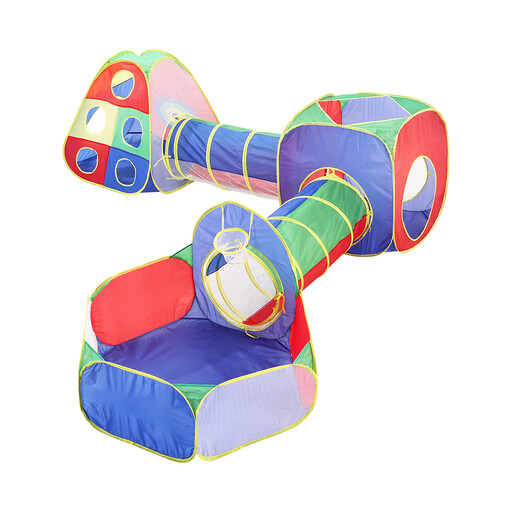
Why it suits this family: The set is listed for children aged 3 to 6 and measures 270 × 260 cm, with several play areas that can be combined for four or five children.
The details on floor space, age range and number of children help you distinguish it from a small tent for one child. It also folds away for storage.
Two tunnels, a ball area, a square tent, a pyramid tent and two hook-and-loop balls; balls for the ball pit are not included.
We’ve put together a complete, regularly updated list of products that meet these strict selection criteria and fully comply with the safety regulations in force in the EU.
It depends on the type of product. A small pop-up play tent only needs the floor space specified. Tunnel sets and bouncy castles also need clear space around them. Measure the area before you buy, and allow for access routes, supervision and a safe distance from obstacles.
There’s no single answer. It depends on the materials, how often the toy is used, exposure to sunlight and moisture, and how it’s stored. Textile products should be kept dry and, where possible, out of direct light. Wooden products benefit from regular checks and dry storage when they’re not being used during the season.
Yes. With the model mentioned, the blower must stay switched on while children are playing. This means ongoing electricity costs and requires a suitable, safe power supply. Before you buy, also check the blower’s power, operating time and site requirements.