
Lieferung heute & morgen

Qualitätsgarantie

Willkommens-Angebote freischalten: KOSTENLOSE Lieferung | Bis zu 80 % RABATT | Kostenlose 30-Tage-JoyPlus-Testphase
App herunterladen
Whether it’s the garden, patio, living room or a family day out, outdoor toys for children should suit the space you have, your child’s age and how they’ll actually be used. From bouncy castles and play tents to slides, sandpits and mud kitchens, setup, care and safety requirements can vary considerably.
Many buying decisions go wrong not because of the product itself, but because important details are overlooked. Three common pitfalls are worth bearing in mind:
Before buying, measure the space you plan to use, including room for movement and access. An inflatable bouncy castle measuring 364 × 315 × 239 cm takes up considerably more room than a pop-up play tent measuring 115 × 75 × 70 cm.
Packed size matters, too. Inflatable models can be folded away, but some weigh over 20 kg. Pop-up play tents and tunnel sets, on the other hand, can be stored or transported without permanent assembly. Also check:
Outdoor toys can be made from materials such as polyester, plastic, wood and Oxford fabric. Rather than relying on general marketing claims, look for specific product details, care instructions and warnings.
Look out for:
The product description for the multi-functional bouncy castle states that it has EN-71 certification. Always check such details directly in the product information. Certification relates to specific requirements that have been tested; it doesn’t replace correct assembly and supervision.
There are plenty of options when choosing garden toys for children aged 3 and over. A play tent encourages quiet imaginative play and reading, while a slide with a basketball hoop needs more room to move and must be assembled securely. A children’s mud kitchen is a good choice if you have access to water, a suitable outdoor area and time for cleaning.
When choosing play equipment for children aged 3 to 10, check whether it’s designed for one child or several children to use at the same time. For a bouncy castle, also check the maximum combined weight and permitted number of children. Water features call for extra checks around slipping hazards, emptying and drying.
The recommendations below group specific models by space requirements, type of play and intended use. Product details are taken from the relevant descriptions, so it’s worth checking them again before you buy.
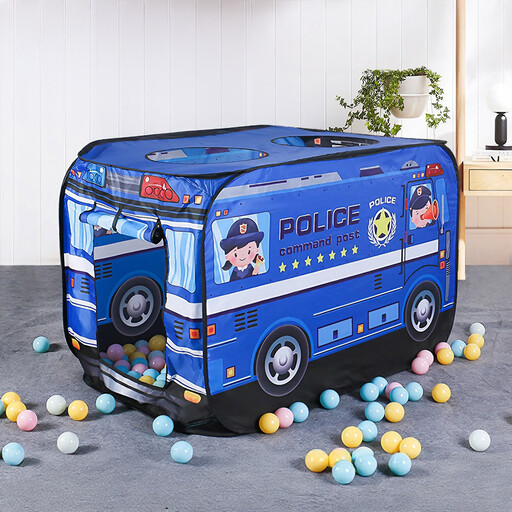
Why it suits this family: According to the product description, this compact play tent is designed for children aged 3 to 6 and has room for one or two children. It’s suitable for indoor use and sheltered areas of the garden.
Its dimensions of 115 × 75 × 70 cm and pop-up design make the space required clear. No permanent assembly is needed.
Foldable and portable, and made from polyester. Two round roof windows and a rear entrance encourage imaginative play.

Why it suits this family: This children’s mud kitchen combines wooden parts with a plastic tub and is designed for outdoor use at home. It’s a good fit for families planning to make imaginative garden play part of everyday life.
The description gives clear care instructions: empty the water after play, clean the surfaces and store the product somewhere sheltered when it’s not in use.
124 × 89 × 34 cm, with a water container and tap, oven and accessories. Assembly is required.
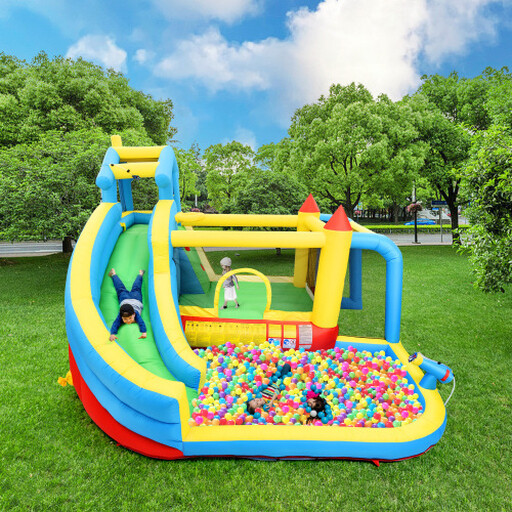
Why it suits this family: Designed for children aged 3 to 10, this bouncy castle is intended for families with plenty of outdoor space and several children. It includes a bouncing area, slide, paddling pool and football net.
The product details specify a maximum weight of 135 kg, space for up to three children and the need to keep the blower switched on during use.
Inflated dimensions of 364 × 315 × 239 cm. A blower is included, and the product description says it can be used wet or dry.
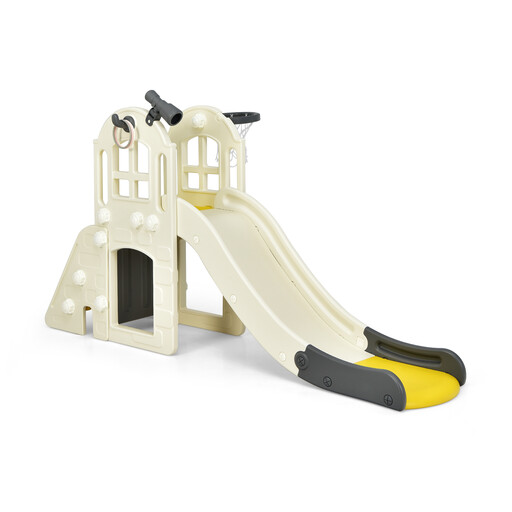
Why it suits this family: This slide with basketball hoop combines six play features and, according to the description, is suitable for children aged 3 to 8 and for indoor or outdoor use.
The product description mentions a wide, triangular base, reinforced handrails and a platform weight limit of 60 kg. Be sure to measure the space you have before buying.
Slide, climbing wall, tunnel, basketball hoop, ring toss and telescope. The description states that assembly tools are included.
We’ve put together a complete, regularly updated list of products that meet these strict selection criteria and fully comply with the safety regulations applicable in the EU.
Even indoor and outdoor toys need regular checks. Empty water from pools and containers after every use. Make sure textiles are completely dry before folding them away. For wooden products, check parts, edges and surfaces regularly.
For bouncy castles, set them up only on a suitable surface, secure them with the supplied fastenings and follow the manufacturer’s instructions on wind, blower use and weight limits. A cover is recommended for sandpits to keep out leaves and animals. Store small parts and accessories out of reach of younger siblings.
As well as the inflated dimensions, you’ll need to leave a clear safety area around the equipment. For a model with a base measuring 364 × 315 cm, consider not just the product dimensions but also access, anchor points and clearance from walls, fences and trees.
Depending on their stage of development, children aged 3 and over may enjoy play tents, small slides, sandpits, mud kitchens and age-appropriate climbing or bouncing equipment. Always follow the specific age recommendation and weight limit, and make sure an adult supervises play.
Its lifespan depends on the material, how often it’s used, the weather and how well it’s cared for. Storing it in a dry place, protecting it from UV rays and rain, and checking seams, screws, wooden surfaces and plastic parts can all affect how long it lasts. Stop using a product if any load-bearing or safety-critical parts are damaged.