
Lieferung heute & morgen

Qualitätsgarantie

Willkommens-Angebote freischalten: KOSTENLOSE Lieferung | Bis zu 80 % RABATT | Kostenlose 30-Tage-JoyPlus-Testphase
App herunterladen
Outdoor toys for children should encourage movement, shared play and easy, fuss-free use. In practice, though, unclear age guidance, lack of space planning or exaggerated product promises can quickly lead to disappointing purchases. That applies to small children’s outdoor games just as much as to large play equipment.
A toy with lots of functions sounds appealing at first. What really matters is whether those functions suit the space you have, your children’s ages and your everyday routine. A large bouncy castle with a slide, for example, needs a flat area of around 4.60 × 3.43 metres. It’s only of limited use for a small garden or transporting to the park.
“From age 3” or “from age 5” isn’t a general quality claim. It’s a crucial guide for safe use. Small parts, moving wheels, throwing speed or the physical strength required can limit how it’s actually used. Pay particular attention to the stated age limit on any product with small parts.
Outdoor toys face sun, moisture, dirt and frequent assembly and pack-down. Plastic should be checked for visible cracks, wood needs dry storage and inflatables must be completely dry before being put away. Even if a toy is described as “waterproof”, that doesn’t automatically mean it’s suitable for deep water or being submerged for long periods.
For outdoor games from age 3, simple, easy-to-grip games with straightforward rules work well, such as skittles, quoits or ball-catching games. For group games like tug-of-war, consider the physical strain as well as the minimum age. According to the product details, the Tender Toys tug-of-war game is designed for children aged 5+ and has a 10‑metre rope with a 2‑centimetre diameter.
For family gatherings and children’s birthday party games, choose options with short rounds and rotating roles. Throwing and catching games usually need little explanation or prep. Strategy games like garden tic-tac-toe are better for two players and require a flat surface.
Measure the available space before you buy. For slides and inflatable play equipment, also factor in safety clearances, a stable surface and the manufacturer’s guidance on wind. The multi-function bouncy castle set must not be used in windy areas; the blower must remain connected and switched on while in use.
Compact children’s outdoor games are ideal for the park, beach or days out. A foldable throwing game fits in a rucksack and needs no batteries or permanent setup. For remote-controlled vehicles, the surface should be as flat as possible and clear of people, animals and fragile objects.
Look for specifics rather than vague terms like “durable”. More meaningful are the materials, dimensions, weight, battery type and cleaning instructions. The 2‑in‑1 skittles and quoits game, for example, specifies PP plastic; the parts can be wiped with a damp cloth. A battery-powered vehicle, by contrast, needs charging time and dry storage. Keep water and charging electronics strictly separate.
Products with a CE marking carry a manufacturer’s declaration that they meet relevant EU requirements. This does not replace reading the actual warnings, age guidance and instructions for use. For inflatables, also check load capacity, the maximum number of children and how it’s anchored.
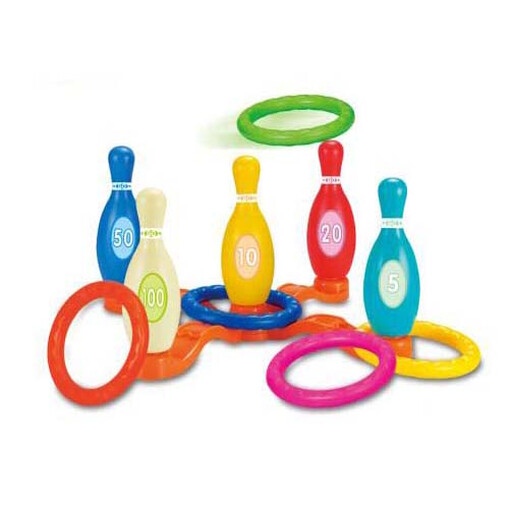
Why this product fits the profile: The set combines skittles and quoits, is listed for children aged 3+ and can be used on flat surfaces in the garden, park or nursery.
The product details list materials, dimensions, contents, cleaning and safety warnings. That makes it easier to judge suitability before you buy.
Two ways to play in one set; manual use with no batteries and around 10 pins plus 5 rings.
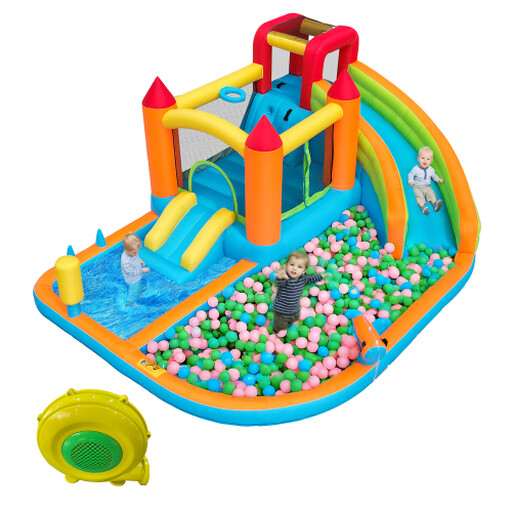
Why this product fits the profile: For families with enough space, this model offers several designated play areas for both dry and wet use.
The specifications list footprint, total weight, maximum number of children, total load, and the need to keep the blower running continuously.
It specifies an area of 460 × 343 cm, a maximum total load of 180 kg and use by up to 4 children aged 3 to 8.
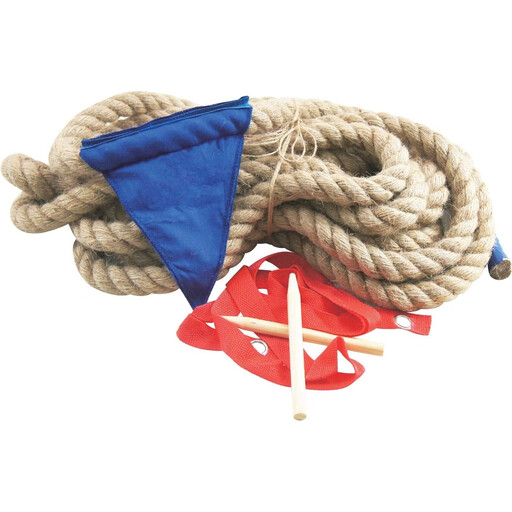
Why this product fits the profile: The rope suits families, group activities and events where several children play together.
By stating a rope length of 10 metres, a 2‑centimetre diameter and the recommended age, it provides clear planning parameters.
Suitable for head‑to‑head duels or two teams; a blue marking shows the middle of the rope.
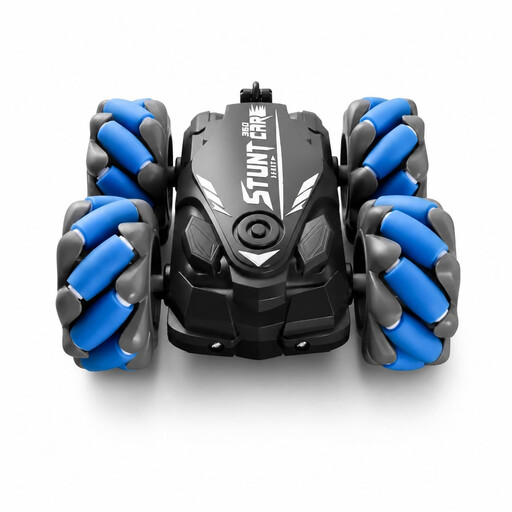
Why this product fits the profile: For children aged 8+ who want a remote-controlled car with multiple control modes and stunt features.
The product details explicitly flag small parts, supervision, charging instructions and the age limit. The vehicle is not intended for use in water.
2.4 GHz remote control, gesture control, four‑wheel drive and a rechargeable lithium battery; specified for flat indoor and outdoor surfaces.
We’ve compiled a complete, regularly updated list of products that fully meet these strict selection criteria and the safety regulations in force in the EU.
Choose games with simple processes and easy-to-grip parts, such as skittles, quoits or larger ball-catching games. The specific age rating on the packaging and product page takes priority. Where there are small parts or moving mechanisms, only play under direct supervision.
Lifespan depends on materials, frequency of use, weather and storage. Protect plastic parts from prolonged sun exposure, store wood in a dry place and ensure inflatables are completely dry. Regular visual checks won’t prevent every defect, but they do help you remove damaged parts in good time.
With remote-controlled vehicles, the main costs are electricity for charging the battery and, where needed, batteries for the remote control. Check whether the battery and charging cable are included and whether the charging instructions must be followed. Manual garden games for children such as quoits, skittles or tug‑of‑war don’t need a power supply.