
Lieferung heute & morgen

Qualitätsgarantie

Willkommens-Angebote freischalten: KOSTENLOSE Lieferung | Bis zu 80 % RABATT | Kostenlose 30-Tage-JoyPlus-Testphase
App herunterladen
Whether it’s the garden, park, beach or on holiday: outdoor toys for children should encourage movement, be easy to transport and suit the child’s age. However, product descriptions often highlight flashy features without explaining the important details. That’s why parents, families, nurseries and schools need clear, understandable criteria such as material, dimensions, age rating and intended use.
For some items, the age stated in the title, description and safety information can differ. A product might be advertised in the title for children aged 5 and up, while a technical product detail says “from 3 years”. The safety information on the packaging and in the official product description is what counts. For items with small parts or dynamic throwing games, adult supervision is advisable.
A plastic toy might be designed for the garden, park and beach, but sharp stones, asphalt edges or intense sunlight can damage the material and surface. Before buying, you should be clear whether the product is waterproof, foldable or only intended for flat surfaces. A children’s basketball hoop, for example, needs a stabilised base, while a children’s frisbee requires enough open space.
A frisbee and ball in one offers several ways to play, but it requires a certain level of reaction time and a minimum of throwing control. For younger children, a soft ball or a simple catch game may be more suitable. So the most important question isn’t how many features a product has, but whether its size, weight and gameplay fit the intended use.
The age rating is a key point of reference. For children aged 3 and up, larger, lightweight balls without small, swallowable parts are suitable. A soft soccer ball with a 20 cm diameter and 165 g weight can be designed for simple kicking, rolling and passing games indoors and outdoors.
For sports toys from age 5, smaller throwing objects and more complex movements may be appropriate. A Phlat Ball Junior measures about 15.2 cm as a disc and transforms into a ball with a diameter of roughly 10.2 cm. The size is compact, but the gameplay is more dynamic than with an ordinary ball.
Look for clear information on type of plastic, foam, polyester, edges and surface texture. A soft rim can make it easier to grip, but it doesn’t replace the need for a clear play area or supervision. For inflatable garden toys, consider the valve, maximum load and regular checks for tears.
If you’re mindful of current safety requirements, look for a marking such as CE and references to relevant toy safety standards, for example EN 71. Such details should be checked on the specific product and are not a substitute for the manufacturer’s safety instructions.
For trips or spontaneous outings, foldable or lightweight products are practical. A Phlat Ball folds flat and fits into many rucksacks. A boules set or a catch game, on the other hand, needs enough space for several people. After playing in sand or on damp ground, products should be cleaned and dried thoroughly. Plastic toys should not be left in direct heat or intense sunlight for long periods.
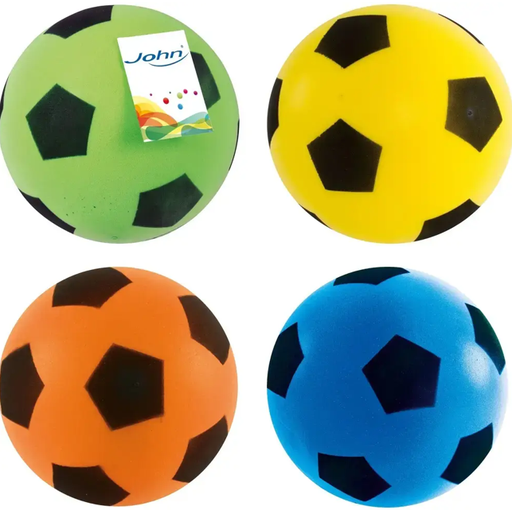
Why this product fits the profile: The 20 cm soft ball is designed for simple ball games indoors and out, and is suitable for children in the stated age range of 3 to 8 years.
The product details clearly state the diameter, weight and material. This makes it easier to match the item to the available play area and the child’s hand size.
Lightweight design at 165 g; suitable for kicking, rolling and passing games on appropriate surfaces.
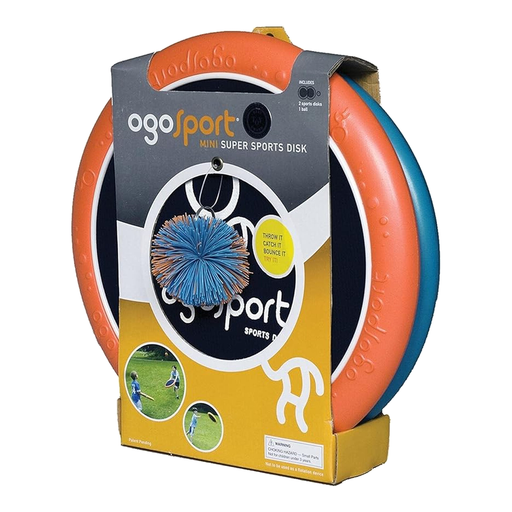
Why this product fits the profile: The set includes two discs with a 29 cm diameter, a fluffy ball and an elastic net for different ways to play.
The two discs can be used as throwing toys for children or for passing back and forth. This reduces reliance on just one way to play.
Waterproof according to the product description; foam ring and elastic net; fluffy ball with reduced rolling distance.
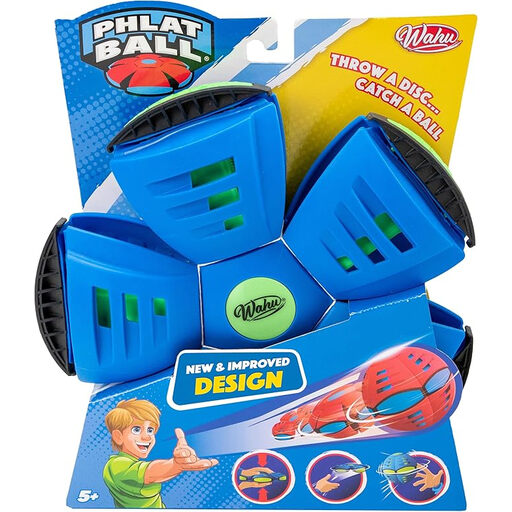
Why this product fits the profile: The Phlat Ball Classic combines a disc and ball in one compact toy for the garden, park, beach and travel.
The transport form is clearly described: the toy can be folded flat and taken in a rucksack. However, you should still check the available play area before buying.
2-in-1 function; dimensions approx. 24 × 6.5 × 27.51 cm; weight stated as 250 g; not intended as a dog toy.
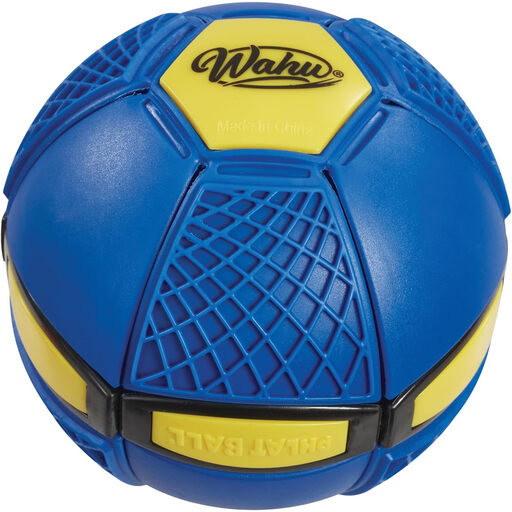
Why this product fits the profile: The mini version is recommended for children aged 5 and up, combining a small transport size with a changing gameplay experience.
The product description states both the disc and ball size. This makes it easier to judge whether the toy is suitable for small hands and the intended distance.
Approx. 15.2 cm as a disc and 10.2 cm as a ball; manual, battery-free use; foldable design.
We’ve put together a full, regularly updated list of products that fully meet these strict selection criteria and the safety regulations in force in the EU.
For children aged 3 and up, larger, lightweight products without easily detachable small parts are suitable, such as a soft ball or an age-appropriate catch game. The specific manufacturer’s recommendation, the warnings and adult supervision are all crucial. Complex throwing games should first be tried over a short distance.
The lifespan depends on the material, how much it’s used, the surface and storage conditions. Soft plastic and foam can be damaged by sharp edges. Regular visual checks, cleaning and dry storage help extend the product’s life. If there are tears, loose connections or damaged handles, the product should no longer be used.
For families with different age groups, games with adjustable distance and simple rules are practical. A soft ball is good for rolling, passing and kicking. A throwing and catching set helps with aiming. A Phlat Ball adds extra variety with its change between disc and ball. For larger groups, boules, ring toss or simple team games can work well.