
Lieferung heute & morgen

Qualitätsgarantie

Willkommens-Angebote freischalten: KOSTENLOSE Lieferung | Bis zu 80 % RABATT | Kostenlose 30-Tage-JoyPlus-Testphase
App herunterladen
An outdoor wall light should illuminate your entrance safely, create an inviting atmosphere on the patio or add visual structure to your façade. In practice, however, some purchasing decisions can quickly lead to unnecessary costs: a light may be advertised as weatherproof but only be suitable for protection against splashing water; its brightness may not suit the intended location; or an integrated LED module may not be replaceable if it develops a fault.
This buying guide explains which technical details matter when choosing an LED outdoor wall light and which models are suitable for different homes and usage situations.
The key factor is the IP rating. An IP44 outdoor wall light is protected against solid foreign objects measuring 1 millimetre or more, as well as splashing water from various directions. This is sufficient for many covered entrances, patios and façades. However, on highly exposed surfaces subject to persistent driving rain, you should still choose the installation position carefully.
IP44 does not mean that the light can be submerged in water or sprayed with a pressure washer. Incorrect installation can also compromise its protective effect.
For LED lights, wattage primarily indicates power consumption. For brightness, the luminous flux in lumens is more meaningful. An outdoor LED light with 300 lumens is more suitable for providing guidance and lighting short paths. A significantly higher output may be useful for a larger façade or functional garage lighting.
The required brightness also depends on the installation height, beam angle, wall colour and distance from the area to be illuminated.
A decorative garden wall light may look attractive on the outside wall of a house but provide too little light for an entrance. Conversely, a bright spotlight on a small patio can create unpleasant glare. Before buying, you should therefore be clear about whether façade lighting, entrance lighting, security lighting or warm-white patio lighting is the priority.
First check that the light is explicitly intended for outdoor use and note which IP rating is specified. IP44 is a popular choice for many applications around the house, balcony, garage and patio. The wall surface should be even, cable entries must be properly sealed, and the supplied or suitable screws must be suitable for outdoor use.
For permanently connected 220–240-volt lights, installation must be carried out by a qualified electrician. The power supply must be switched off before carrying out any maintenance work.
When choosing a dimmable outdoor wall light, check whether a compatible LED dimmer is required. With integrated LEDs, dimmer compatibility is particularly important.
Permanently installed models are suitable for planned, long-term lighting on house walls, garages or patios. Battery-powered lights offer greater flexibility when no mains connection is available. In this case, check the charging method, battery life and mounting system.
With a light that uses a replaceable E27 bulb, you can change the light colour at a later date. With integrated LED modules, however, the entire light often has to be replaced when the module reaches the end of its service life.
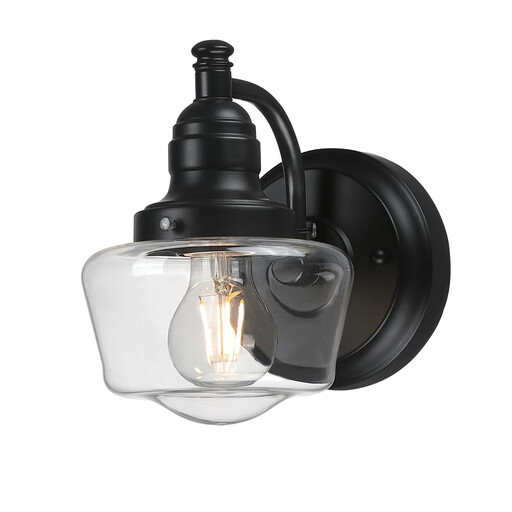
Why this product suits this profile: This model features a classic wall fitting with a replaceable E27 bulb, making it suitable for entrances, garages or covered patios.
The light source is not permanently integrated. An E27 bulb rated up to 60 watts can be selected to suit your preferred light colour and brightness.
IP44 rating; E27 socket; matt black cover with clear glass.
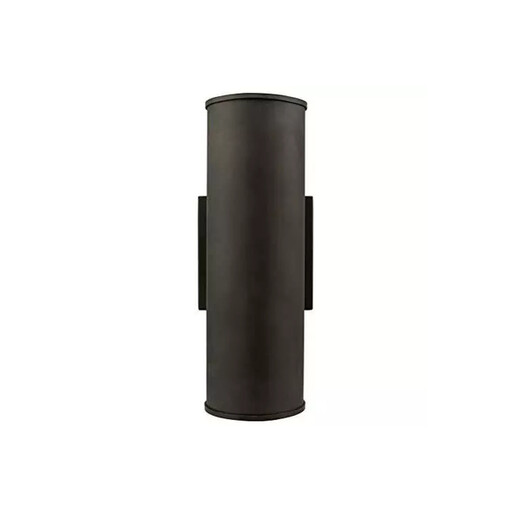
Why this product suits this profile: This slim light combines a clean design with up-and-down lighting and is intended for entrances, patios and contemporary exterior façades.
The specifications clearly state IP44, 3000 Kelvin and 870 lumens. This makes it easy to assess the IP rating, light colour and luminous flux objectively before buying.
Two integrated 8-W LEDs; 870 lumens; warm-white light at 3000 Kelvin; IP44.
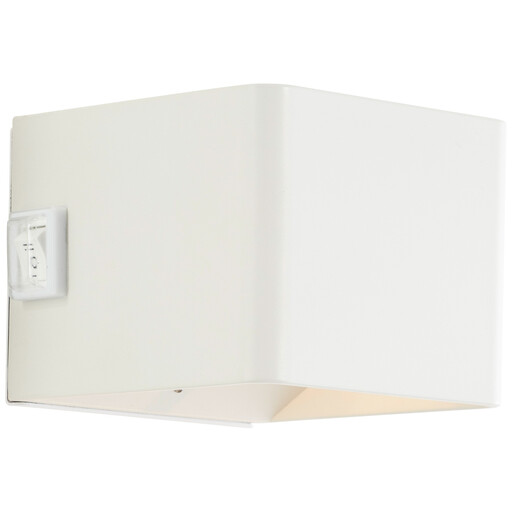
Why this product suits this profile: This battery-powered outdoor wall light is suitable for locations without a mains connection, such as balconies, gardens, patios or side entrances.
The design does not require a permanent mains connection. IP44, a USB charging cable, magnetic mounting and a motion sensor are all clearly specified.
4 watts; 300 lumens; 3000 Kelvin; integrated battery; motion sensor and IP44.
We have put together a complete, regularly updated list of products that fully meet these strict selection criteria and the safety regulations applicable in the EU.
For a permanently connected outdoor light, installation should be carried out by a qualified electrician. A secure mounting, a suitable surface and proper sealing of the connection point are essential. Motion sensors require an unobstructed detection area; branches, reflective surfaces or heavily used paths can cause false triggers.
Clean lights in accordance with the manufacturer’s instructions, usually with a soft, dry cloth. High-pressure water and aggressive cleaning products can damage seals, coatings or glass surfaces.
For many sheltered outdoor areas, IP44 is a popular choice. The light is then protected against splashing water. For exposed locations that are heavily affected by the weather, you should check the exact installation position and whether a higher IP rating may be required.
The service life depends on the LED module, electronics, operating time, heat dissipation and weather conditions. Manufacturer specifications can vary considerably. With integrated LEDs, you should also bear in mind that the module often cannot be replaced separately.
A motion sensor can reduce operating time because the light only switches on when movement is detected. Actual consumption depends on the power rating, activation duration, sensitivity and daily use. With battery-powered models, charging requirements also need to be taken into account.