
Lieferung heute & morgen

Qualitätsgarantie

Willkommens-Angebote freischalten: KOSTENLOSE Lieferung | Bis zu 80 % RABATT | Kostenlose 30-Tage-JoyPlus-Testphase
App herunterladen
An outdoor wall light should do more than simply look attractive. It needs to be compatible with your existing power supply, installation location and lighting requirements. If you choose based solely on design or a high wattage, you can easily overlook important details.
Three common buying mistakes occur particularly often:
Before buying, it is therefore worth checking the voltage, IP rating, colour temperature, installation type and replacement-part options.
An IP44 outdoor light is protected against solid foreign objects measuring 1 millimetre or more, as well as splashing water from different directions. This makes it suitable, for example, for a sheltered entrance, a covered terrace or an exterior wall with sufficient roof overhang.
However, IP44 is not equally suitable for every exposed location. For a wall without an overhang, heavy wind-driven rain or consistently high humidity, a higher IP rating may be advisable. Correct installation is also crucial: a poorly positioned seal or an inadequately sealed cable connection can compromise the intended level of protection.
For an LED outdoor wall light, the wattage mainly indicates its electrical power consumption. The stated light output in lumens is more important when it comes to brightness. A light with 950 lumens is suitable for an entrance area or terrace, while an adjustable outdoor wall spotlight with a higher light output is more suitable for illuminating a garage, driveway or larger garden area.
Colour temperature is measured in kelvin:
For entrances and terraces, 2,700 to 3,000 kelvin is often pleasant. For a security light for a garage and driveway, neutral or daylight white light can make it easier to see where you are going.
In Germany, fixed-wired outdoor lights generally require 220–240 V at 50 Hz. The product specifications should therefore be compared with your existing connection before purchase. This is particularly important for imported models: according to the product data, the LUTEC Twin-Spotlight light in this selection is designed for AC 120 V, 60 Hz, so it is not directly suitable for a standard German domestic connection.
With an E27 outdoor wall light, you can choose the bulb separately and replace it when necessary. An integrated LED, on the other hand, saves space and is supplied with a suitable light source, but may not be replaceable depending on the model. A dimmable outdoor light also requires a compatible LED dimmer. A conventional dimmer can cause flickering or malfunctions.
The following models meet different requirements. Before ordering, you should also check details such as the IP rating, power, colour temperature and bulb type on the relevant product page.
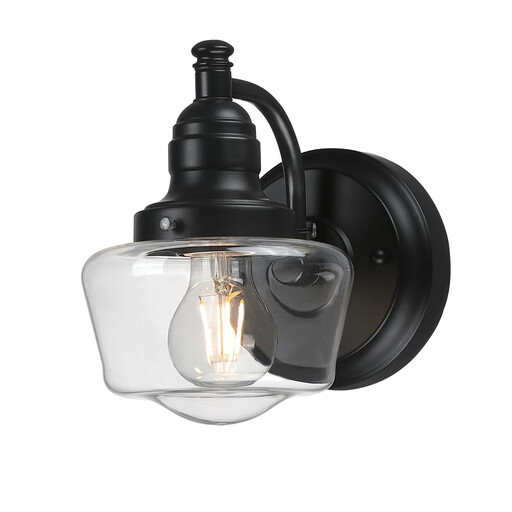
Why this product suits this profile: This compact light offers a classic outdoor look and uses a separately available E27 bulb of up to 60 watts. This allows you to choose the colour temperature according to your needs.
The E27 socket means you are not tied to a permanently installed LED module. The stated IP44 rating makes the light suitable for appropriate outdoor areas protected from splashing water.
E27 bulb up to 60 W, 220–240 V at 50 Hz, matt black metal finish and compact dimensions.
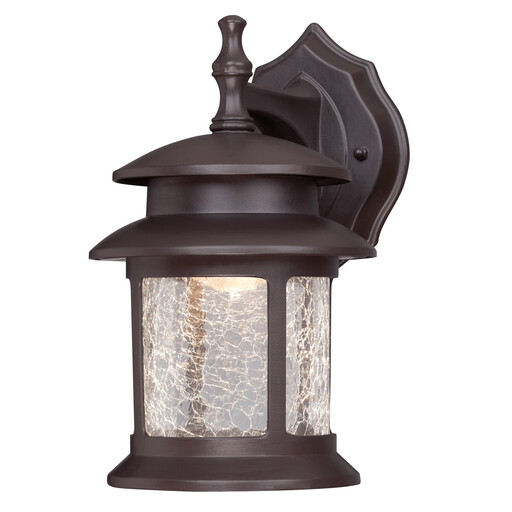
Why this product suits this profile: This model combines an aluminium housing with an oil-rubbed bronze finish, crackle clear glass and warm white lighting for an entrance, terrace or garden wall.
The product data gives specific figures rather than making vague claims about weather resistance: IP44, 9 W, 3000 K and a light output of 1000 lumens.
Dimmable integrated LED light, warm white 3000 K, 9 W power consumption and a stated average lifespan of 35,000 hours.
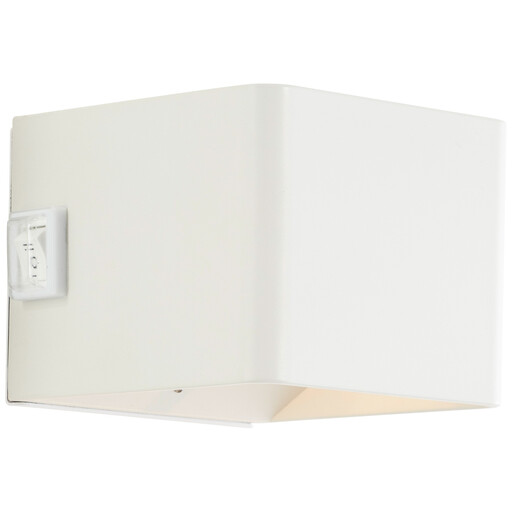
Why this product suits this profile: This portable light is suitable for locations without a fixed power connection, such as sheds, covered terraces or temporary installations.
Instead of assuming that wiring is available, this light runs on a rechargeable battery and USB charging cable. The IP44 rating should nevertheless be understood as protection against splashing water, not as approval for continuous exposure to unprotected rain.
4 W, 300 lumens, 3000 K, integrated motion sensor, rechargeable battery, USB connection and magnetic mounting.
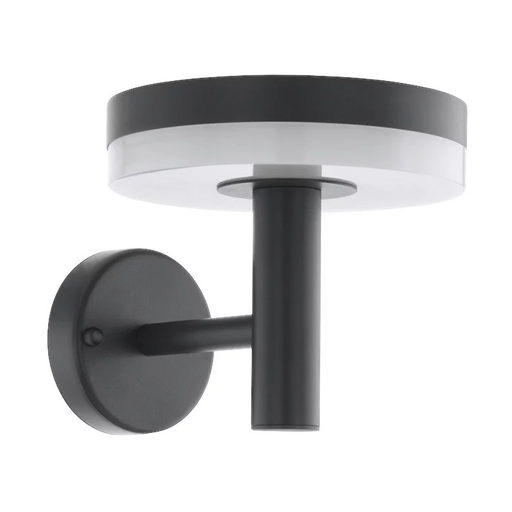
Why this product suits this profile: For a fixed connection at an entrance, along a garden path or on a terrace, this slim LED light offers clearly defined light output and a warm white colour temperature.
The specifications state 950 lumens and 3000 kelvin, making the expected lighting effect easier to assess than with wattage-based claims alone.
Integrated 11 W LED module, 950 lumens, 3000 K, anthracite finish and dimensions of 24.5 × 18 × 24.5 cm.
We have put together a complete, regularly updated list of products that fully meet these strict selection criteria and the safety regulations applicable in the EU.
Fixed-wired models should be installed by a qualified electrician. Before working on the light, switch off the power supply at the consumer unit. The wall surface must be strong enough to support the light, and cable entries and seals should not be altered unnecessarily.
Ongoing electricity costs depend on power consumption, daily operating time and your electricity tariff. A 10 W light switched on for five hours a day consumes around 18.25 kWh per year in theory. A motion sensor can reduce operating time, but it is no substitute for the correct positioning and suitable brightness. With battery-powered models, charging intervals and battery ageing should also be taken into account.
For a sheltered entrance, models with IP44, a colour temperature of 2,700 to 3,000 kelvin and sufficient light output are worth considering. A higher lumen value may be useful for larger entrance areas. Also pay attention to glare, installation height and the distance from the door.
Lifespan depends on the LED module, heat dissipation, operating time and environmental conditions. Manufacturer specifications should be understood as average values. For example, the Westinghouse 6400340 is stated to last 35,000 hours. However, an integrated module is not automatically replaceable.
An outdoor lamp with a motion sensor can reduce energy consumption if it only comes on when movement is detected. The actual result depends on sensitivity, switch-off delay, location and usage. For paths or driveways, the detection area should be adjusted so that passing vehicles or moving branches do not activate the light constantly.