
Lieferung heute & morgen

Qualitätsgarantie

Willkommens-Angebote freischalten: KOSTENLOSE Lieferung | Bis zu 80 % RABATT | Kostenlose 30-Tage-JoyPlus-Testphase
App herunterladen
An outdoor wall light needs to do more than look good. At your front door, garage or patio, the right brightness, weather protection and a suitable fit with your existing electrical installation all matter. Many listings also advertise high lumen figures, “waterproof” housings or exceptionally long lifespans without clearly explaining the details that really count.
A high lumen rating tells you how much light a fitting produces, but not how well it will illuminate an area. An LED outdoor wall light with a wide beam angle may light an entrance more evenly than a more powerful LED floodlight with a narrow beam. For paths and driveways, it’s also worth checking whether the light is directed downwards or could dazzle neighbours and passing traffic.
Check the IP rating to find out how well a fitting is protected. An IP44 outdoor light is protected against solid objects larger than 1 mm and splashing water from different directions. This doesn’t mean it’s suitable for direct jets of water or for installation in a permanently exposed position.
An IP65 outdoor light is dust-tight and protected against water jets. An IP66 outdoor floodlight offers additional protection against powerful water jets. Even so, the installation position, seals and correct cable routing remain important. “Waterproof outdoor light” isn’t a useful selection criterion on its own without a specific IP rating.
An outdoor light with a motion sensor can be useful by your front door or garage, switching on only when it detects movement. For decorative lighting that stays on, a dimmable model or a separate switch may be more suitable. With lights that have an integrated LED module, the light source often can’t be replaced. An outdoor E27 wall light, on the other hand, gives you more choice of colour temperature and brightness, as well as the option to replace the bulb later.
The first digit indicates protection against solid objects and dust; the second indicates protection against water. Before you buy, check:
IP44 may be enough for a covered balcony. Higher ratings are often more suitable for an exposed garden wall or garage. Always follow the installation instructions and the manufacturer’s guidance.
Brightness is measured in lumens (lm), while power consumption is measured in watts. Warm white light at around 2700 to 3000 kelvin tends to feel subtle and works well on patios, balconies and by the front door. Neutral white at around 4000 kelvin makes it easier to see along paths and driveways. Cool white at around 6000 to 6500 kelvin may suit work areas or outdoor security lighting, but it tends to stand out more.
Also look for:
A mains connection provides a steady supply regardless of sunlight, but new wiring must be installed by a qualified professional. A solar outdoor floodlight needs a suitable spot for its panel and enough daylight. With a separate solar panel, you can position the floodlight on a wall that gets less sun.
Lights with a fixed 220–240 V connection should be installed by a qualified electrician. Before you buy, check the wall material, drill-hole spacing, cable route, mounting height and available space.
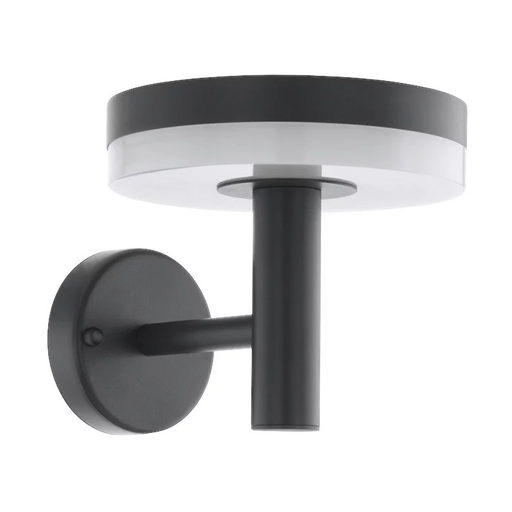
Why it suits this profile: This integrated LED light combines 11 W power consumption with 950 lm and a warm white colour temperature of 3000 K. It’s well suited to entrances, patios and paths where you have a regular mains supply.
The specifications give precise wattage, lumen and kelvin figures, rather than making vague claims about energy efficiency. Check the IP rating in the listing and instructions before installation.
11 W, 950 lm, 3000 K and an integrated LED module; anthracite finish in metal and plastic.
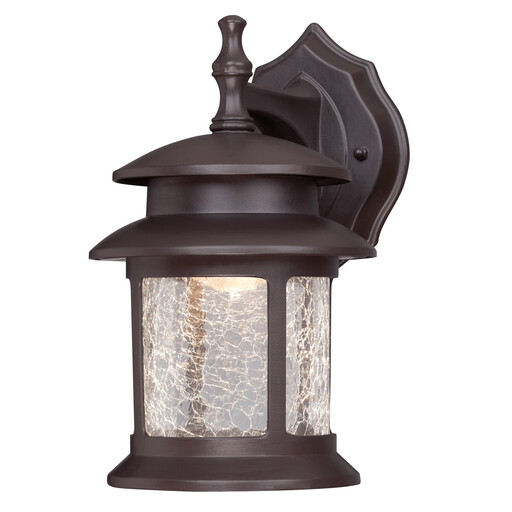
Why it suits this profile: This model has an integrated 9 W LED, a light output of 1000 lm, a colour temperature of 3000 K and a stated average lifespan of 35,000 hours. Its dimming function lets you adjust the brightness to suit your needs.
The product specifications distinguish between the light source’s output and the effective light output. Dimming requires a compatible LED dimmer.
9 W, 1000 lm, 3000 K, dimmable and IP44 rated; aluminium housing with clear textured glass.
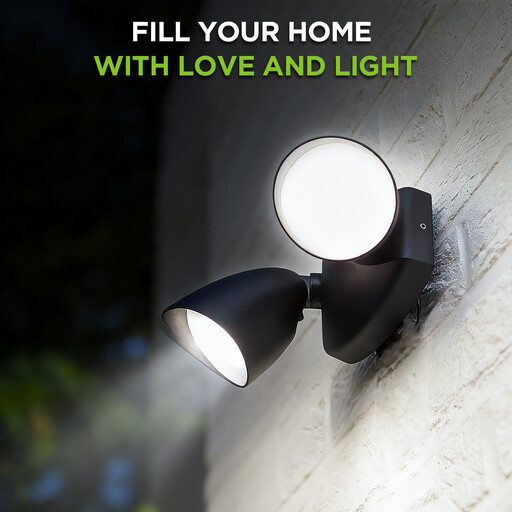
Why it suits this profile: This twin-head outdoor floodlight delivers 20 W, 1800 lm and 4000 K, making it suitable for larger areas such as a courtyard, garage, garden or driveway. The two light heads can be angled to direct the light where you need it.
The two heads help you tailor the lit area to the installation spot, rather than relying on a single high lumen figure. Check whether a sensor is included before you buy.
1800 lm, 20 W, 4000 K and twin-head design with a metal housing.
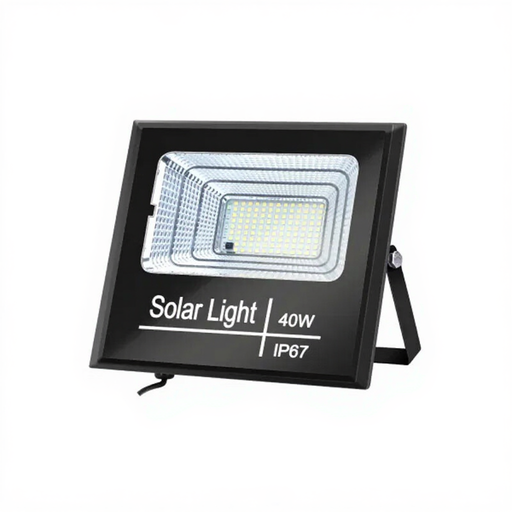
Why it suits this profile: The separate solar panel makes this a good option for gardens, paths or outbuildings without a mains connection. The product description lists a 10,000-mAh battery and a lighting time of up to 12 hours.
The separate panel makes it easier to position the light somewhere sunny. Actual run time depends on the charge level, time of year and location, so it shouldn’t be treated as a guaranteed figure.
Separate solar panel, 10,000-mAh battery and IP67 rating as stated in the product description.
We’ve put together a complete, regularly updated list of products that meet these strict selection criteria and the applicable EU safety regulations.
For a small entrance, a moderate lumen output may be enough, depending on the mounting height and beam angle. A higher light output is often useful for a garage, courtyard or driveway. Lumens aren’t the only thing to consider: light distribution, glare and colour temperature also matter. Always compare the stated light output with the area you want to illuminate.
IP44 may be suitable for a sheltered entrance. If the light will be exposed to the weather, IP65 or IP66 offers greater protection against water and dust. The IP rating needs to suit the installation location, and proper sealing and installation are still essential.
The cost depends on the wattage, how many hours it’s on each day and your electricity tariff. A simple calculation is: wattage divided by 1000, multiplied by the hours of use and the price per kilowatt-hour. Sensors, timers and dimming can reduce the time the light is on. Solar lights don’t use mains electricity, but their usable lighting time depends on sunlight and battery condition.