
Lieferung heute & morgen

Qualitätsgarantie

Willkommens-Angebote freischalten: KOSTENLOSE Lieferung | Bis zu 80 % RABATT | Kostenlose 30-Tage-JoyPlus-Testphase
App herunterladen
Choosing the right outdoor wall light is a decision that significantly impacts both the aesthetics and functionality of a home. A well-placed outdoor wall lamp not only ensures safety in the dark but also sets architectural accents and creates a welcoming atmosphere. However, given the variety of styles, materials, and technologies, the search can quickly become overwhelming.
This guide serves as a helpful resource. It presents objective criteria to help you make an informed decision—from weather resistance and lighting technology to the right design for your facade.
To find the perfect light for your needs, several technical and design aspects should be considered.
An outdoor light is exposed to the elements all year round. Robust materials like stainless steel, aluminium, or high-quality plastic are therefore crucial for longevity. A key indicator of weather resistance is the IP (Ingress Protection) rating. For most applications on a house wall, the weatherproof IP44 rating is an established standard. This classification means the light is protected against splashing water from all sides and solid foreign objects larger than one millimetre in diameter. For unprotected areas exposed to heavy rain or water jets, a higher IP rating (e.g., IP65) may be advisable.
LED outdoor wall lighting has become the standard due to its energy efficiency and long lifespan. Modern LED modules are often permanently integrated, offering maintenance-free use for many years. Furthermore, new technologies open up additional possibilities:
The design of the light should harmonise with your home's architecture. A modern outdoor wall light is often characterised by clean lines, geometric shapes, and materials like brushed stainless steel or aluminium. In contrast, a vintage outdoor wall light relies on classic forms, such as lanterns, and materials like black metal and glass to create a nostalgic charm.
A special design effect can be achieved with an outdoor up and down light. These fixtures cast cones of light both upwards and downwards onto the facade, creating impressive, indirect illumination that accentuates the building's structure.
Here, we present three models that cover different requirements in terms of design, function, and technology.
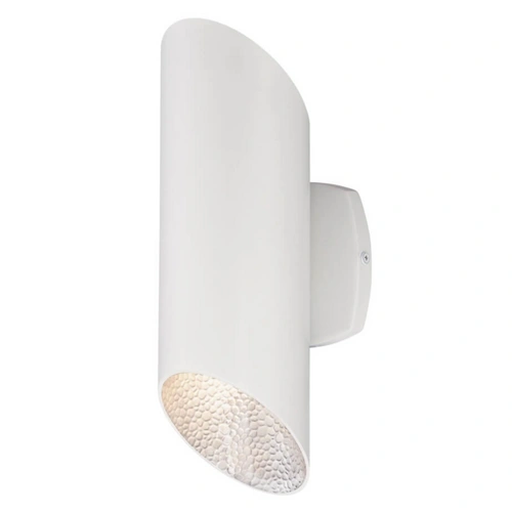
Why it stands out The Westinghouse Skyline impresses with its minimalist, cubic design and focused lighting effect. As an outdoor up and down light, it showcases modern facades with symmetrical cones of light without being obtrusive.
Advantages
Who it's for This model is ideal for owners of modern homes who are looking for stylish yet subtle accent lighting for their facade, entrance area, or patio. Its slim design also fits well on narrower wall sections.
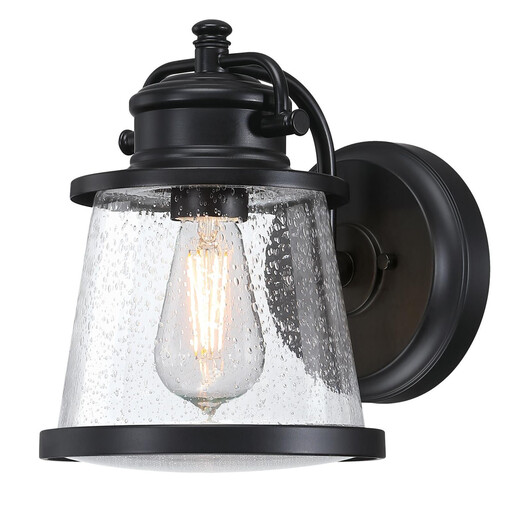
Why it stands out The Emma Jane takes the classic lantern design and gives it a timeless interpretation. The combination of a matte black finish and clear seeded glass lends a warm and inviting touch to any outdoor space.
Advantages
Who it's for Perfect for lovers of traditional or rustic styles. This outdoor wall lamp is an excellent match for older buildings, half-timbered houses, or as a stylish contrast on modern buildings to illuminate the entrance, balcony, or porch.
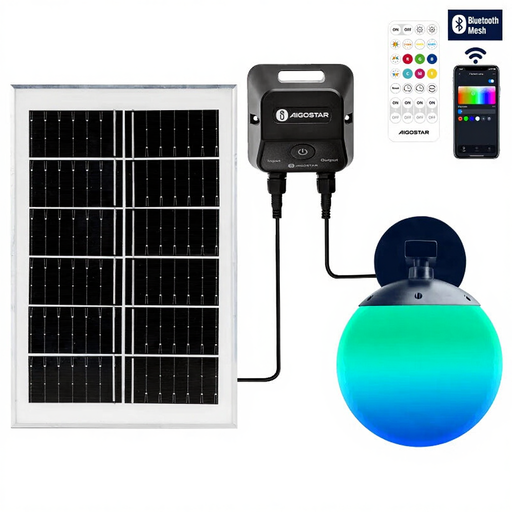
Why it stands out This model from Aigostar is a technologically advanced solution that combines independence from the power grid with smart control. As a solar outdoor wall light, it is environmentally friendly and extremely easy to install.
Advantages
Who it's for Ideal for tech-savvy and eco-conscious users who want maximum flexibility in their lighting design. It is perfectly suited for gardens, patios, or facade sections where no power connection is available, allowing for creative lighting scenarios.
If our selection doesn't yet have the right fit for your project, or if you'd like to explore more styles and features, we invite you to browse our entire collection. Here you will find a wide range of lighting solutions for every taste and application.
Discover our full range of Electric Wall Lamps.
The IP rating indicates how well an electrical device is protected against the ingress of foreign objects and water. The first digit (4) signifies protection against solid objects larger than 1 mm in diameter. The second digit (4) stands for protection against splashing water from all directions. A light with an IP44 rating is therefore well-suited for most covered or wall-mounted positions in outdoor areas.
No, the dimming capability must be explicitly stated by the manufacturer. For lights with integrated LEDs, the entire fixture must be designated as dimmable. For models with replaceable bulbs, both the bulb (e.g., a dimmable LED lamp) and the installed wall switch (a compatible dimmer) must be designed for this function.
A common recommendation for mounting height is about 1.80 to 2.20 metres (5.9 to 7.2 feet) above the ground. At this height, the light generally does not cause glare and effectively illuminates pathways or entrance areas. However, the optimal height depends on the specific model, its beam angle, and the desired lighting purpose. For an up and down light, a lower or higher mounting can also create appealing effects.