
Lieferung heute & morgen

Qualitätsgarantie

Willkommens-Angebote freischalten: KOSTENLOSE Lieferung | Bis zu 80 % RABATT | Kostenlose 30-Tage-JoyPlus-Testphase
App herunterladen
An outdoor wall light should do more than simply illuminate the exterior wall of your home. It needs to be compatible with your existing electrical installation, mounting surface and intended location. Products also vary considerably in terms of protection rating, light output, bulb type and controls.
Three buying pitfalls are particularly common:
The IP44 rating means protection against solid foreign objects measuring 1 millimetre or more, as well as against splashing water. This rating may be suitable for sheltered entrance lighting, a covered balcony or a partially protected patio. On a façade exposed to the elements, you should also take the mounting position, any overhead cover and the manufacturer’s specifications into account.
A weatherproof outdoor lamp also requires carefully sealed installation. Drill holes, cable entry points and the wall connection must not compromise the protection provided. If you are unsure, the electrical installation should be carried out by a qualified professional.
Lumens (lm) indicate luminous flux and provide a more meaningful indication of brightness than wattage. A few hundred lumens may be enough for a decorative garden wall light. An entrance area or garage drive often requires a higher light output.
Colour temperature is measured in Kelvin:
Light distribution also affects the overall effect. An up-and-down outdoor light casts light upwards and downwards, making it particularly suitable as a façade light. An adjustable twin spotlight directs light precisely towards a driveway, garden path or garage.
With an LED outdoor wall light, you need to distinguish between an integrated and a replaceable LED module. Integrated LEDs do not require a separate bulb and allow for compact housings. If the module cannot be replaced, the entire light will generally need to be replaced in the event of a fault.
Models with an E27 socket offer greater flexibility. The bulb can be replaced later, and its colour temperature or brightness can be adjusted. An outdoor light with a motion sensor is practical at entrances and along passageways, but it should be positioned so that passing cars or moving branches do not trigger it constantly.
The following recommendations categorise specific products according to their intended use and clearly identifiable product features. Details such as IP rating, wattage, lumens and colour temperature are based on the respective product descriptions.
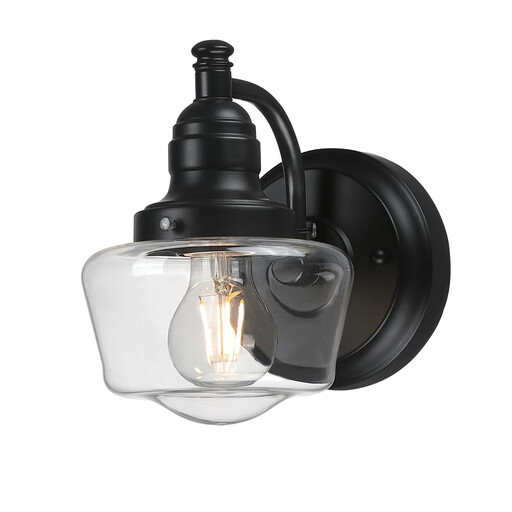
Why this product suits this profile: The light uses an E27 socket for bulbs up to a maximum of 60 watts. This means you can choose the bulb separately and replace it when needed.
Brightness does not depend on a permanently integrated LED module. Buyers can fit a suitable LED bulb and change the colour temperature later.
IP44 splash protection, a matt black metal finish and clear glass; suitable for 220–240 V and 50 Hz.
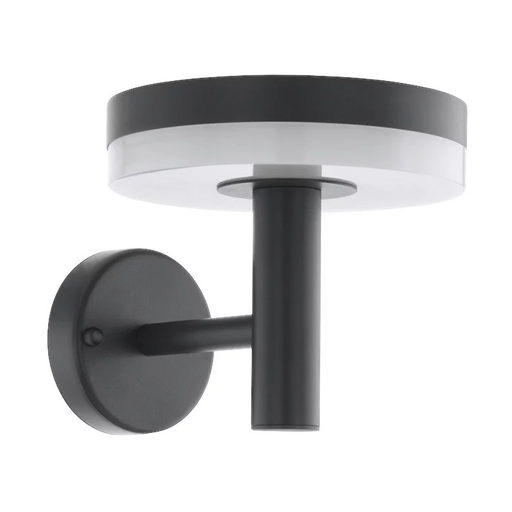
Why this product suits this profile: According to the product details, the integrated LED delivers 950 lumens at 3000 Kelvin, combining clearly defined light output with a compact, modern housing.
The lumen specification makes it easier to choose than by comparing wattage alone. Please note that, according to the description, the LED module cannot be replaced.
11-watt LED, 950 lumens, warm white 3000-Kelvin light and an anthracite-coloured metal and plastic construction.
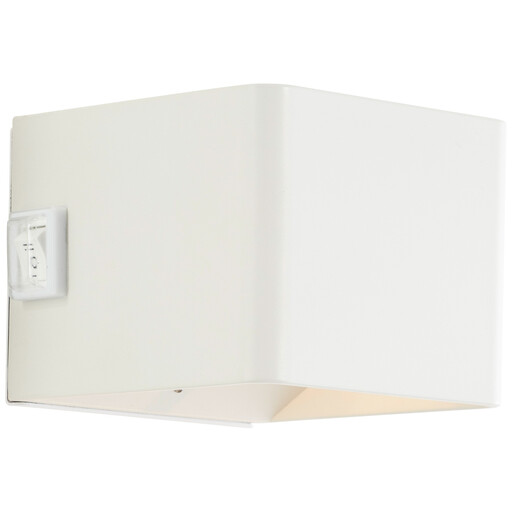
Why this product suits this profile: The battery-powered light is suitable for locations without a fixed power connection, such as balconies, garden sheds or temporary patio lighting.
No permanent electrical installation is required. The integrated motion sensor switches the light on when movement is detected; the battery needs to be recharged regularly via USB.
300 lumens, 3000 Kelvin, integrated battery, USB connection, magnetic mounting and IP44 protection rating.
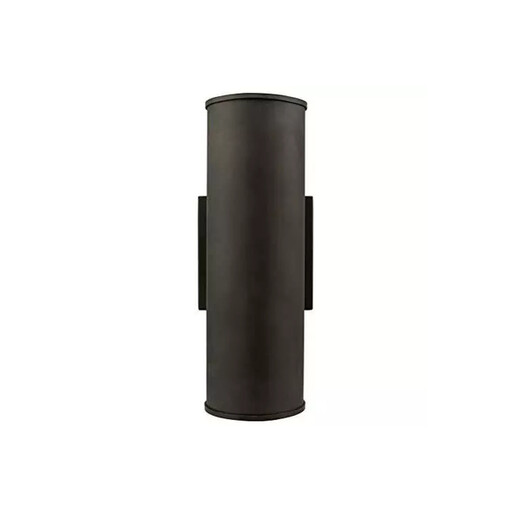
Why this product suits this profile: The rectangular up-and-down light creates architectural accents around entrances, garages or patios, combining this light distribution with warm white illumination.
The specifications state both the colour temperature and luminous flux: two integrated 8-watt LEDs produce a total of 870 lumens at 3000 Kelvin. The dimming function must be matched with a suitable LED dimmer.
870 lumens, 3000 Kelvin, up-and-down light distribution and IP44 splash protection; mounting accessories and instructions are included according to the description.
Before buying, check the wall material, connection position and space required. A round light with a diameter of 16 centimetres requires different hole spacing from a slim façade light with a vertical design. If you live in rented accommodation, you should also clarify whether drilling and a fixed power connection are permitted.
You can estimate electricity costs as follows:
Power in watts ÷ 1000 × operating hours × electricity price per kilowatt-hour
A 10-watt LED that is switched on for five hours a day uses approximately 18.25 kilowatt-hours per year. The actual cost depends on the electricity tariff in question. Motion sensors or timers can reduce the operating time, but they cannot replace carefully planned positioning.
For permanently wired models, check the standard mains voltage used in Germany: 220–240 volts at 50 hertz. Not all outdoor lighting offered internationally is suitable for this specification. The LUTEC products with 120 volts and 60 hertz in this selection should therefore be checked particularly carefully for electrical compatibility before ordering.
We have put together a complete, regularly updated list of products that fully meet these strict selection criteria and the safety regulations applicable in the EU.
For many sheltered outdoor areas, IP44 is a common guideline. The light is protected against splashing water. For unprotected façades, heavy driving rain or particularly high exposure to water, you should take the local conditions and the manufacturer’s specifications into account.
The service life depends on the LED module, operating time, heat dissipation and environmental conditions. With integrated LEDs, you should check whether replacement is предусмотрено. Some product details, for example, state an average service life of 35,000 hours; such figures should be understood as manufacturer or product information, not as a guaranteed operating life.
At house entrances, garages, paths and stairways, a motion sensor can make operation easier and shorten the time the light remains switched on. For consistently illuminated patios or gardens, however, an outdoor wall light that can be switched manually or dimmed is often more suitable. The key factors are the detection range, overrun time and the position of the light.