
Lieferung heute & morgen

Qualitätsgarantie

Willkommens-Angebote freischalten: KOSTENLOSE Lieferung | Bis zu 80 % RABATT | Kostenlose 30-Tage-JoyPlus-Testphase
App herunterladen
An outdoor wall light should do more than illuminate the façade of your home decoratively. At the entrance, it needs to provide guidance; on the patio, create a pleasant atmosphere; and by the garage or garden path, ensure better visibility. At the same time, it is constantly exposed to moisture, temperature fluctuations and dirt.
However, several common marketing claims can lead to poor purchasing decisions. A high wattage, for example, does not automatically mean high brightness. The term “weatherproof” is also of limited value without a specific IP rating. And an attractive design can be impractical if the bulb, dimmer or mounting location is not suitable.
With LED lights, wattage mainly describes power consumption. The luminous flux in lumens determines the actual brightness. Depending on its design, an outdoor LED wall light rated at 10 or 11 watts can produce different amounts of light. That is why lumens, beam angle and intended location should be considered together.
An IP44 outdoor light is protected against solid foreign objects measuring 1 millimetre or more and against splashing water from various directions. This does not mean it is suitable for every mounting position or for strong, direct jets of water. IP44 may be suitable beneath a canopy; on a completely exposed wall that is frequently subject to driving rain, the installation conditions should be checked particularly carefully.
A light with an integrated LED module does not require a separate bulb, but depending on the model, a fault cannot simply be resolved by fitting a new bulb. An outdoor light with an E27 fitting, on the other hand, gives you more flexibility when it comes to light colour, output and replacement. The bulb must be purchased separately, however, and the permitted maximum wattage must be observed.
For entrance lighting or a short pathway, warm white light of 2,700 to 3,000 Kelvin can create a welcoming atmosphere. For a garage, courtyard or outdoor security lighting, neutral white light of around 4,000 Kelvin can make the surroundings appear more functional and provide greater contrast. Very high brightness is not suitable everywhere: a powerful light can cause glare directly next to a seating area or neighbouring property.
As a general guide:
The brightness required also depends on the number of lights, the colour of the wall and the beam angle.
Look for a clearly stated IP rating and a mounting surface that is suitable for the model in question. Metal, aluminium, plastic and glass can each have different care requirements depending on how they are finished. A weatherproof wall light should be securely fixed and installed so that water cannot collect around connection points over time.
For a 230-volt connection, installation must be carried out by a qualified electrician. The power supply must be disconnected before maintenance or cleaning. The installation instructions provided by the relevant manufacturer take precedence.
An outdoor light with a motion sensor can be practical for entrances, garages and pathways when light is only needed after movement has been detected. Check the detection range, time delay and potential false activations caused by animals or passing vehicles.
A dimmable outdoor wall light requires a compatible LED dimmer. “Dimmable” does not automatically mean that every existing wall switch will work. With E27 models, the bulb being used must also be dimmable.
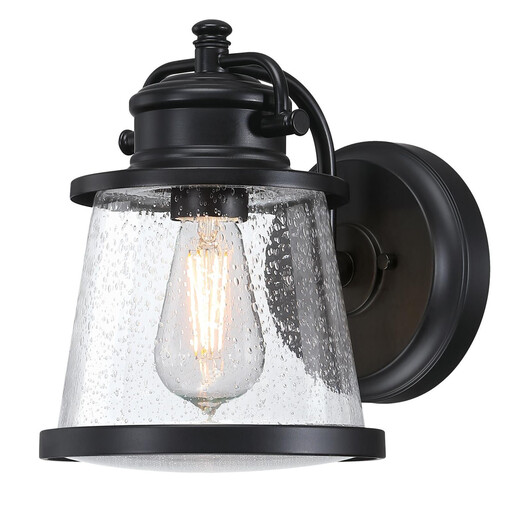
Why this product suits the profile: This classic outdoor wall light is suitable for entrances, balconies or covered patios and uses a separately selected E27 bulb rated up to 60 watts.
The E27 fitting makes the choice of bulb clear. The stated IP44 rating can be compared directly with the intended mounting location.
Matt black metal, clear antique glass and E27 compatibility up to 60 watts.
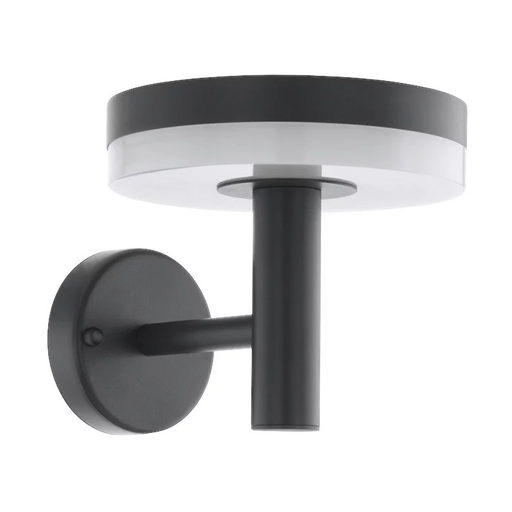
Why this product suits the profile: According to the product details, the integrated LED module delivers 950 lumens at 3,000 Kelvin, making it suitable for entrances, garden paths or patios.
The wattage, luminous flux and light colour are clearly stated. This makes it easier to assess the light output objectively than by relying solely on an energy comparison figure.
11-watt LED, 950 lumens, warm white light and anthracite-coloured metal and plastic housing.
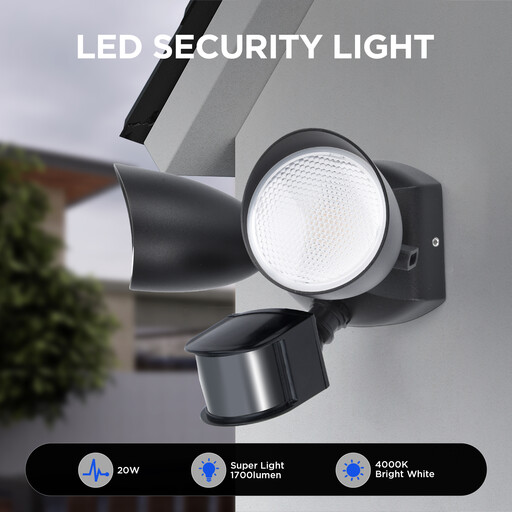
Why this product suits the profile: This outdoor light with motion sensor is designed for courtyards, garages, gardens or driveways where light needs to come on when movement is detected.
The stated brightness of 1,700 lumens makes the light output easy to verify. Before buying, check the detection range and mounting height against the product information.
Integrated LED technology, 20 watts, 1,700 lumens and 4,000 Kelvin according to the product name.
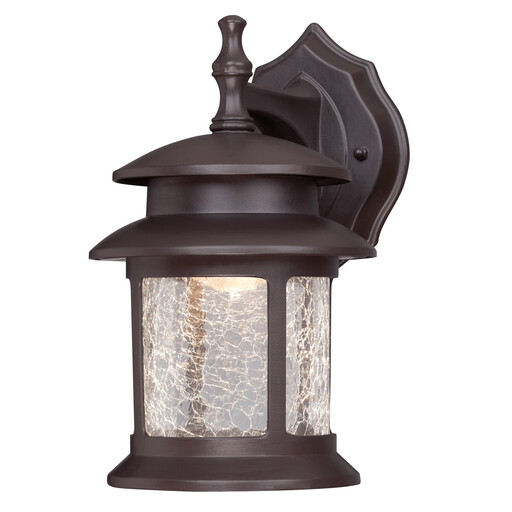
Why this product suits the profile: This dimmable outdoor wall light combines warm white light with adjustable brightness, making it suitable for entrances, patios or façade lighting.
The dimming function is clearly stated. A suitable LED dimmer is required; an existing dimmer switch is not automatically compatible.
9-watt LED, 3,000 Kelvin, 1,000 lumens of luminous flux and a stated average lifespan of 35,000 hours.
We have put together a complete, regularly updated list of products that fully meet these strict selection criteria and the safety regulations applicable in the EU.
Before buying, check the existing connection box, the condition of the wall and the distance from doors, windows or canopies. For lights with glass covers, it is also important to leave enough space for cleaning and replacing the bulb. An E27 light involves additional costs for the bulb; with integrated LEDs, this purchase is not necessary, although the module cannot be replaced in several of the models mentioned.
You can estimate the ongoing electricity costs as follows:
Power in kilowatts × operating hours × electricity price = electricity costs
A 10-watt light that is switched on for four hours each day uses around 14.6 kilowatt hours per year. The actual cost depends on your personal electricity tariff. Motion sensors can reduce operating time if the light does not need to remain switched on continuously.
IP44 is used for many sheltered outdoor areas. However, suitability depends on the exact mounting position. In exposed areas, locations subject to direct driving rain or particularly exposed façades, a higher IP rating may be advisable. The manufacturer’s specifications and proper sealing of the installation are decisive.
Lifespan varies depending on the LED module, operating conditions and heat dissipation. Some product specifications, for example, state 35,000 hours. This is a manufacturer’s figure and is not a guarantee for every installation situation. With integrated LEDs, check before buying whether the module can be replaced.
A few hundred lumens may be sufficient for a small entrance to a house. Larger areas, courtyards and garages often require more light. In addition to lumens, mounting height, beam direction and glare are also important. For a pleasant wall light for the garden and patio, a lower level of warm white light is often more practical than a powerful floodlight.