
Lieferung heute & morgen

Qualitätsgarantie

Willkommens-Angebote freischalten: KOSTENLOSE Lieferung | Bis zu 80 % RABATT | Kostenlose 30-Tage-JoyPlus-Testphase
App herunterladen
An outdoor wall light should illuminate your entrance, patio or balcony effectively while coping with changing weather conditions. However, design is not the only factor to consider. Unclear information about the IP rating, brightness or installation often means that a light does not perform optimally in its intended location.
The term weather-resistant outdoor light is not, on its own, a technical standard. The specified IP rating is what matters. An IP44 outdoor light is protected against solid foreign objects measuring 1 millimetre or more, as well as splashing water from various directions. It is therefore suitable for many sheltered outdoor areas, but should not be permanently exposed to a powerful jet of water or standing water.
For a long service life, the housing, seals and wall connection must be installed correctly. Poor sealing can compromise the light’s protection.
For an LED, the wattage primarily describes energy consumption, not brightness directly. For comparison, luminous flux in lumens is more meaningful. An LED outdoor wall light with 300 lumens is more suitable for guidance and accent lighting. Models with around 800 to 1,000 lumens can illuminate larger entrance areas, sections of patio or paths more brightly.
Colour temperature also affects the overall effect. Warm white light around 2,700 to 3,000 kelvin usually creates a subtle atmosphere around the home. 4,000 kelvin or more produces a more neutral light, which can be practical for garages, driveways or areas where security is a priority.
An outdoor wall light with a motion sensor only switches on reliably when the sensor detects the relevant area of movement. Projections from walls, dense plants or an unsuitable installation height can limit detection. When choosing an outdoor wall light with a sensor, you should therefore check the detection angle, range, lighting duration and dusk threshold.
An outdoor wall light with a rechargeable battery avoids fixed power cables and is suitable for locations without an existing connection. However, the charge level needs to be checked regularly. For entrance lighting that is intended to operate continuously, a permanently connected model is often easier to plan for.
For an entrance, 300 to 1,000 lumens is often sufficient, depending on the distance, wall colour and desired illumination. An up-and-down outdoor light distributes light upwards and downwards, showcasing the façade decoratively. For paths or driveways, adjustable spotlights or a wider beam are often more practical.
An outdoor light with warm white light works well on patios, balconies and around entrances. If you want to see details more clearly, you may prefer a more neutral colour temperature. The lumen and kelvin specifications should always be considered together.
With integrated LEDs, the light source is permanently built in. This reduces the need for replacement, but it also means that, depending on the design, the entire light may need to be replaced if a fault occurs. Models with an E27 fitting offer greater flexibility when choosing a light source.
A dimmable outdoor wall light requires a compatible LED dimmer. An existing dimmer switch is not automatically suitable. Permanently connected lights must be installed in Germany by a suitably qualified electrician. The power supply must be disconnected before installation or maintenance.
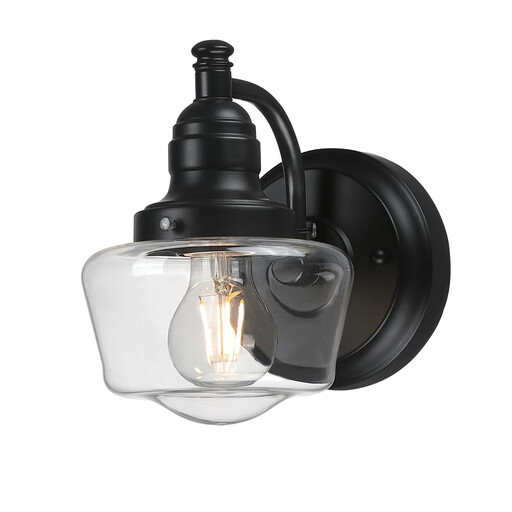
Why this product fits the profile: The light uses an E27 fitting, allowing you to choose a suitable LED light source to suit your needs. This is practical for beginners who may want to adjust the colour temperature and brightness later.
The IP44 rating clearly indicates the level of splash protection. The maximum output of 60 watts for the E27 fitting is also specified.
E27 fitting, IP44 rating and 220–240-volt design according to the product specifications.
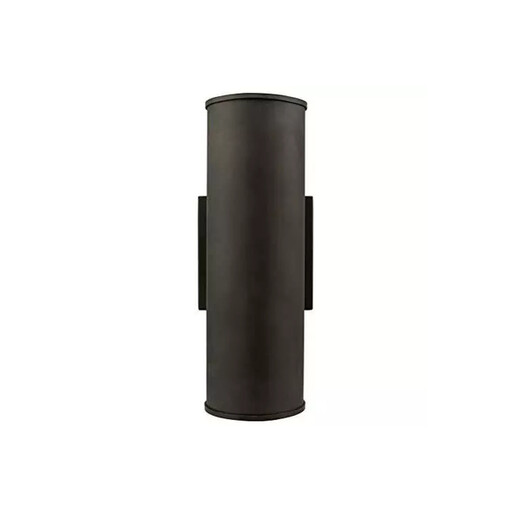
Why this product fits the profile: The slim housing, bronze-coloured finish and frosted glass panels suit entrances, patios and garage doors where a directional lighting effect is desired.
The product specifications provide precise figures: two integrated LEDs with a total output of 8 watts, 870 lumens, 3,000 kelvin and IP44.
Up-and-down lighting, warm white 3,000-kelvin light and 870 lumens from integrated LED technology.
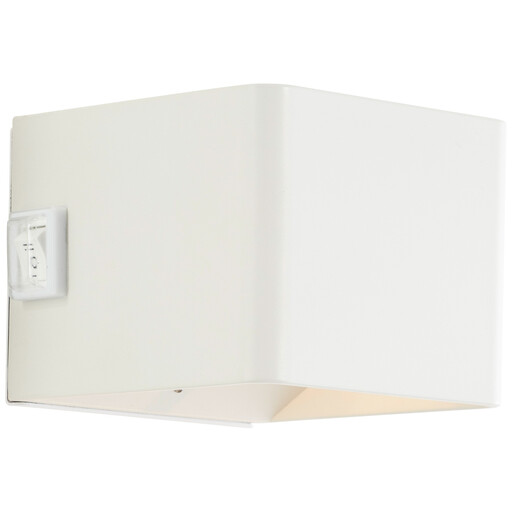
Why this product fits the profile: This battery-powered light is designed for balconies, gardens, patios or entrance areas without a fixed power connection and can be charged via USB.
This portable solution does not require fixed wiring. The motion sensor, USB connection, magnetic mounting and IP44 rating are all explicitly listed.
4 watts, 300 lumens, 3,000 kelvin, integrated battery and motion sensor according to the product description.
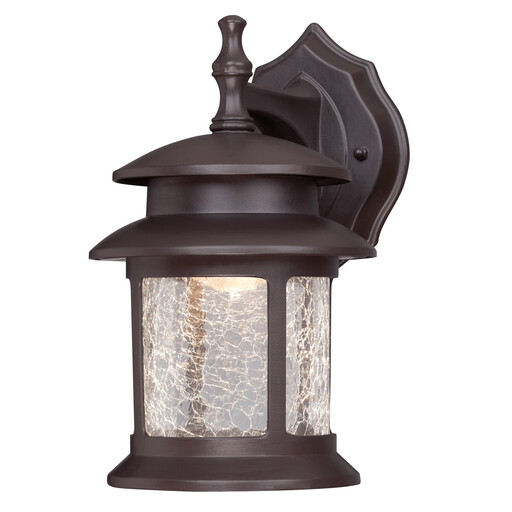
Why this product fits the profile: For users looking for a permanently installed light with adjustable brightness, this model offers an integrated LED and dimmer control compatibility.
Dimming depends on a compatible LED dimmer and should not be mistaken for an automatic function. IP44 and 220–240 volts are specified.
9 watts, 3,000 kelvin, 1,000 lumens of luminous flux and a stated average service life of 35,000 hours.
We have put together a complete, regularly updated list of products that fully meet these strict selection criteria and the safety regulations applicable in the EU.
Before buying, check the wall clearance, light height and cable routing. A light near the front door should not obstruct either the doorway or the motion sensor. If you live in rented accommodation, you should also check whether drilling or installing a fixed power connection is permitted. A magnetically mounted battery-powered outdoor light may be more suitable for temporary solutions.
Clean the light according to the manufacturer’s instructions, using a soft, dry or slightly damp cloth. Pressure washers and aggressive cleaning products can damage surfaces and seals. Integrated LED modules and batteries must not be modified or opened independently.
For many entrance areas, patios and partially sheltered exterior walls, IP44 is a commonly used rating providing protection against splashing water. For highly exposed installation locations, the specific installation conditions should be checked against the manufacturer’s specifications.
Around 300 lumens may be enough for guidance. Depending on the distance, beam angle and desired brightness, 800 to 1,000 lumens may be more suitable. However, a high lumen rating cannot replace appropriate light distribution.
The actual service life depends on factors including operating hours, heat dissipation, mains quality and weather conditions. If the manufacturer specifies a service life, this should be understood as product information rather than a guaranteed operating period. If the LED cannot be replaced, the entire light will usually need to be replaced if a fault occurs.