
Lieferung heute & morgen

Qualitätsgarantie

Willkommens-Angebote freischalten: KOSTENLOSE Lieferung | Bis zu 80 % RABATT | Kostenlose 30-Tage-JoyPlus-Testphase
App herunterladen
An outdoor wall light with a motion sensor is designed to automatically illuminate paths, doors, garages or patios. In practice, however, unclear product specifications, misjudged protection ratings and poor installation often lead to the wrong purchase. What really matters is not just the advertised light output, but the interplay between the location, sensor, power supply and housing protection.
An LED outdoor light with a motion sensor may have a high lumen count but still produce an unsuitable beam pattern. For a front entrance, a wide-angle light is often more practical than a narrow, focused spotlight. For a courtyard, garage or larger garden areas, however, a LED floodlight for outdoor use may be a better choice.
So pay attention to:
The protection rating is given by the IP code. An IP44 outdoor light is protected against solid objects larger than 1 millimetre and against splashing water from any direction. This is suitable for many covered entrance areas, patios or carports. However, IP44 does not mean the housing can withstand persistent heavy rain, standing water or a high-pressure jet.
So check before you buy:
An outdoor light with a sensor can be triggered by pets, passing vehicles, warm exhaust air or moving plants. Conversely, a poor detection angle can mean people are only picked up late. Details on detection angle, range, switch-on duration and twilight threshold should therefore be checked before purchase.
For hardwired lights or separate 230-volt sensors, professional installation is also required. Work on the electrical system must only be carried out by a suitably qualified person.
For small entrance areas, a compact light with 300 lumens can be sufficient, while driveways and courtyards often benefit from a more powerful floodlight. The wattage alone describes the power consumption, not the brightness. So compare lumens, beam angle and light position first and foremost.
Hardwired models are usually connected directly and are suitable for permanent installation locations. A solar or battery-powered outdoor light offers more flexibility, but requires regular charging or sufficient sunlight. For battery-operated products, pay attention to the charging port, battery life and protection against moisture.
The protection rating must match the actual installation location. A light with IP44 should not be mounted in a recess where water can collect. For rental properties, battery or magnetic solutions can be interesting, provided the fixing is secure and compatible with your tenancy agreement. For heavy metal lights, suitable wall plugs and corrosion-resistant screws are required.
The following selection groups products by specific usage scenarios. Details such as lumens, colour temperature, IP protection rating and power supply are taken from the respective product descriptions.
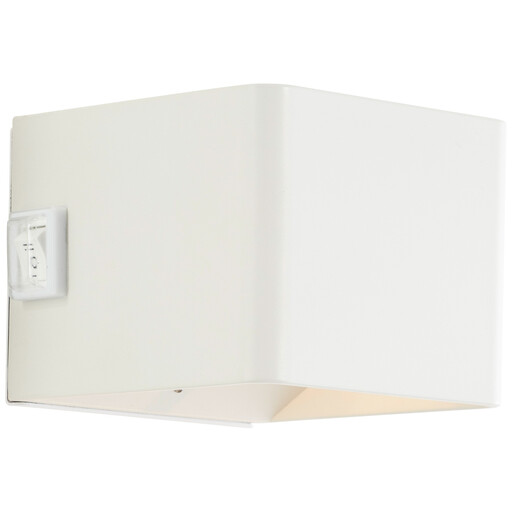
Why this product fits the profile: This compact battery-powered light is ideal for a patio, entrance or smaller paths where no mains power is available. The magnet and USB connection support flexible use.
The product description gives specific values of 300 lumens, 3000 Kelvin and IP44, rather than just talking generally about high performance and weather resistance.
Integrated battery, USB charging cable, magnetic fixing, motion sensor and IP44 protection rating.
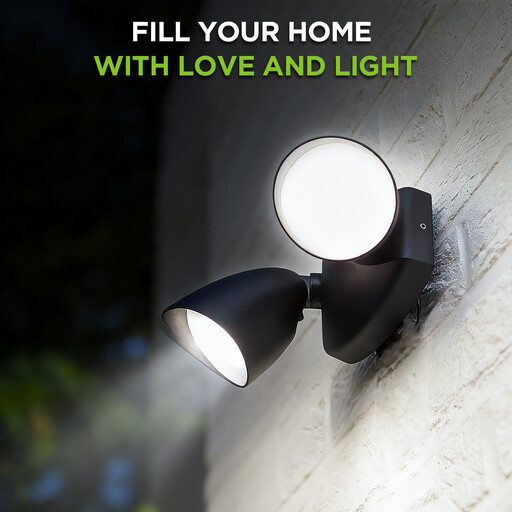
Why this product fits the profile: The dual-head design and stated luminous flux of 1800 lumens will appeal to users who want to light up a courtyard, garage or larger patio areas more precisely.
Two light heads can adapt the light distribution to different areas. However, you should still check the sensor range and protection rating in the full technical specifications before installation.
Stated 1800 lumens, 20 watts, 4000 Kelvin and dual-head design with metal construction.
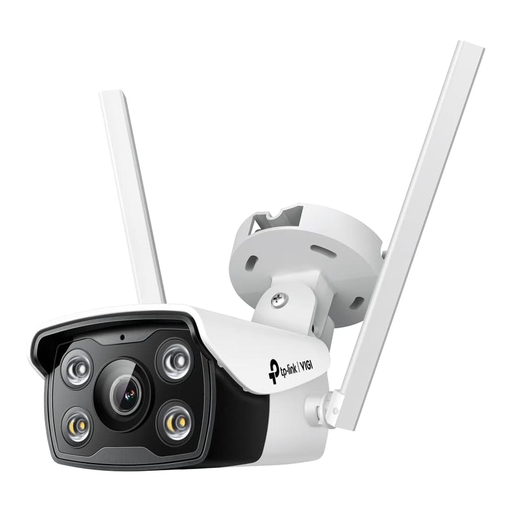
Why this product fits the profile: For users who need both light and a surveillance solution, a separate outdoor Wi-Fi camera can complement the outdoor wall light.
The camera is not presented as a replacement for a light. It handles video surveillance, while the lighting is chosen separately based on brightness and sensor function.
Wi-Fi connectivity, stated 1080p resolution, infrared night vision up to 30 metres, and wall and ceiling mounting options.
We have put together a complete, regularly updated list of products that fully meet these strict selection criteria and the safety regulations in force in the EU.
Mount the light so that the sensor covers the expected movement area without pointing directly at windows, roads or heat sources. For stairs and paths, a sideways orientation is often more sensible than a sensor that only faces oncoming people head-on.
Before final fixing, you should:
It depends on the installation location. IP44 is suitable for many sheltered outdoor areas and protects against splashing water. For unprotected locations heavily exposed to rain, a higher protection rating may be necessary. The manufacturer's specifications and the actual installation situation are decisive.
The consumption depends on the power in watts and the actual operating time. A 20-watt light uses 0.02 kilowatt-hours for one hour of operation. Thanks to the motion sensor, it only stays on for the set time. With battery or solar models, charging intervals and possible charging losses occur instead.
The sensor should fully cover the access point, path or garage area and should not point directly at heat sources, busy roads or moving branches. The specific mounting height, range and detection angle must correspond to the relevant instruction manual.