
Lieferung heute & morgen

Qualitätsgarantie

Willkommens-Angebote freischalten: KOSTENLOSE Lieferung | Bis zu 80 % RABATT | Kostenlose 30-Tage-JoyPlus-Testphase
App herunterladen
An outdoor wall light should reliably illuminate house entrances, patios, balconies, garages or garden paths. In practice, however, poor purchases often happen not because of the design, but because of unclear technical specifications. A decorative light may be suitable for an entrance area, yet it might not be sufficient for an exposed wall section or a frequently used driveway.
The rating IP44 outdoor light means protection against solid foreign objects larger than 1 mm and against splashing water from any direction. It is not automatically suitable for direct water jets, permanently standing moisture, or installation in every exposed position. What really matters is a sheltered installation location, correctly fitted seals, and proper mounting.
With an LED outdoor wall light, the lumen value is more meaningful than the wattage. Watts describe the power consumption, whereas lumens indicate the amount of light emitted. For example, an integrated 9 W LED might produce 1,000 lm according to the product specifications; the actual usable light output may differ. For a front door, it also matters how evenly the light is distributed and whether it causes glare.
An outdoor wall light with a motion detector or outdoor wall light with a sensor can be triggered unexpectedly by an unfavourable detection angle, passing cars or moving branches. Before buying, you should check the detection range, mounting height, switch-on duration and any adjustable settings. With a solar outdoor wall light, the orientation of the solar panel also comes into play: shade and short winter days can affect the lighting duration.
For a covered patio or a sheltered entrance area, IP44 may be suitable. On an exposed house wall with heavy weather exposure, you should check the manufacturer’s stated protection rating and installation instructions particularly carefully. The light must sit flush against the wall for the protection to remain effective.
Electrical outdoor installations connected to the mains at 220–240 V and 50 Hz should be handled by a qualified electrician. Always disconnect the power supply before maintenance or installation. Corrosion-resistant fixings help to prevent rust spots on your outdoor wall lighting.
An integrated LED doesn’t need a separate bulb and allows for a compact housing. However, if it fails, you usually have to replace the entire LED module or the whole light. Models with an E27 fitting offer more flexibility when it comes to light colour, brightness and future replacement. A dimmable outdoor wall light only works with a compatible LED dimmer, which isn’t always included in the box.
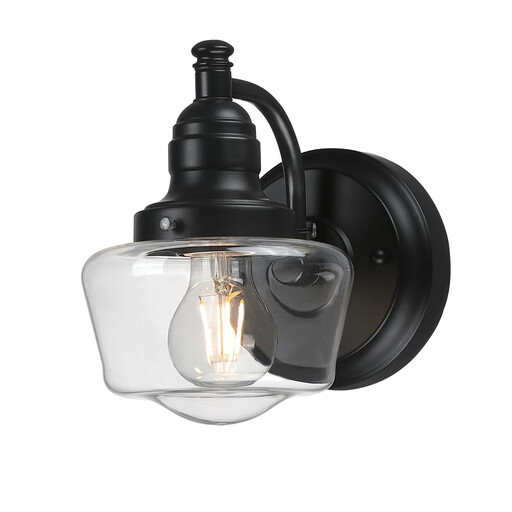
Why this product fits the profile: The E27 fitting lets you choose a suitable LED bulb. That’s handy if you want to adjust the light colour or brightness later on.
The maximum power of 60 W for an E27 bulb is clearly stated. The model isn’t promoted with a vague integrated brightness figure; the bulb must be bought separately.
E27 fitting, clear glass, matt black housing and IP44 splash-proof protection according to the product specifications.
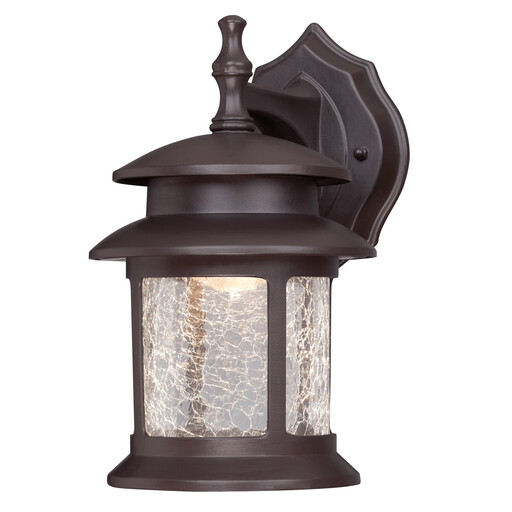
Why this product fits the profile: For a permanently installed outdoor wall light on a patio, house entrance or garden wall, this model combines defined light data with an aluminium housing and glass cover.
Light colour, luminous flux, power consumption and an average lifespan of 35,000 hours are all specifically stated in the product specifications. The dimming function requires a compatible LED dimmer.
9 W LED, 3,000 K warm white, 1,000 lm luminous flux and IP44 splash-proof protection according to the manufacturer’s specifications.
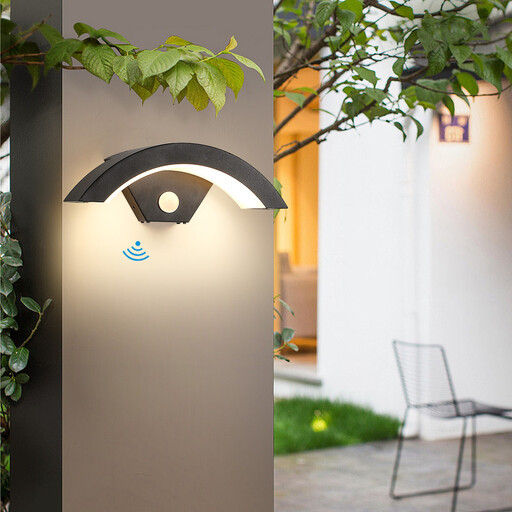
Why this product fits the profile: The combination of a light sensor and motion sensor is ideal for driveways, garages, stair areas, paths and frequently used entrances.
The sensor function is explicitly stated. This allows you to choose the light specifically for the desired detection range, rather than using continuous lighting for every situation.
24 W, warm white light at 3,000 K, U-shaped design and combined light and motion sensor according to the product description.
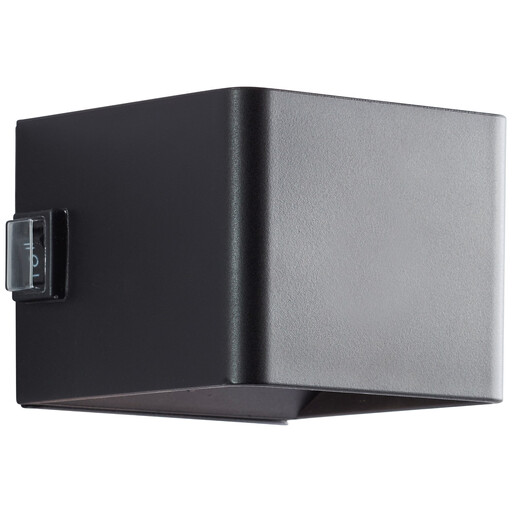
Why this product fits the profile: The battery-powered light is ideal for areas without a fixed mains connection, such as a balcony, garden shed or temporary lighting on a metal surface.
The battery, USB charging cable and magnet are all explicitly stated. This removes any assumption that a mains-powered wall installation is possible without an electrical connection.
4 W, 300 lm, 3,000 K, IP44 and an integrated motion sensor according to the product data. The light also has a switch and a magnetic mounting option.
We’ve put together a complete, regularly updated list of products that fully meet these strict selection criteria and the safety regulations in force in the EU.
For many sheltered outdoor areas, IP44 is a common specification. It offers splash-proof protection, but not complete protection against strong water jets or standing moisture. The specific installation location and the manufacturer’s instructions remain the deciding factors.
The running costs depend on the wattage, daily operating hours and your electricity tariff. A simple calculation is: wattage ÷ 1,000 × operating hours × electricity price. A 10 W light running for ten hours, for example, uses 0.1 kWh. With sensor or solar lights, the actual operating time may be lower.
For integrated LEDs, an average lifespan is often stated. This is a manufacturer’s figure and depends on factors such as operating time, heat dissipation, mains quality and installation conditions. With lights that have a replaceable E27 bulb, the bulb can be replaced separately.