
Lieferung heute & morgen

Qualitätsgarantie

Willkommens-Angebote freischalten: KOSTENLOSE Lieferung | Bis zu 80 % RABATT | Kostenlose 30-Tage-JoyPlus-Testphase
App herunterladen
An outdoor wall light with motion sensor should reliably illuminate your entrance, garage or garden without staying on constantly. In practice, however, poor purchases are often not caused by the light output, but by unsuitable sensors, unclear protection ratings or an unsuitable power connection.
Wattage describes energy consumption, not brightness directly. For comparisons, the luminous flux in lumens is more informative. For example, an LED outdoor wall light with 300 lumens is suitable for a small balcony or short access path. For a wide garage drive, a more powerful outdoor light with sensor may be more appropriate.
Even a very bright light is not automatically suitable: an unfavourable beam angle can cause glare or illuminate only a small area.
A sensor can be triggered by passing vehicles, animals or movement behind a fence. Before buying, you should therefore check the detection angle, range and adjustable run-on time. Positioning is also important: a sensor pointing directly at a busy road behaves differently from one installed above a front door.
An outdoor wall light with dusk sensor, or combined light and motion detection, can prevent the lamp from being activated unnecessarily during daylight. However, this feature must be explicitly stated in the product details.
The IP rating describes protection against solid foreign objects and water. IP44, for example, protects against splashing water from different directions, while an IP65 outdoor light also offers a higher level of dust protection and can withstand water jets. This does not mean that every model can be left standing in water permanently or cleaned with a pressure washer.
For a covered terrace, an outdoor wall light with IP44 may be sufficient. On an unprotected house façade, beside a garden path or on a garage, a higher protection rating is often more suitable. The installation instructions and manufacturer’s specifications remain decisive.
Pay attention to the stated luminous flux in lumens and choose the desired light colour:
A warm-white outdoor light at 3000 Kelvin creates subtle illumination. For security-focused applications, even illumination is just as important as the light colour.
A permanently connected LED outdoor wall light requires a suitable electrical installation. Electrical work must only be carried out by appropriately qualified professionals. Also check that the connection cable, mounting materials and installation surface are compatible.
A battery-powered outdoor light is more flexible, but must be charged regularly. With a solar outdoor wall light, operating time depends on its orientation, shading, time of year and charge level. A separate solar panel can be useful if the light itself is installed on a shaded wall.
Depending on their construction, powder-coated metal, aluminium or suitable plastics may be designed for outdoor use. The specific manufacturer’s information on temperature, installation and cleaning is what matters. With integrated LEDs, the light source often cannot be replaced separately. Before buying, you should therefore check the stated lifespan, warranty terms and spare-parts information.
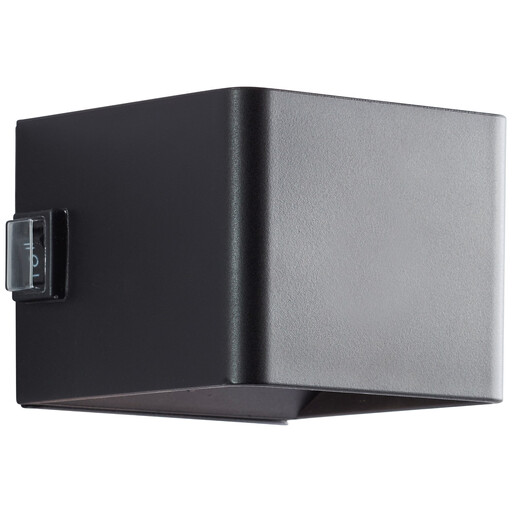
Why this product suits this profile: The compact, portable light is suitable for areas without a permanent power connection, such as a terrace, balcony or small entrance area.
The product details specify 300 lumens, 3000 Kelvin, IP44, a USB connection and an integrated motion sensor. This makes it easier to assess the brightness and intended use before buying.
Integrated battery, USB charging cable, magnetic mounting, rocker switch and 300 lumens.
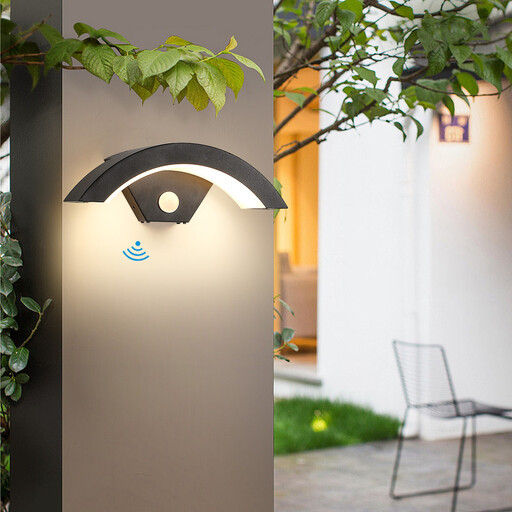
Why this product suits this profile: This model is designed for permanently installed areas such as front doors, façades, garages, balconies, gardens or driveways, and combines light and motion sensors.
The product description specifies a construction made from matt die-cast aluminium and constant-current technology. The combined sensor can reduce unnecessary illumination during daylight.
24 watts, integrated LED, 3000 Kelvin, aluminium housing, plus light and motion sensors.
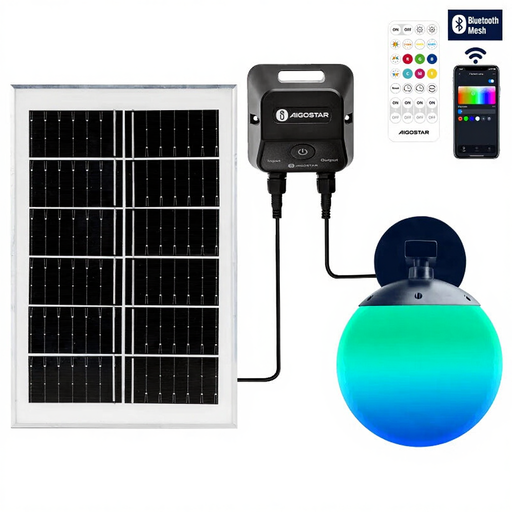
Why this product suits this profile: This solar light is interesting for users looking for flexible installation without a permanent mains connection, together with additional control options.
The description explicitly specifies IP65, a 5-metre cable to the solar panel and a stated charging time of 4 to 6 hours. This makes the installation requirements easier to plan.
Solar panel without a permanent mains connection, IP65, Bluetooth Mesh, RGB and CCT settings, plus up to 24 hours of automatic illumination according to the product description.
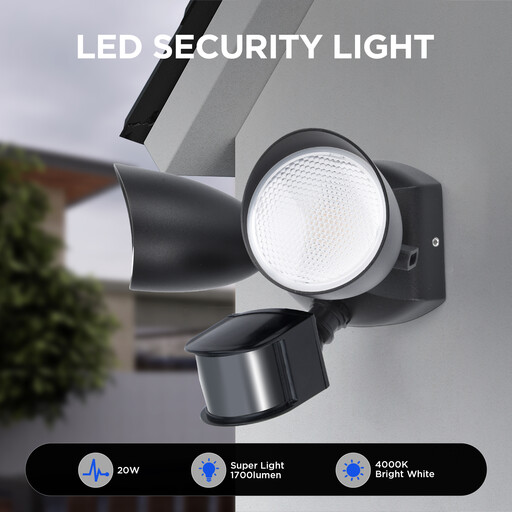
Why this product suits this profile: The 1700 lumens and 4000 Kelvin stated in the product name are aimed at buyers who want to illuminate a larger outdoor area, such as a courtyard, driveway or garden.
The specific lumen and Kelvin figures allow comparisons based on measurable parameters rather than general terms such as “extra bright”.
20 watts, 1700 lumens according to the product name, 4000 Kelvin, integrated LED, two light heads and sensor.
We have put together a complete, regularly updated list of products that fully meet these strict selection criteria and the safety regulations applicable in the EU.
Install the light so that the sensor detects the intended route across it or at a slight angle. Wherever possible, it should not point directly at a road, moving branches or highly reflective surfaces. The recommended installation height, detection angle and range are specified in the relevant instructions.
The lifespan depends, among other things, on operating hours, temperature, moisture, electronics and switching cycles. With a light featuring a motion sensor, demand-based operation usually reduces the time it remains switched on. For a realistic assessment, the manufacturer’s stated LED lifespan and warranty terms should be considered together.
Consumption depends on the power rating and the actual operating time. A 20-watt light uses 0.02 kilowatt hours when operated for one hour. If it is activated only when movement is detected, running consumption may be lower than with continuous lighting. Solar and battery-powered models instead require suitable charging conditions and regular maintenance.