
Lieferung heute & morgen

Qualitätsgarantie

Willkommens-Angebote freischalten: KOSTENLOSE Lieferung | Bis zu 80 % RABATT | Kostenlose 30-Tage-JoyPlus-Testphase
App herunterladen
An outdoor wall light with a motion sensor should illuminate your entrance, patio or pathway reliably without being on all the time. In practice, unclear product specs, unsuitable protection ratings and misjudged installation conditions often lead to the wrong purchase. Joybuy’s Product Recommendation Officer provides a clear overview of the key criteria and shows which product features suit different usage scenarios.
The designation IP44 means a product is protected against solid objects from 1 millimetre and against splashing water from any direction. An IP44 outdoor light is therefore suitable for many sheltered outdoor areas, but not automatically for direct water jets, standing water or cleaning with a pressure washer.
Also pay attention to the mounting position. Conditions under a canopy differ from those on an exposed exterior wall open to wind and rain. The manufacturer’s guidance on outdoor use should match the actual location.
The lumen value describes the luminous flux, i.e. the amount of light emitted. For subtle entrance lighting, a lamp with 300 Lumen can be enough. A wide courtyard, garage or long driveway may need a different light distribution and more luminous flux.
Colour temperature matters too. Warm white light around 3000 Kelvin generally feels softer at entrances or on the patio than neutral white light. For a more functional LED security light, a more neutral colour temperature may be preferred. What counts is not just the wattage, but the interplay of lumen output, beam angle, mounting height and lighting duration.
A solar and battery outdoor light is easy to place, but still needs regular energy supply. With a battery light, charging port, battery capacity and achievable runtime all need to align. A magnetic mount is handy on suitable metal surfaces, but doesn’t always replace a permanently secure screw fixing.
Before buying, check whether the motion sensor can be activated separately, whether there’s a manual switch and how the light is charged. For hard-wired models, the electrical connection must only be made by a suitably qualified person.
For a weatherproof outdoor light, the IP rating is a key checkpoint. IP44 can be sufficient for a balcony, patio, sheltered outer wall or entrance. For more exposed areas, check the precise manufacturer guidance on outdoor mounting and resistance to rain, snow and moisture.
Fixings should be suitable for outdoor use and corrosion-resistant. In rented properties, clarify whether drilling is permitted. For flexible use cases, a battery-powered wall light with a USB port can be an alternative to a permanently installed light.
A motion sensor won’t respond the same way in every situation. People walking straight towards the sensor may be detected later than those crossing the detection area from the side, depending on the technology. Branches, passing vehicles or pets can cause false triggers.
Mount the light so the intended path or door lies within the detection area. Avoid pointing it directly at strong light sources where possible. For an outdoor lamp with a motion sensor, check the detection angle, range, switch-on time and presence of a dusk sensor before you buy.
An integrated LED module often takes up little space and can provide an even light source. Even so, the specifications should be stated clearly. When choosing, look for:
A light with 4 Watt and 300 Lumen is suited to orientation and short paths, and should be judged differently from a more powerful floodlight solution for a courtyard or garage.

Why this product fits the profile: This mobile light suits users who want to illuminate a patio, balcony or sheltered entrance without a fixed power cable.
The specs list IP44, 300 Lumen, 3000 Kelvin and an integrated battery. That lets you assess protection, brightness and colour temperature clearly before buying.
Integrated battery, USB charging cable, motion sensor, magnetic mount and toggle switch; power consumption 4 Watt.

Why this product fits the profile: This permanently installed outdoor wall light is for buyers who prefer a design-led lamp for entrances, paths, balconies or patios.
The description mentions a light and motion sensor as well as a construction in matt aluminium die-cast. The exact IP class should be checked before purchase.
24 Watt, warm white light at 3000 Kelvin, integrated light and motion sensor, plus aluminium housing according to the product description.
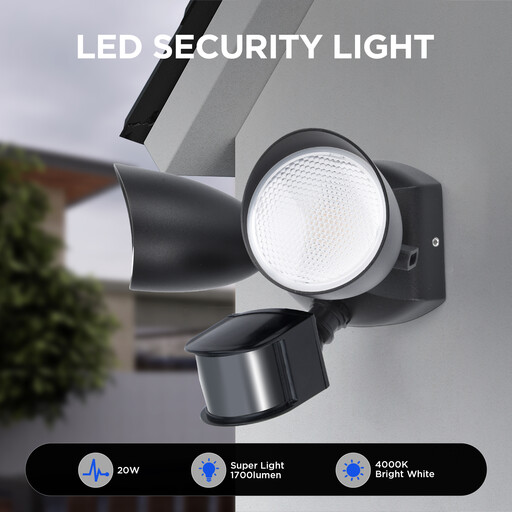
Why this product fits the profile: The higher light output and twin heads can be useful for a courtyard, garage, driveway or larger outdoor areas.
The specs list 1700 Lumen, 20 Watt and 4000 Kelvin, making the light performance clearer than offers that only quote a wattage.
20 Watt, 1700 Lumen, 4000 Kelvin and two integrated lamp heads according to the product title.
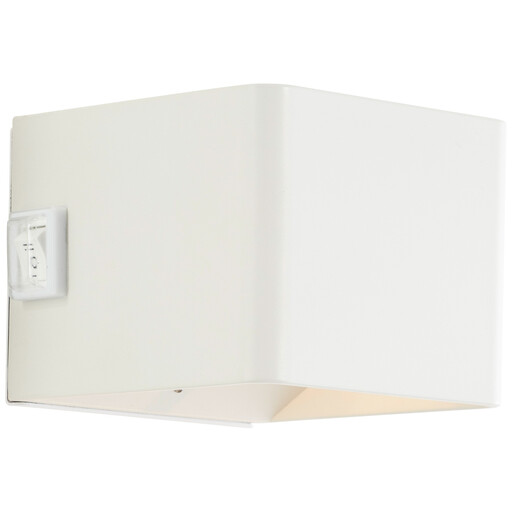
Why this product fits the profile: The cable-free, battery-powered design suits changing locations where drilling or a fixed power supply isn’t desired.
With 300 Lumen, 3000 Kelvin and IP44, the key parameters are specified. The light must still not be submerged or exposed to a high-pressure water jet.
Integrated battery, USB port, magnet, toggle switch, motion sensor and 300 Lumen at 3000 Kelvin.
We’ve compiled a comprehensive, regularly updated list of products that fully meet these stringent selection criteria and comply with EU safety regulations.
Before installing an outdoor wall light with a motion sensor, check these points:
A mounting height of around 1.8 to 2.5 metres can make sense depending on the model and detection area. The manufacturer’s guidance is decisive. If it’s mounted too high, the sensor may be less able to detect movement near the ground; too low, and the risk of accidental contact or damage increases.
Service life depends on the LED module, electronics, operating temperature, humidity and switching cycles. For battery lights, battery ageing is also relevant. So don’t just check the LED spec—also see whether the battery is replaceable and how the manufacturer describes maintenance or spare parts.
Consumption depends on power and the actual on-time. A light with a motion sensor only operates for the set activation period, provided no continuous light mode is enabled. For hard-wired models, the wattage and daily runtime help with a rough estimate. Battery and solar lights draw no mains power in operation, but they do need regular charging or sufficient exposure to daylight.