
Lieferung heute & morgen

Qualitätsgarantie

Willkommens-Angebote freischalten: KOSTENLOSE Lieferung | Bis zu 80 % RABATT | Kostenlose 30-Tage-JoyPlus-Testphase
App herunterladen
An outdoor wall light should reliably illuminate your entrance, patio or balcony while also complementing the façade. In practice, however, some purchasing decisions can lead to unnecessary follow-up costs: a light is installed despite having an unsuitable IP rating, the brightness is insufficient for the entrance area, or an integrated LED module cannot be replaced later.
This guide explains which details are relevant before buying an LED outdoor wall light, an E27 outdoor wall light or a weatherproof outdoor lamp.
The IP44 rating means protection against solid foreign objects above a certain size and against splashing water from various directions. An IP44 outdoor light is therefore suitable for many sheltered outdoor areas, but not automatically for exposed locations subject to persistent heavy rain, standing moisture or a direct jet of water.
Correct installation, intact seals and a suitable wall surface are also essential. If the housing is mounted at an angle or the cable entry is not sealed properly, the stated level of protection may be compromised in everyday use.
Wattage primarily describes energy consumption. The lumen value is a more meaningful indication of light output. A 10-watt LED can vary considerably in brightness depending on its design. A decorative wall light for the patio often only needs a moderate light output, whereas an outdoor light for the entrance needs to illuminate the steps and doorway evenly.
The colour temperature also affects how the light is perceived. Warm white light of around 2700 to 3000 Kelvin often creates a subtle feel and suits residential areas. Neutral white light may be more suitable for paths, garages or functional areas.
Clear glass shades, dark metal finishes and delicate shapes can look attractive, but they require regular cleaning outdoors. With transparent glass, bulbs and dirt are more visible. For a light with an integrated LED module, you should also check whether the module can be replaced. On some models, it is permanently fitted.
Before buying, make sure your checklist includes dimensions, distance from the wall, connection type and bulb type, as well as appearance.
A light with an IP44 rating may be suitable for a covered entrance or sheltered patio. On a highly exposed exterior wall, buyers should check whether the manufacturer’s recommended installation position and the IP rating match the actual level of exposure to the weather.
Installation on a 220 to 240-volt mains supply should be carried out by a qualified electrician. The power supply must be disconnected before maintenance and cleaning. The appropriate wall plugs and screws depend on the wall material, such as brick, concrete, wood or an insulated façade.
An integrated LED outdoor wall light is compact and does not require a separate bulb. However, depending on its construction, a fault may mean that the entire module or fitting has to be replaced. Details such as wattage, colour temperature, lumens and dimmability should therefore be checked in advance.
An E27 outdoor wall light allows you to choose the bulb. This means you can change the colour temperature, brightness and, in some cases, smart functions at a later date. The maximum wattage must not be exceeded. A suitable bulb with sufficient approval for outdoor use is required.
A dimmable outdoor wall light requires a compatible LED dimmer. Not every existing wall dimmer works with every LED module. For integrated LEDs, the product description should explicitly state that external dimming is supported.
An outdoor light with a motion sensor can be practical for paths, carports or entrances. The detection angle, range, switch-on duration and sensor position are all important. Not every model can prevent false activations caused by passing vehicles or pets. The lights presented here focus on other features.
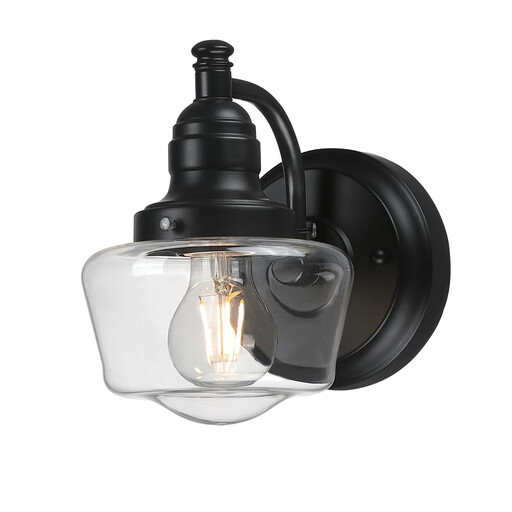
Why this product suits the profile: This compact light is designed for smaller exterior walls, entrances or sheltered paths and uses a separately fitted E27 bulb.
The E27 socket avoids being tied to a non-replaceable LED module. The IP44 rating also clearly indicates the intended protection against splashing water.
15 cm wide, 21 cm high, IP44, one E27 bulb up to a maximum of 60 watts.
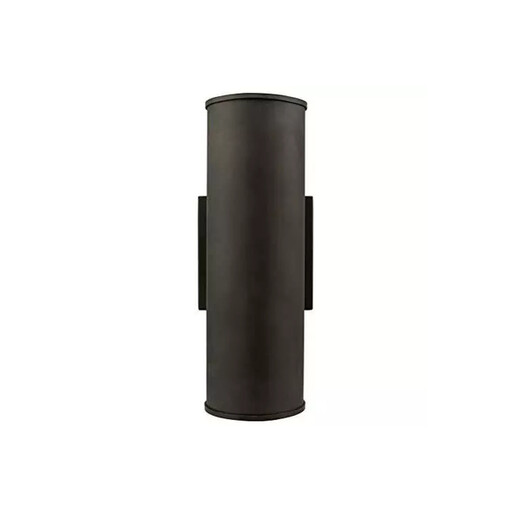
Why this product suits the profile: The upward- and downward-facing light distribution is ideal for modern façades, entrances and patios where design is a priority.
The specifications state the colour temperature, luminous flux and IP rating clearly, rather than simply promoting a wattage. Weather resistance still depends on correct sealing.
Integrated 16-watt LED, 870 lumens, 3000 Kelvin, IP44 and upward/downward lighting.
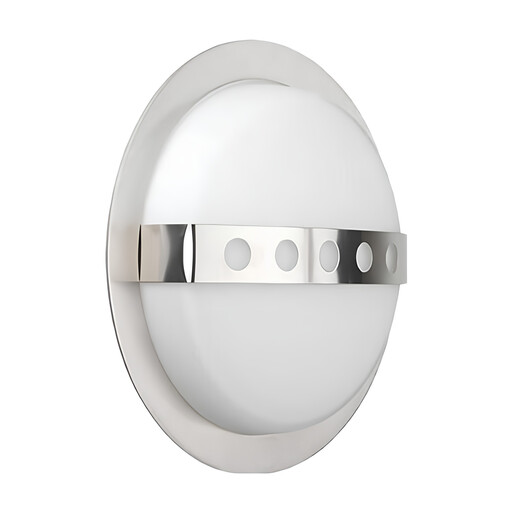
Why this product suits the profile: For larger entrances or exterior walls where higher light output matters more than an especially compact design.
The luminous flux is clearly stated as 2050 lumens. This makes it easier to match the lighting requirement to the area before choosing a decorative light that is too weak.
2050 lumens, neutral white light, matt nickel, frosted glass shade and IP44 protection.
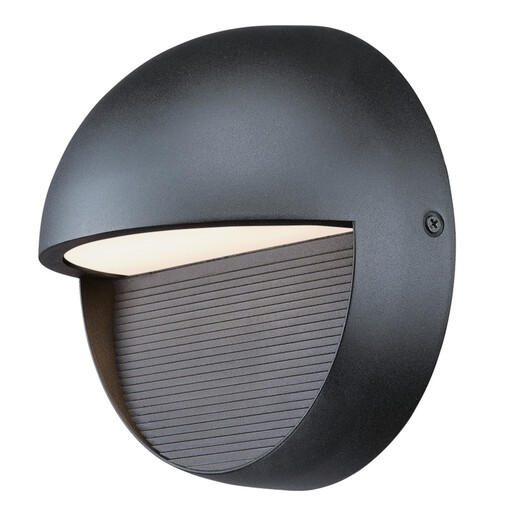
Why this product suits the profile: The round, compact shape suits smaller outdoor areas. If required, the brightness can be adjusted using a suitable external LED dimmer.
Dimming is not promised without qualification; it depends on using a compatible LED dimmer. This helps prevent unsuitable purchases when you are using existing switches.
Integrated 10-watt LED, IP44, opal glass and external dimming with compatible equipment.
We have put together a complete, regularly updated list of products that fully meet these strict selection criteria and the safety regulations applicable in the EU.
Before buying an outdoor wall light, compare the following points:
For many covered or partially sheltered outdoor areas, IP44 is a commonly used IP rating. It indicates protection against splashing water, not use underwater or protection against a powerful water jet. The specific installation location and the installation instructions remain decisive.
Service life depends, among other things, on operating hours, heat dissipation, ambient temperature and build quality. For an integrated LED module, you should check the stated service life in the product description. A replaceable E27 bulb can be replaced separately when required.
Electricity consumption can be calculated using the power rating in watts and the daily operating time. Example: a 10-watt light that is switched on for five hours a day theoretically uses 0.05 kilowatt hours per day. With an outdoor light with a motion sensor, the actual lighting time may be shorter, provided that the sensor and settings suit the installation location.