
Lieferung heute & morgen

Qualitätsgarantie

Willkommens-Angebote freischalten: KOSTENLOSE Lieferung | Bis zu 80 % RABATT | Kostenlose 30-Tage-JoyPlus-Testphase
App herunterladen
An outdoor wall light should reliably illuminate your entrance, patio or garage while complementing your property’s exterior. In practice, however, unsuitable purchases are often caused not by the design, but by unclear product specifications. For example, a decorative outdoor wall light may be suitable for a sheltered entrance, but reach its limits on an exterior wall exposed to heavy weather.
The IP44 rating means protection against solid foreign objects from 1 mm in size, as well as splashing water from various directions. An IP44 outdoor wall light is therefore suitable for many covered entrances, patios and sheltered façades. However, it is not automatically designed to withstand driving rain, standing water or cleaning with a pressure washer.
An IP65 outdoor wall light offers a higher level of protection against dust and water jets. Nevertheless, the exact installation position remains important: even a water-resistant light must be properly sealed and installed to suit the wall surface.
The wattage describes energy consumption, not brightness directly. The amount of light is determined by the lumen value. For example, an integrated LED outdoor wall light rated at 9 W may produce 1,000 lm according to the product specifications, while another light with a similar wattage may emit considerably less light.
Colour temperature is measured in kelvins:
When choosing a light, also consider whether it emits light upwards, downwards or in both directions. An up-and-down outdoor light creates a decorative cone of light, but does not necessarily replace wide-beam security lighting.
With an E27 outdoor wall light, the bulb can be replaced. This allows you to choose a warm-white LED bulb, higher brightness or a dimmable version at a later date. Always check the maximum wattage, for example “1 x E27, maximum 60 W”.
With a light featuring an integrated LED, the light source is permanently installed. This can allow for a compact design, but it also means that the entire light will generally need to be replaced if a fault occurs. Details regarding service life and dimming functionality should therefore be checked in the data sheet before purchase.
First, assess how heavily the light will be exposed to rain, splashing water and dust. Covered areas have different requirements from a garage wall that is fully exposed to the elements. Ensure that the mounting surface is flat and stable, and that cable entries and seals are correctly positioned.
The IP rating applies to the light when it has been installed correctly. Poor installation can compromise the intended level of protection.
A compact light with moderate output is often sufficient for a house number or small entrance area. A wider beam may be more suitable for a garage, courtyard or longer path. Adjustable spotlights allow for precise positioning, while up-and-down models place greater emphasis on the façade.
An outdoor light with a motion sensor should also be selected based on its detection angle, range, run-on time and dusk sensor. Smart models additionally require consideration of app compatibility, wireless standard and range. A smart outdoor light is only practical if the connection remains stable at the installation location.
Metal, aluminium, glass, ABS and PE have different characteristics in terms of weight, appearance and care requirements. Clear glass distributes light differently from opal or frosted glass. Also compare the height, width and wall clearance with the available space.
With a solar outdoor wall light, the solar panel should receive as many hours of sunlight as possible. A separate panel with a cable can be positioned more flexibly than a permanently integrated panel. The actual lighting duration depends, among other things, on the charge level, time of year, weather and selected brightness.
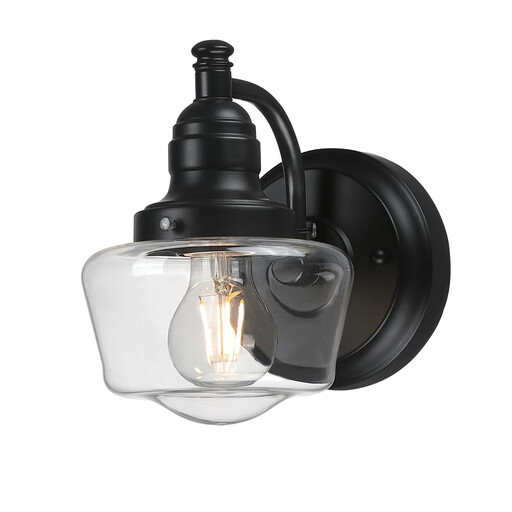
Why this product suits this profile: This compact light is 15 cm wide, uses a replaceable E27 bulb and is suitable for entrances or smaller outdoor areas.
The specifications clearly state IP44, 220–240 V and a maximum of 60 W for an E27 bulb. This makes it easier to check whether the installation location and replacement bulb are suitable.
Matt black metal, clear glass, E27 socket and a weight of 0.9 kg.
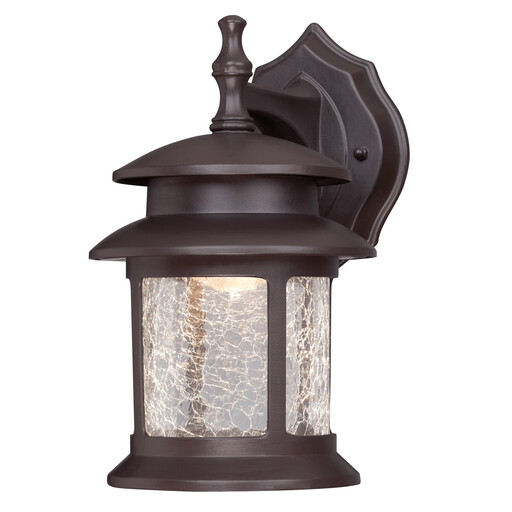
Why this product suits this profile: The combination of aluminium, crackle clear glass and warm-white LED complements entrances, patios and traditional façades.
The product data distinguishes between a 1,000 lm light source and 670 lm of effective luminous flux. It also states that the light is dimmable with a suitable LED dimmer.
9 W integrated LED, 3,000 K, IP44 and a stated average service life of 35,000 hours.
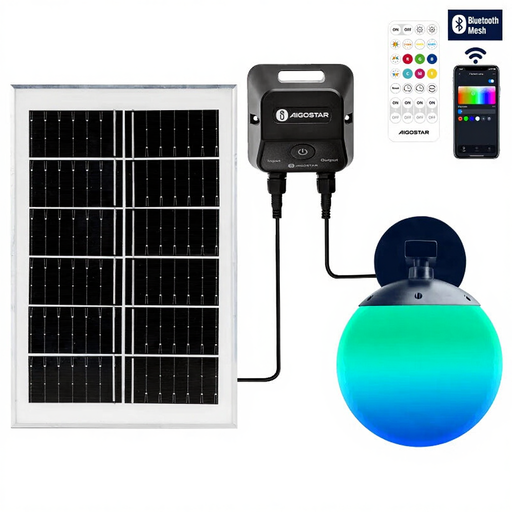
Why this product suits this profile: For areas without an existing power connection, this solar light offers a separate panel, Bluetooth Mesh control and adjustable light colours.
The solar function means no mains connection is required. The 5 W panel can be positioned using the 5 m cable; charging and lighting duration remain weather-dependent.
IP65, 200 lm, RGB and white light from 2,700 to 6,500 K, plus Bluetooth Mesh for multiple devices.
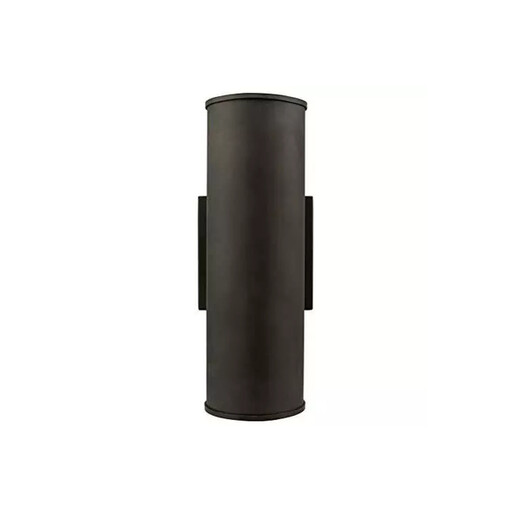
Why this product suits this profile: This slim light with up-and-down illumination is suitable for entrances, covered patios and narrow exterior walls.
The description specifies not only LED technology, but also colour temperature, luminous flux and IP rating. This makes it easier to compare the decorative effect with the planned installation location.
Two integrated 8 W LEDs, 870 lm, 3,000 K, IP44 and a rectangular design measuring 31 cm in height.
We have put together a complete, regularly updated list of products that fully meet these strict selection criteria and the safety regulations applicable in the EU.
For permanently connected lights operating at 220–240 V, installation should be carried out by a qualified electrician. Disconnect the power supply before installation or cleaning. Use suitable wall plugs and screws for the relevant substrate, and never exceed the specified maximum wattage.
A motion sensor should be positioned so that it is not triggered continuously by passing vehicles or swaying branches. With dimmable models, the dimmer must be explicitly suitable for LED lights. Clean the housing and glass with a soft, dry cloth, and avoid harsh cleaning products and high-pressure water.
IP44 is often used for sheltered outdoor areas. IP65 may be more suitable where there is greater exposure to dust and water. Suitability always depends on the installation location, orientation and correct sealing.
Consumption depends on the wattage and the daily operating time. A 10 W light uses 0.1 kWh when operated for ten hours. Solar lights do not use mains electricity while operating, although the available lighting duration depends on sunlight, the battery and the selected brightness.
With replaceable E27 bulbs, service life depends on the bulb used. Integrated LEDs are generally specified with an average service life. These figures are product specifications and are not a guarantee of a particular operating time at an individual installation location.