
Lieferung heute & morgen

Qualitätsgarantie

Willkommens-Angebote freischalten: KOSTENLOSE Lieferung | Bis zu 80 % RABATT | Kostenlose 30-Tage-JoyPlus-Testphase
App herunterladen
Outdoor wall lights should reliably illuminate paths, doorways or façades while complementing the style of your home. In practice, poor purchases are often down to overlooked technical details rather than design. A decorative light may be suitable for a sheltered entrance, but struggle on an exposed wall in heavy rain. Brightness, connection type and dimmability are also often judged on the basis of brief marketing claims alone.
So the key decisions are about more than just appearance. Before you buy, check:
An IP44 outdoor light is protected against solid objects 1 mm or larger and splashing water from different directions. However, that does not mean it is designed to withstand a direct jet of water, standing water or installation in any completely exposed location. IP44 may be suitable for entrances, covered patios and partially sheltered façades. In permanently exposed areas, check the manufacturer's guidance on where the light can be installed.
A higher rating such as IP65 offers additional protection against dust and water jets. This can be relevant for certain outdoor spotlights or garden lights, for example, but it does not remove the need for correct installation and sealing.
For LED lights, wattage mainly describes electrical power consumption. The perceived brightness depends more on the luminous flux, measured in lumens. An LED outdoor wall light with 870 lumens may be enough for an entrance or patio, while a driveway or larger courtyard may need more light and a different beam pattern.
Also check whether the stated figure refers to the light source's luminous flux or the usable luminous flux of the light itself. For example, the Westinghouse 6400340 model is listed as having a light source output of 1,000 lumens and an effective luminous flux of 670 lumens. These figures make for a more meaningful comparison than a general comparison with an incandescent bulb.
Many modern outdoor wall lights have a built-in LED module. This means you don't need to buy a separate bulb, but it also means that when the module reaches the end of its working life, the whole light will usually need replacing. With an E27 outdoor wall light, you can replace the bulb separately and change the colour temperature or brightness later.
Warm white light, typically between around 2,700 and 3,000 kelvin, is a popular choice for entrance lighting, balconies and patios. It tends to feel subtle outdoors and works well with wood, natural stone and traditional façades. Neutral white light at around 4,000 kelvin can be useful in work areas, garages or with an outdoor spotlight when you need to see details more clearly.
An up-and-down outdoor wall light directs light upwards and downwards. This creates a visible beam on the façade, but does not automatically illuminate the whole area at ground level. For paths or a driveway, a light with a wider beam or an additional outdoor spotlight may be a better choice.
A dimmable outdoor light often needs a compatible LED dimmer. An existing dimmer switch designed for traditional bulbs will not necessarily work with integrated LEDs. Check that the light and dimmer are compatible before planning the installation.
A motion-sensor outdoor light can help reduce energy use by switching on only when needed. Check the detection range, time delay, mounting height and whether false triggers from passing vehicles or animals can be limited. Not all the lights featured here have a built-in motion sensor, so check the product description before buying.
Aluminium housings are relatively lightweight and used in many outdoor lights. Glass covers can affect light distribution, but need to be cleaned carefully and must not have any cracks. Before ordering, measure the available wall space and check the distance from doors and windows, as well as the position of the electrical connection.
A qualified electrician should install fixed 220–240-volt lights. Disconnect the power supply before carrying out any installation or maintenance. Correct sealing and secure fixing are essential to maintain the stated IP rating.
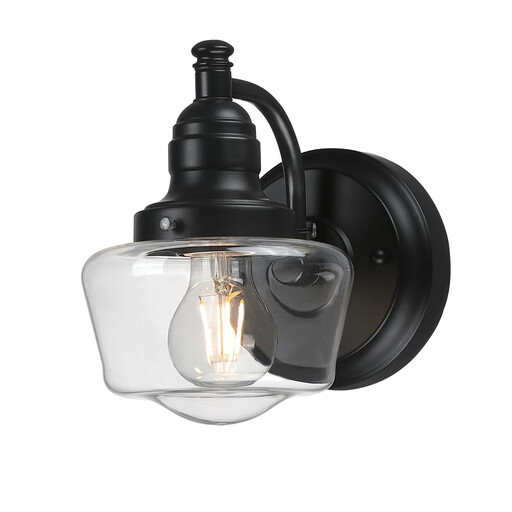
Why this product suits this use case: This light takes a separate E27 bulb rated up to 60 W, so you can choose the bulb type and colour temperature yourself.
The bulb is not built in, so replacing it later does not automatically mean replacing the entire light.
IP44 splash protection, an E27 socket and compact dimensions of 15 × 21 × 22 cm.
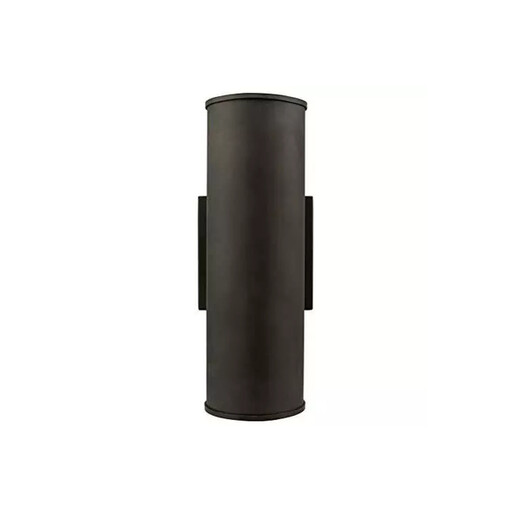
Why this product suits this use case: Its slim, rectangular design, bronze-coloured finish and matt glass panels suit modern entrances, patios and garage doors.
The specifications list the IP44 rating, two integrated LED modules, a total light output of 870 lumens and a colour temperature of 3,000 kelvin.
Up-and-down light distribution, integrated 2 × 8 W LEDs and warm white light at 3,000 K.
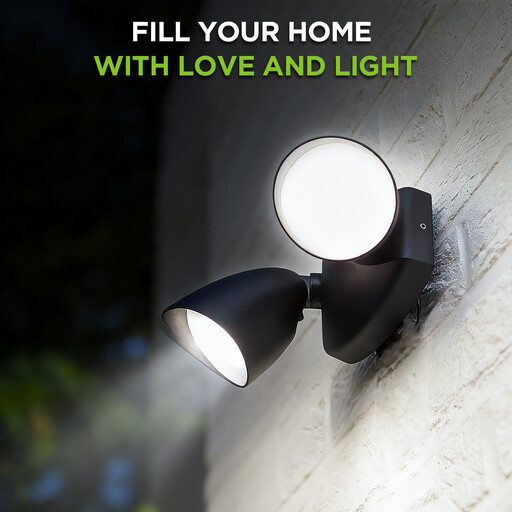
Why this product suits this use case: With two light heads and a stated output of 1,800 lumens, it is suitable for larger outdoor areas such as a courtyard, garden, patio or driveway.
You can direct it more precisely towards the area you want to illuminate than you could with a purely decorative wall light.
Dual-head design and 4,000 K neutral white light, according to the product name.
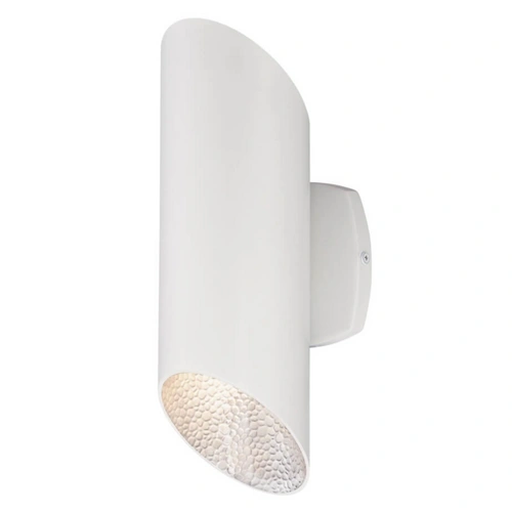
Why this product suits this use case: Its slim width of 12 cm makes it suitable for smaller areas of façade. The stated dimming function lets you adjust the brightness when installed with compatible equipment.
The product information specifically notes that an LED dimmer is required. The compatible switch is not included.
We've put together a complete, regularly updated list of products that meet these strict selection criteria and the safety regulations applicable in the EU.
IP44 is commonly used in partially sheltered areas. This rating means the light is protected against splashing water. A higher rating may be suitable for an exposed wall, areas that regularly get heavy rain or dusty locations. The installation location, sealing and manufacturer's specific guidance are still key.
The cost depends on the wattage, how many hours it is used each day and your electricity tariff. A 10-watt light switched on for five hours a day uses around 18.25 kilowatt-hours a year. You can calculate the annual cost using your tariff. Motion sensors, timers or dimming the light when full brightness is not needed can reduce the time it is on.
Lifespan is given in operating hours and varies by model. The product description for the Westinghouse 6400340 model states an average of 35,000 hours. This is the manufacturer's stated figure, not a guarantee for every installation. Heat, moisture, voltage fluctuations and the quality of the installation can all affect the actual lifespan.