
Lieferung heute & morgen

Qualitätsgarantie

Willkommens-Angebote freischalten: KOSTENLOSE Lieferung | Bis zu 80 % RABATT | Kostenlose 30-Tage-JoyPlus-Testphase
App herunterladen
Outdoor wall lights should reliably illuminate entrances, façades, patios and paths. In practice, unclear product specifications and unsuitable features often lead to the wrong purchase. A light with an attractive design is not necessarily suitable for every installation location.
IP44 indicates a defined level of protection against solid objects with a diameter of 1 millimetre or more, as well as splashing water from various directions. This rating is suitable for many sheltered outdoor areas, but it does not replace correct installation. Carefully check the manufacturer’s information if the light will be installed on a highly exposed façade, in an open area subject to driving rain or somewhere where water may collect.
Cable entries, seals and fixings also affect the level of protection. If a light is not installed securely, water may get inside even if its housing is marked IP44.
Lumens indicate luminous flux. For example, a 300 lm light may be suitable for a small entrance or as a guide light, but it may not provide the wide beam needed to illuminate a façade. An up-and-down outdoor wall light, on the other hand, casts light upwards and downwards, making the wall a more prominent part of the overall effect.
Colour temperature affects the atmosphere:
An outdoor light with a motion sensor can be useful by entrances and paths. However, consider its detection range and response time, and whether it can avoid false activations caused by passing vehicles or animals. A built-in battery makes the light easier to position, but it needs regular charging.
For a dimmable outdoor wall light, the dimmer must be compatible with the integrated LEDs. If the light source is built in, it cannot be replaced with an E27 bulb when it reaches the end of its useful life. Bear these differences in mind before buying.
First, check that the light is approved for the outdoor area where you plan to use it. When installing IP44 outdoor lighting, make sure water cannot remain on the housing for long periods. In Germany, mains-powered models must be installed by a suitably qualified professional.
A mains-powered LED outdoor wall light needs a suitable electrical connection. In return, it will not usually need regular recharging. Battery-powered and solar lights are more flexible, but their performance depends on charge level, sunlight and battery capacity.
For a solar garden light, position the solar panel somewhere that is as open as possible and not in permanent shade. A smart solar light with app control may offer schedules, group control and brightness adjustments. These features require a suitable connection and, in some cases, a stable smartphone or hub set-up.
With an E27 outdoor wall light, you can choose and replace the bulb separately. Check the maximum permitted wattage and make sure the bulb is suitable for outdoor use. With integrated LEDs, the colour temperature, luminous flux and dimming capability are fixed.
It is also worth checking:
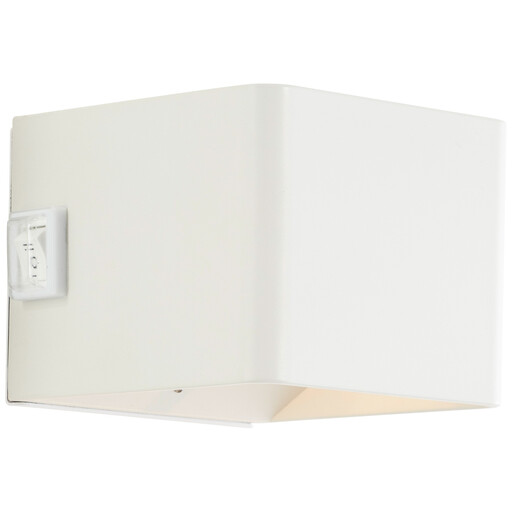
Why this product suits this profile: This portable light is ideal for areas without a fixed power supply, such as a small patio, a garden shed or an entrance that is only used occasionally.
The battery, USB charging cable and magnetic fixing keep installation simple. The built-in motion sensor is paired with a manual toggle switch.
4 W, 300 lm, warm white light at 3,000 K, built-in battery and IP44 rating.
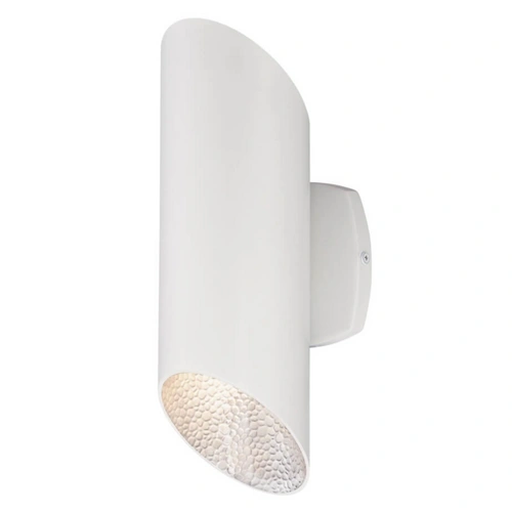
Why this product suits this profile: Its slim design and up-and-down light distribution make it a good fit for modern façades, entrances and covered patios.
The specifications list an IP44 rating, integrated LEDs and the need for a compatible LED dimmer. The light source is not replaceable.
Aluminium housing, 2 × 7.5 W integrated LEDs, dimmable and 12 cm wide.
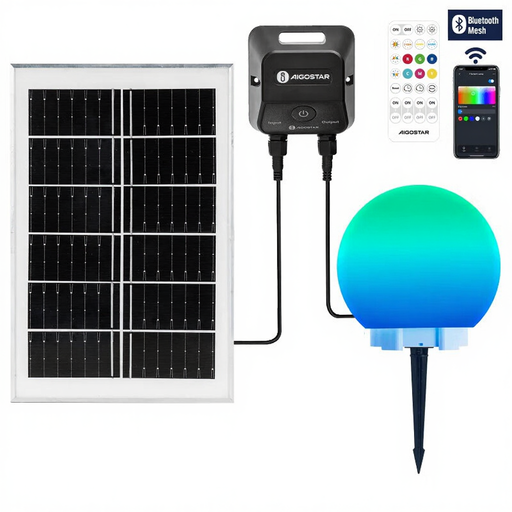
Why this product suits this profile: For garden paths, flower beds and larger outdoor areas, this solar light offers a wireless solution with app control and lights that can be grouped together.
The specifications clearly state that the light needs sunlight and is protected against splashing water. This helps you assess whether the installation location is suitable before you buy.
Solar-powered with a lithium battery, Bluetooth Mesh, AigoSmart app and RGB+CCT from 2,700 to 6,500 K.
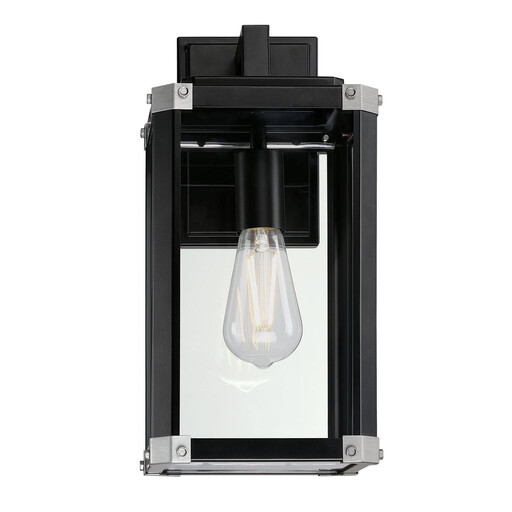
Why this product suits this profile: This light is for buyers looking for a classic style with a replaceable E27 bulb for an entrance or patio.
The bulb is not included and must be chosen separately. This makes the available light colour and replacement options clear before you buy.
E27 socket for bulbs up to 60 W, clear glass, aluminium housing and IP44 rating.
We’ve put together a complete, regularly updated list of products that meet these strict selection criteria and fully comply with the safety regulations in force in the EU.
For an entrance, you could choose an LED outdoor wall light with a manual switch, an outdoor light with a motion sensor or a permanently installed E27 outdoor wall light. The key considerations are the installation location, the luminous flux you need, the colour temperature and suitable protection against splashing water. Depending on the installation, IP44 may be sufficient for a covered entrance.
Consumption depends on wattage, how long the light is on and how it is controlled. A 4 W light uses 0.4 kWh over 100 hours of operation. Motion sensors can limit how long the light stays on. Solar lights do not use mains electricity while operating, but sunlight, the battery and charging conditions affect how long they can run each night.
Lifespan depends on the bulb, electronics, switching cycles, moisture and installation. If a built-in LED fails, the entire light will usually need to be replaced. E27 models, on the other hand, let you replace the bulb. Regular visual checks, dry cleaning and checking for damaged seals all help you use the light properly.