
Lieferung heute & morgen

Qualitätsgarantie

Willkommens-Angebote freischalten: KOSTENLOSE Lieferung | Bis zu 80 % RABATT | Kostenlose 30-Tage-JoyPlus-Testphase
App herunterladen
An outdoor wall light with a motion sensor can automatically illuminate pathways, home entrances, garages and patios. At first glance, choosing one seems straightforward: LED technology, a sensor and a weather-resistant housing appear to cover the essentials. In practice, however, unclear brightness specifications, an unsuitable IP rating or an incorrectly planned power supply often lead to disappointing purchases.
This buying guide from the Joybuy Product Recommendation Officer provides an objective overview of the most important criteria and presents suitable products for different usage scenarios.
A high lumen figure does not automatically mean that a light is suitable for every installation location. For a small entrance, 300 lumens may be sufficient. A large courtyard, driveway or spacious garden usually requires a wider light distribution and greater light output.
Pay attention to:
The term “weather-resistant” in a product description is not as meaningful as a specific IP rating. An IP44 outdoor wall light is protected against solid foreign objects measuring 1 millimetre or more and against splashing water. It should not be exposed permanently to heavy wind-driven rain or a direct jet of water.
An IP65 outdoor light is additionally dust-tight and protected against water jets from various directions. However, IP65 does not mean that the light may be submerged. Check that the IP rating suits the installation location and that the cable, junction box and mounting hardware are also suitable for outdoor use.
A solar outdoor light requires a location with sufficient direct sunlight. Shade from roof overhangs, trees or neighbouring buildings can reduce the amount of energy captured each day. In winter or during several consecutive cloudy days, operating time may also be reduced.
For a portable battery-powered light, you should also check the charging connection, charging time, switch and whether the battery can be replaced. A portable outdoor wall light with USB charging is especially useful where no power connection is available or where the light needs to be repositioned flexibly.
For a partially sheltered balcony, covered patio or home entrance, IP44 may be sufficient depending on the installation conditions. For exposed outdoor areas, garage entrances and fully exposed exterior walls, IP65 offers greater protection against dust and water jets.
The IP rating is only effective if the light is installed correctly. Seals must not be damaged, cable entries must remain closed and the mounting surface should be designed so that water cannot collect behind the housing.
LED lights generally operate more efficiently than older light sources with comparable light output. Nevertheless, the available power options differ:
For rented properties or temporary installations, magnetic mounts and portable designs can be practical. On metal surfaces, the magnet must hold securely enough. For permanent installation on masonry, suitable corrosion-resistant screws and wall plugs are required.
Not every motion sensor responds in the same way. Detection angle, range, activation duration and the ability to adjust the sensor are all relevant. A sensor may trigger when people move laterally across its detection zone; direct movement towards the light may be detected differently depending on the sensor type.
Also check whether the light can be left permanently on, switched off completely or operated exclusively via the sensor. An additional switch can be useful for an outdoor LED security light if you want the option to control the lighting manually.
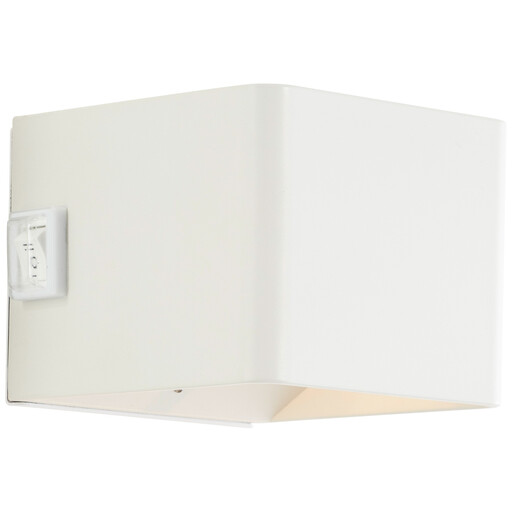
Why This Fits Their Persona: This compact light is ideal for renters, balconies, patios and small entrance areas without an existing power socket.
The product specifications state 300 lumens, 3,000 Kelvin, a battery, USB connection and IP44 protection rather than simply describing the light as “bright” or “weather-resistant”.
Integrated motion sensor, USB charging, toggle switch and magnetic mounting; 4-watt power consumption.
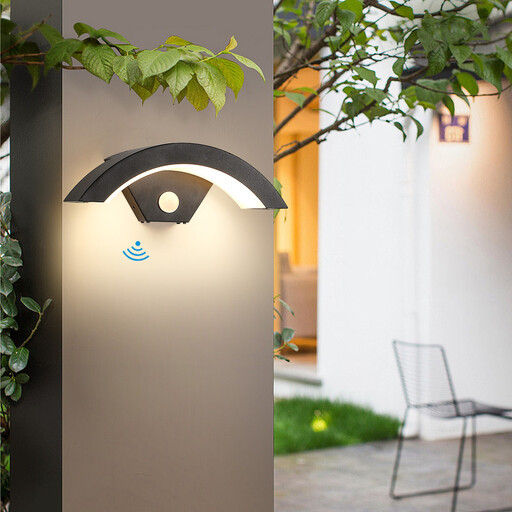
Why This Fits Their Persona: Ideal for homeowners who prefer permanently installed entrance or patio lighting with a metal housing.
The description specifies the material, power output, colour temperature and sensor function. A specific IP rating should still be checked before purchase.
24 watts, warm-white light at 3,000 Kelvin, U-shaped design and aluminium housing according to the product description.
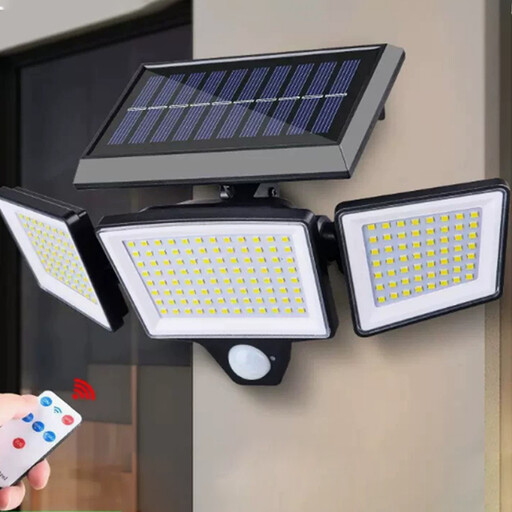
Why This Fits Their Persona: Suitable for garages, courtyards, driveways and larger garden areas where powerful, off-grid area lighting is required.
The specifications state IP65 protection, three lighting modes, solar power and a wide detection range. A location with direct sunlight remains essential.
302 LEDs, 3,000 lumens according to the product specifications, three adjustable light heads, a 180-degree sensor and a 1,800-mAh battery.
For a small balcony or covered front door, a compact outdoor light with a motion sensor and battery power is often sufficient. For an exposed courtyard, an IP65 light with a wider beam angle is the more sensible choice. A hardwired light is suitable when the lighting needs to operate reliably and regularly, regardless of the weather.
Before placing your order, compare the mounting height, power supply, preferred colour temperature, sensor range and IP rating. For mains-powered installation, consult a qualified electrician.
Our category features an regularly updated selection of lights for home entrances with motion sensors and a range of technical specifications.
A mounting height of around 1.8 to 2.5 metres is often practical. The ideal height depends on the sensor range, beam angle, building layout and desired illumination. The sensor should not be obstructed by plants, railings or roof edges.
Consumption depends on the wattage, activation duration and frequency of triggers. A 4-watt light operated for a short period each day uses significantly less energy than a high-output floodlight. Solar lights have no direct mains electricity consumption, but their performance depends on light conditions and battery charge.
IP44 may be suitable for sheltered outdoor areas, such as beneath a roof overhang. On exposed exterior walls, driveways or locations subject to heavy rain, a higher rating such as IP65 should be considered. In addition to the product itself, proper installation and protection of the electrical connection are decisive.