
Lieferung heute & morgen

Qualitätsgarantie
App herunterladen
Kategorien
Choosing a suitable outdoor Wi-Fi security camera depends on a range of technical parameters. The decision for a specific model should be based on an objective analysis of resolution, connectivity, field of view, and additional features. This article breaks down the essential criteria and presents a selection of models that meet specific requirement profiles.
The functionality of modern outdoor security cameras is determined by the interplay of various technical components. The following aspects are relevant for making an informed purchasing decision.
Image quality is a primary criterion. A high resolution (e.g., 2K or higher) allows for the clear identification of details such as faces or license plates. Some models use dual-lens technology. This combines two lenses to, for example, display a wide-angle overview and a zoomed-in view simultaneously. This enhances surveillance flexibility.
Most cameras support the 2.4 GHz Wi-Fi band, which offers greater range and better wall penetration. Models that also support 5 GHz Wi-Fi can benefit from higher data transfer rates and less interference in congested wireless environments. The choice depends on the distance to the router and the local network load.
PTZ stands for Pan, Tilt, and Zoom. A PTZ camera with 360-degree coverage can be remotely controlled via an app to dynamically adjust the surveillance area. This is particularly useful for monitoring large, complex areas like gardens or business premises, as a single camera can cover the area of multiple fixed cameras.
Standard night vision uses infrared LEDs to produce a monochrome (black and white) image in darkness. Models with colour night vision use integrated white-light spotlights or highly sensitive sensors to capture colour images even in low ambient light. This can facilitate the identification of people or vehicles at night.
2-way audio enables communication with people in front of the camera via an integrated microphone and speaker. This can be used to deter intruders or to communicate with delivery personnel. Auto tracking is a feature where the camera automatically follows detected motion. The motion detector triggers the function, and the PTZ mechanism keeps the moving object in frame.
Video can be recorded in two ways. Local recording to a microSD card offers a cost-effective and privacy-conscious solution with no recurring fees. Cloud storage secures recordings off-site, protecting them from theft or damage to the camera. Many manufacturers offer optional cloud subscriptions.
An outdoor IP camera must be weather-resistant. The IP rating indicates how well the housing is protected against the ingress of foreign objects (first digit) and water (second digit). A standard for outdoor use is IP66. This certification means the camera is dust-tight and protected against powerful water jets.
Based on the technical criteria mentioned above, we have compiled a selection of models that meet different requirements.
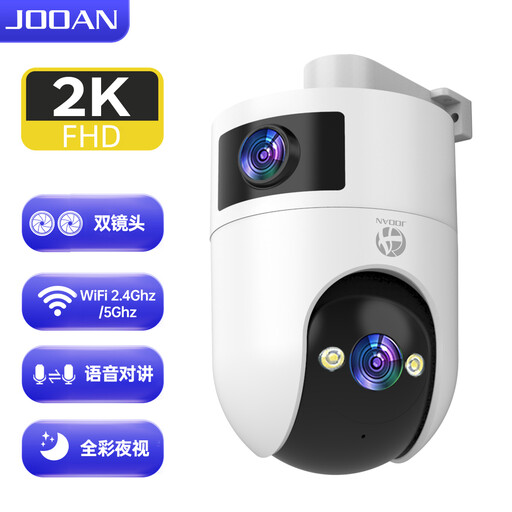
Why We Recommend This Product This model combines two lenses in a single housing. It allows for the simultaneous display of two video feeds in the app—for example, a fixed view of the entrance and flexible PTZ control of the rest of the property. Support for both 2.4 GHz and 5 GHz Wi-Fi ensures flexible network integration.
Pros
Best For Users who want to cover two different perspectives—such as a wide overview and a focused entrance area—with a single device and who prioritise a stable Wi-Fi connection.
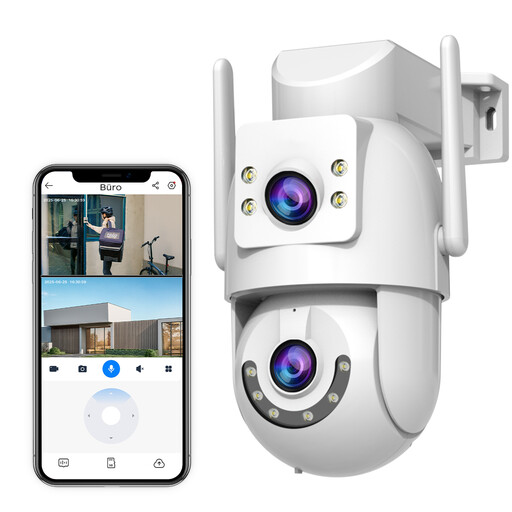
Why We Recommend This Product This model stands out for its high mobility and connectivity options. With a 330-degree pan and 90-degree tilt range, the PTZ function covers a very large area. According to the manufacturer, the reinforced dual antenna is designed for improved signal penetration.
Pros
Best For Users who need a flexible PTZ camera with a reliable Wi-Fi connection for medium-sized properties and who appreciate the option of a wired installation as a backup.
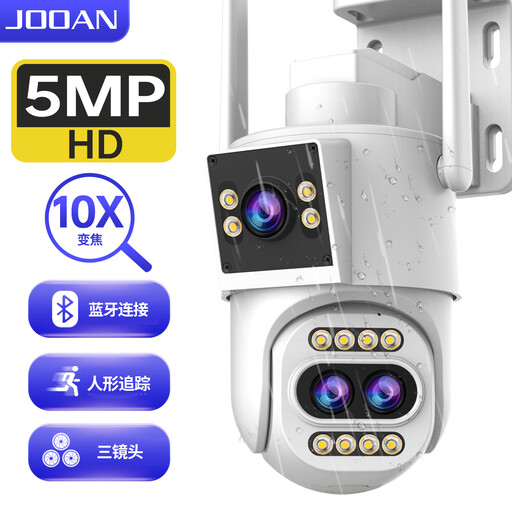
Why We Recommend This Product The standout feature of this model is its 10x optical zoom. Unlike digital zoom, which merely enlarges a section of the image and loses quality, optical zoom changes the lens's focal length. This allows for lossless magnification and the clear monitoring of objects at a great distance. The three-lens system offers additional flexibility.
Pros
Best For Owners of large properties, agricultural operations, or small businesses for whom identifying details from a distance is a high priority.
If the models presented here do not exactly meet your requirements, you can find a broader selection of devices in our main category. There, you can filter products by specific features such as resolution, connectivity, or storage type to find a suitable solution for your unique scenario.
Discover more products in the smart electronics category.
1. Does an outdoor Wi-Fi security camera need a power connection? Yes, these cameras typically require a constant power supply via an adapter. The term "Wi-Fi" refers exclusively to the wireless data transmission to the network router, not the power supply. While battery-powered models exist, they require regular recharging.
2. What does PTZ mean on a security camera? PTZ is the abbreviation for Pan, Tilt, and Zoom. A PTZ camera can change its viewing angle horizontally (Pan) and vertically (Tilt) and magnify the image (Zoom). These functions are typically controlled remotely via a smartphone app.
3. Can I access recordings without a subscription? Yes, if the camera has a microSD card slot. The feature for recording to a local memory card allows access to videos without recurring costs. A cloud storage subscription is an optional service that protects against data loss in case of theft or damage to the camera.