
Lieferung heute & morgen

Qualitätsgarantie

Willkommens-Angebote freischalten: KOSTENLOSE Lieferung | Bis zu 80 % RABATT | Kostenlose 30-Tage-JoyPlus-Testphase
App herunterladen
An OutdoorMaster ski goggle with interchangeable lenses can be a smart choice when light, weather and terrain change frequently. On the slopes, you may need a darker tint in bright sunshine and a lighter lens in flat light. When mountain biking, motocross or dirt biking, you also have to contend with dust, wind and flying debris.
However, some common marketing claims can lead you to make the wrong choice. A good selection therefore starts not with the colour of the frame, but with compatibility, lens changing, ventilation and care.
An OTG ski goggle – “Over The Glasses” – is designed to be worn over prescription eyewear. But that doesn’t mean every spectacle frame will fit comfortably underneath. The key factors are the internal width, the height of the goggle frame, the position of the spectacle arms and the pressure on your nose bridge and temples.
Where possible, try your prescription glasses on together with the goggles. Make sure there is enough clearance between the two sets of lenses. If they touch, ventilation can be compromised and there is a higher risk of scratches.
An anti-fog ski goggle reduces the risk of condensation, but it doesn’t replace the need for proper airflow. Large temperature differences, damp clothing, long breaks with your jacket zipped up, or blocked vents can still impair your vision.
Avoid wiping the inside of the lens dry. This can damage the coating. It’s better to let the lens air dry and only use the supplied microfibre cloth.
A mirrored lens feels great in sunshine, but can be too dark in fog, snowfall or changing light. Pay attention to the stated light transmission, often given as the VLT value. A low VLT value means a darker lens; a high value lets more light through.
For a ski goggle with magnetic lenses, a set with different tints is therefore more practical than a single, heavily darkened lens.
First, check whether the lens is actually interchangeable and which replacement lenses are available. A magnetic system can make swapping easier. However, the frame must still close securely so the lens doesn’t come loose during movement.
For changing conditions, sets with a darker lens for sunny days and a lighter or clear lens for flat light are a sensible choice. According to the product information, the OutdoorMaster ULTRA models come with the magnetic MagKlick system and multiple lenses.
A toric lens profile can offer a wider field of view. For skiing and snowboarding, this is useful because peripheral areas matter when turning, jumping or navigating the terrain. With a snowboard goggle, you should also check the fit with your helmet.
Multi-layer foam can improve the seal against your face while also aiding ventilation. Make sure the vents aren’t blocked by your helmet, hat or prescription glasses. An adjustable strap makes it easier to fit different helmet sizes.
According to their respective product information, the OutdoorMaster models featured here offer 100% UV protection. This claim should be verifiable in the product description and on the labelling. For your intended use, you should also check that the goggles carry the appropriate product certification and safety information.
A ski or snowboard goggle is not automatically suitable for motocross. For a motocross goggle or dirt bike goggle, dust protection, a nose guard, ventilation and a secure fit are especially important. These goggles are not designed for road use or for looking directly at the sun.
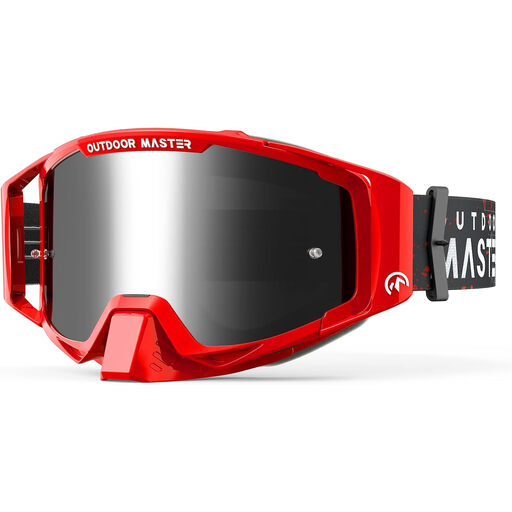
Why this product fits the profile: The OTG version is aimed at men, women and teenagers who want a simple goggle for dirt biking, ATV or mountain biking and need to wear prescription glasses underneath.
The product description mentions a flexible PP frame, ventilation openings, a nose guard and triple-layer foam padding. This addresses typical issues with dust, sweat and wind. However, the variant shown does not have interchangeable lenses.
OTG construction, anti-fog and scratch-resistant coating, UV protection and an adjustable elastic strap.
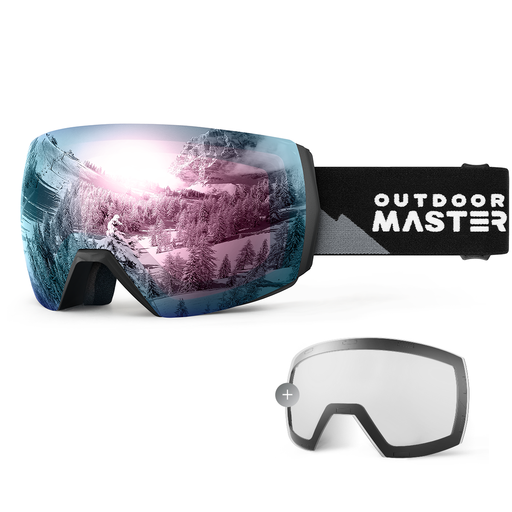
Why this product fits the profile: The set is designed for skiing and snowboarding and includes a grey lens, a Revo pink lens and a clear spare lens for different light conditions.
The magnetic MagKlick system makes lens changes easy. The OTG version takes spectacle wearers into account; however, you should still check the fit with your own glasses frame.
Toric lens profile, triple-layer anti-fog foam padding, magnetic lens change mechanism and stated UV protection.
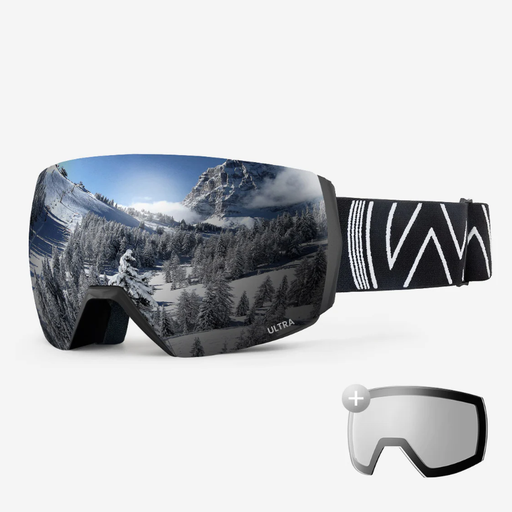
Why this product fits the profile: This bundle is ideal for regular skiing and snowboarding when you want a darker silver lens and a clear spare lens to hand.
The different lenses cover sunny and low-light situations. The product information also warns against damaged lenses and improper cleaning.
MagKlick lens change mechanism, UCT and OVP lens technology according to product information, toric design, plus included protective case and microfibre cloths.
We’ve put together a full, regularly updated list of products that fully meet these strict selection criteria and the safety regulations in force in the EU.
Clean the lenses with a soft, slightly damp cloth. Solvents, kitchen paper and abrasive cleaning agents can damage the coatings. Avoid touching the inside of the lens if possible, and store the goggles in the supplied bag or protective case.
Replace lenses when they become heavily scratched, cracked or visibly damaged. Even with a robust polycarbonate lens, impact resistance does not mean it is unbreakable. Before buying, check whether suitable replacement lenses are available for your specific model. A magnetic lens should only be fitted if the shape and fixing system match.
The ULTRA models are described in the product information as OTG-compatible. Whether the goggles fit comfortably over your prescription glasses depends on the dimensions of your frames. In particular, test the pressure from the spectacle arms, the clearance between the lenses and the compatibility with your helmet.
Keep the ventilation openings clear, try not to put the goggles on over a wet hat, and avoid rubbing the inside of the lens. An anti-fog coating helps maintain visibility, but cannot guarantee a completely fog-free view in extreme temperature differences.
The lifespan depends on use, cleaning, storage and contact with snow, dust or equipment. Visible scratches and damage are a reason to replace them. Store spare lenses separately and protected so they don’t rub against each other or against hard objects.