
Lieferung heute & morgen

Qualitätsgarantie

Willkommens-Angebote freischalten: KOSTENLOSE Lieferung | Bis zu 80 % RABATT | Kostenlose 30-Tage-JoyPlus-Testphase
App herunterladen
An outdoor wall light with a motion sensor can automatically illuminate paths, entrances, garages and terraces. This removes the need to switch the light on manually, provided the sensor is positioned correctly. However, high lumen ratings, unclear IP specifications and supposedly simple installation can often lead to poor purchasing decisions.
A powerful LED outdoor wall light is not automatically suitable for every setting. 300 lumens may be enough for a small entrance, while a wide courtyard or garage drive may require broader light distribution. The following factors are therefore just as important as the lumen rating:
An LED security light with a high light output can feel uncomfortably bright on a small terrace. For entrance lighting, a warm white colour temperature of around 2700 to 3000 Kelvin is often more subtle than cool white light.
The level of protection is described by the IP rating. An IP44 outdoor light is protected against solid foreign objects measuring 1 millimetre or more and against splashing water from various directions. It is suitable, for example, for partially sheltered entrance areas, covered terraces or balconies.
An IP65 outdoor light is dust-tight and protected against water jets. This is often more suitable for highly exposed areas such as garden paths, garage drives or uncovered exterior walls. IP65 does not mean that the light can be submerged in water. Even with this level of protection, cable connections, wall penetrations and the installation position must be properly arranged.
With sensor-controlled outdoor lighting, you should check whether the motion sensor actually provides the function you want or whether a dusk sensor is also required. A motion sensor responds to movement, while a light sensor takes the ambient brightness into account.
For a battery-powered outdoor light, charging time, battery capacity and the charging connection are also relevant. A solar light with a motion sensor needs a location with sufficient direct sunlight. On a permanently shaded north-facing wall, the operating time may be shorter than stated in the product description under favourable conditions.
Light output is measured in lumens. For a small outdoor wall light, 200 to 400 lumens may be suitable. An outdoor floodlight for a courtyard, garage or large garden area will generally require broader illumination and correspondingly more light.
Colour temperature is measured in Kelvin:
A high wattage alone says little about the actual brightness. You should therefore compare lumens, colour temperature and beam angle together.
For a weatherproof outdoor light, you should consider the IP rating, housing material and installation instructions. Metal housings can feel sturdy, but outdoor use requires suitable corrosion protection. Plastic housings are often lighter and practical for solar or battery-powered models.
The light should not be installed in a location where water collects permanently. On permanently installed models, electrical connections must only be made by a suitably qualified person.
A motion sensor operates within a specific detection angle and defined range. Before buying, check the following:
A light with too short a range may only switch on when the person is already standing directly in front of the door. Conversely, an overly wide detection area may cause it to activate more often than desired.
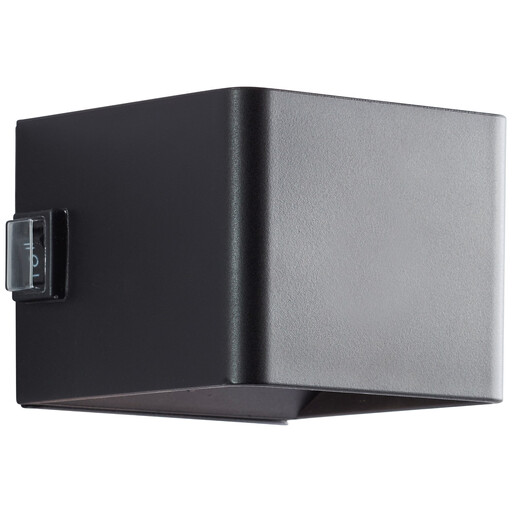
Why this product suits this profile: This battery-powered light needs no fixed power cable and can be charged via USB. It is suitable for smaller entrance areas, terraces or garden spots with a metal surface.
The product specifications state 300 lumens, 3000 Kelvin, USB charging and IP44 protection. This makes it easier to assess the suitable applications realistically, rather than choosing based solely on unclear brightness claims.
Integrated battery, magnetic mounting, USB cable, motion sensor and 300 lumens with a warm white colour temperature.
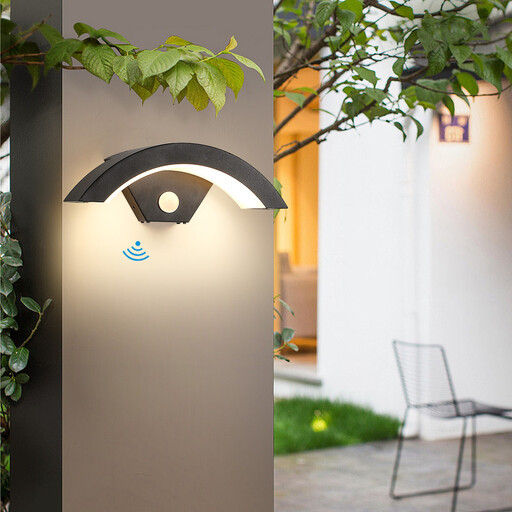
Why this product suits this profile: This model combines a permanently installed outdoor wall light with light and motion sensors. The warm white colour temperature suits entrances, balconies, paths and terraces.
The stated IP65 rating is clearly considered separately from the sensor function. Before installation, check the wall connection, mounting and alignment according to the instructions.
24 watts, 3000 Kelvin, aluminium housing and combined light and motion sensors according to the product specifications.
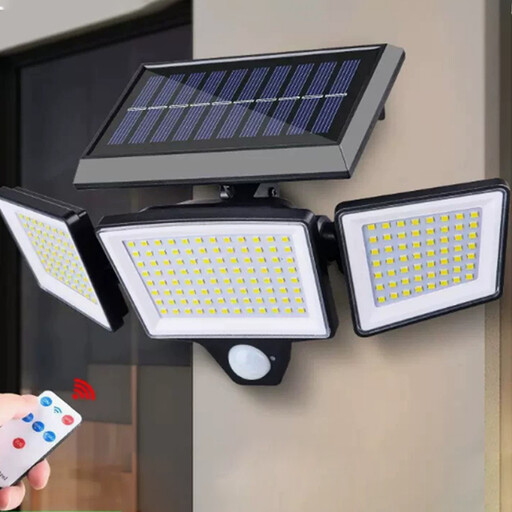
Why this product suits this profile: Three adjustable light heads and a wide detection angle are intended for garage drives, courtyards, larger gardens and paths. Solar power is a practical choice where no mains connection is available.
Solar performance depends on the location. The product should be installed so that the panel receives as much direct sunlight as possible; regular cleaning can help maintain favourable charging conditions.
302 LEDs, 3000 lumens, IP65, three lighting modes, 180-degree detection and three adjustable heads according to the product description.
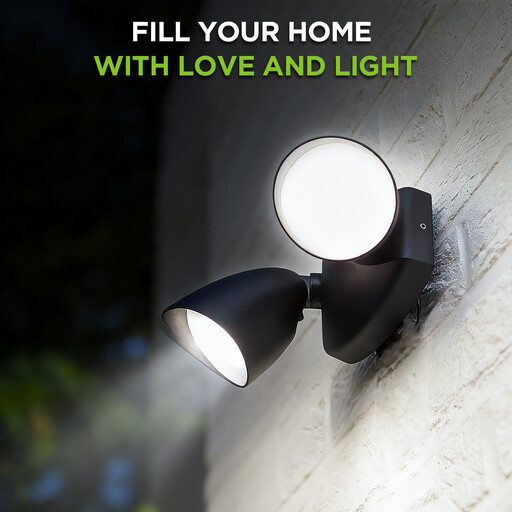
Why this product suits this profile: This outdoor floodlight with two light heads is aimed at users looking for a permanently installed solution for a courtyard, garden, garage or terrace, with the flexibility to adjust the light direction.
The two adjustable heads help you plan the illumination more precisely, rather than relying on a single light source with an unnecessarily wide spread.
20 watts, 1800 lumens, 4000 Kelvin, twin-head design and metal construction according to the product specifications.
We have put together a complete, regularly updated list of products that fully meet these strict selection criteria and the safety regulations applicable in the EU.
With a permanently installed outdoor wall light, the wall must be suitable for its weight and fixings. Use corrosion-resistant screws and note that electrical work on the home’s wiring must only be carried out by a qualified professional. In rented accommodation, it is advisable to obtain the landlord’s permission before drilling or installing permanent wiring.
Solar and battery-powered models are easier to install retrospectively. With solar lights, the panel must remain as free from shade as possible. For battery-powered lights, charging intervals and access to the USB connection should be considered when planning the installation. The sensor should not point directly at heavily moving branches, public footpaths or reflective surfaces.
An installation height of around 1.8 to 2.5 metres is common for many domestic applications. However, the manufacturer’s specifications, detection angle and intended area are the decisive factors. The sensor should detect access routes from the side, as movement across the sensor’s axis is often detected more reliably than someone approaching directly.
IP44 is suitable for sheltered or partially covered areas exposed to splashing water. IP65 also provides dust protection and protection against water jets, making it generally more suitable for highly exposed exterior walls. The IP rating does not replace correct installation and does not permit the light to be submerged in water.
Costs depend on the power rating, daily operating time and electricity tariff. A permanently installed 20-watt light that is active for one hour a day uses approximately 7.3 kilowatt hours per year. Solar and battery-powered lights do not require mains electricity during operation, but depending on the model and usage, they must be charged or supplied with sufficient sunlight.