
Lieferung heute & morgen

Qualitätsgarantie

Willkommens-Angebote freischalten: KOSTENLOSE Lieferung | Bis zu 80 % RABATT | Kostenlose 30-Tage-JoyPlus-Testphase
App herunterladen
An outdoor wall light with a motion sensor can automatically illuminate your front entrance, garage or garden path. To ensure your purchase remains suitable for everyday use in the UK over the long term, you should not focus solely on lumen figures or impressive range claims. The key factors are the installation location, IP rating, power supply, installation requirements and the actual technical specifications.
A high brightness rating can be useful for a driveway or large courtyard, but may quickly feel excessive on a small balcony. The beam angle also determines whether the light reaches a narrow path or covers a larger area. An LED floodlight with a motion sensor is therefore better suited to wide-open spaces than to a light positioned directly beside the front door.
The term ‘weatherproof’ should be supported by a specific IP rating. An IP44 outdoor light is protected against solid foreign objects measuring 1 millimetre or more and against splashing water from different directions. For completely exposed locations or areas subject to heavier dust and water exposure, an IP65 security light may be more suitable. However, the IP code does not replace correct installation: water must not be allowed to collect permanently on the housing or wall bracket.
A motion sensor does not automatically detect every movement equally well. Walls, hedges, parked vehicles and the installation height can all affect detection. A limited detection area is often sufficient for a narrow entrance path. For a driveway or larger garden, a wide sensor angle and an adjustable light head are more practical.
For a covered patio or partially sheltered front entrance, an IP44 outdoor light may be sufficient if the installation location is not regularly exposed to direct heavy rain. An IP65 version is additionally dust-tight and can withstand water jets. It is therefore worth considering for more exposed outdoor areas.
Important: even an IP65 light is not automatically suitable for immersion in water. Before installation, also check whether the screws, cable entries and wall connections are designed for outdoor use.
Brightness is measured in lumens. As a rough guide:
Light colour is described in Kelvin. 3,000 Kelvin produces warm white light and often has a discreet feel in residential settings. 4,000 Kelvin appears neutral white and makes it easier to find your way around. With solar lights, manufacturer specifications can vary considerably, so Kelvin and lumen values should always be considered together.
An integrated LED requires little maintenance, but cannot be replaced on many models. You should therefore check the stated operating method, charging options and warranty terms. With permanently wired lights, electrical work must be carried out by a suitably qualified professional.
A battery-powered outdoor light can be used where there is no mains connection. However, the battery must be charged regularly via USB or a mains adapter. A solar outdoor light needs as much direct sunlight as possible. Beneath a porch roof or on a permanently shaded north-facing wall, the operating time may be shorter.
An integrated motion sensor reduces the time the light is switched on and can therefore help limit energy consumption. Even so, check whether the detection area, lighting duration and operating mode can be adjusted.
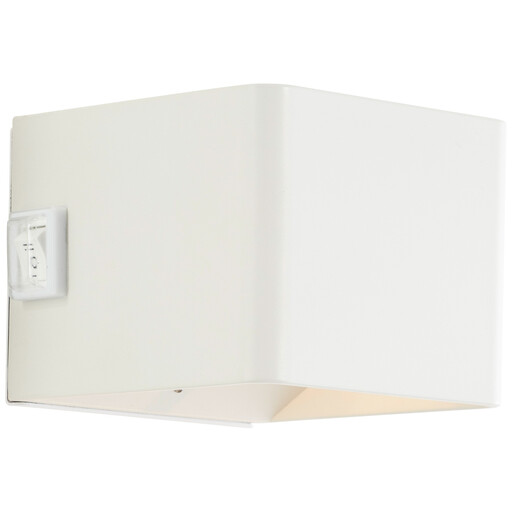
Why this product suits the profile: This compact outdoor wall light has an integrated battery and charges via USB. With 300 lumens and 3,000 Kelvin, it is suitable for smaller entrance areas, patios or sections of the garden without a permanent power connection.
The specifications state a precise 300 lumens, IP44 protection and USB charging instead of making vague weatherproofing claims. The magnet also allows flexible attachment to suitable metal surfaces.
Integrated battery, USB cable, motion sensor, rocker switch and IP44 protection.
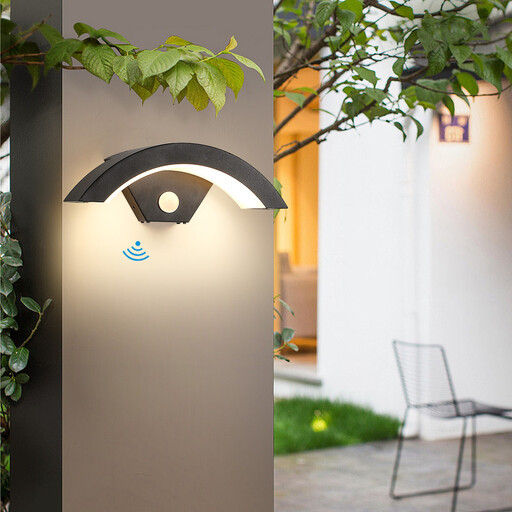
Why this product suits the profile: The matt aluminium U-shaped design is intended for permanently mounted areas such as front entrances, balconies, patios, garages or stairways. The light and motion sensors combine two automatic operating modes.
The construction is designed for permanent wall installation, avoiding the typical compromise of a portable light at frequently used entrances.
24 watts, warm white light at 3,000 Kelvin, aluminium housing, plus light and motion sensors.
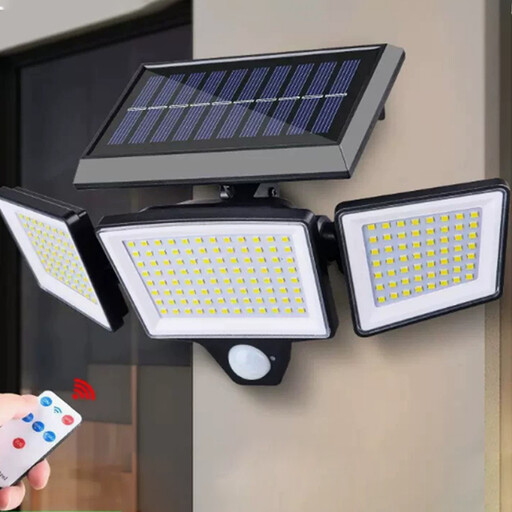
Why this product suits the profile: This solar outdoor light is designed for larger areas such as driveways, courtyards, garages or gardens. Three light heads and a stated detection angle of 180 degrees help provide broader illumination.
The stated IP65 rating and specific sensor range of 60 feet or around 18 metres make the application limits clearer than general security claims.
302 LEDs, stated 3,000 lumens, 1,800-mAh battery, three operating modes and three adjustable light heads.
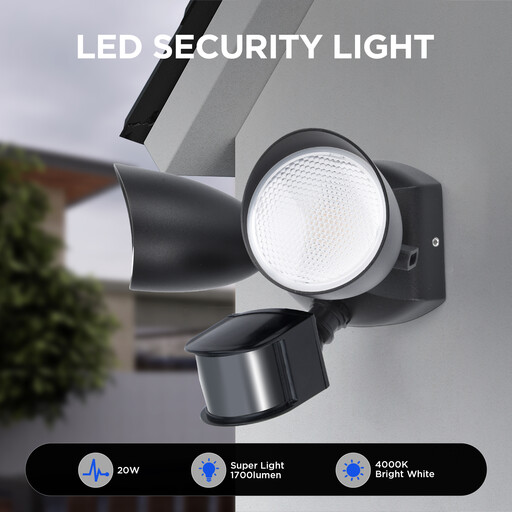
Why this product suits the profile: The twin-head design is intended to illuminate patios, courtyards and driveways. With 1,700 lumens and neutral white 4,000 Kelvin light, it offers different specifications from a compact entrance light.
The specific rating of 20 watts and 1,700 lumens makes it easier to assess the product. Before buying, check the product page to confirm that the IP rating is suitable for your intended installation location.
20 watts, 1,700 lumens, 4,000 Kelvin and two light heads for distributed illumination.
We have put together a complete, regularly updated list of products that fully meet these strict selection criteria and the safety regulations applicable in the EU.
Before buying, assess the installation location from several angles:
This depends on the model and the stated detection area. Installation at a height of around 1.8 to 2.5 metres is often practical. The manufacturer’s installation instructions remain decisive, as sensor angles and ranges vary according to the design.
IP44 may be sufficient for sheltered outdoor areas. On fully exposed walls or where there is greater dust exposure, IP65 is a sensible option. You should also ensure proper sealing and use corrosion-resistant fixings.
Consumption depends on the power rating, daily operating time and operating mode. A 4-watt LED with short sensor intervals uses less energy in theory than a 20-watt floodlight that remains switched on for a long time. With battery and solar versions, there are no ongoing mains electricity costs at the installation location; however, the battery must be charged or powered by sunlight.