Hosts with a large baking dish
You want to cook the rolls in a dish that’s a good fit for sharing with friends, and might also want to pre-cook the aubergine slices on trays.


First, check whether your baking dish and any trays you’ll use to pre-cook the aubergines will fit in the oven. Then decide whether a built-in oven will suit your kitchen or a freestanding mini oven will fit your available space better. A built-in oven may be a good choice for larger quantities or several trays; with a mini oven, your dish and portions will need to fit the specific model. For this recipe, the cooking functions it calls for matter more than extra features you don’t need.
You want to cook the rolls in a dish that’s a good fit for sharing with friends, and might also want to pre-cook the aubergine slices on trays.
You need a freestanding oven and want to check the dish dimensions, available worktop space and safe-clearance requirements against the specific model.
You regularly cook other dishes in the oven too, so you’ll want to take cleaning and the stated energy consumption into account when choosing.
A good fit if: you have a suitable built-in space and need a larger dish or several trays.
Bear in mind: the space and connection requirements must be right. Pyrolytic cleaning and sensors aren’t essential for this dish.
A good fit if: you don’t have a suitable built-in space and your dish and required quantity will fit the specific model.
Bear in mind: you’ll need enough space and must follow the safety clearances in the instructions. Depending on the capacity, you may need to cook in batches.
| What matters | What to check before buying | Who should consider this? |
|---|---|---|
| Dish size and quantity | Compare the dimensions of your dish with the usable oven space and tray. Rommelsbacher specifies that the BG 1805/E fits round dishes up to 31.5 cm in diameter; this doesn’t confirm that every rectangular dish will fit. | If I’m cooking for several guests in one dish and might need trays for pre-cooking, I want to know whether everything will fit. Around 31% of consumers focus mainly on dish size and quantity when buying an oven. |
| Where you’ll put it | For a built-in oven, check the space and connection requirements. For a worktop model, check its external dimensions and the safety clearances specified in the instructions. | If there isn’t a suitable built-in space free in my kitchen, I’ll need to plan for enough room and safe clearances. Around 25% of consumers prioritise the available built-in or installation space. |
| Cooking functions | Check for conventional top and bottom heat, and a suitable grill function if you want extra browning. Leckerschmecker uses 180 °C conventional heat to pre-cook the aubergines in one recipe; Bosch says the HBA272BB3 offers hot air cooking on up to three levels. | If I want to pre-cook the aubergine slices and then bake the filled rolls, I need clear settings for both steps. Around 19% of consumers focus mainly on cooking functions when buying. |
| Cleaning | Read the cleaning instructions for the oven cavity and accessories of the specific model. NDR points out that pyrolytic cleaning uses additional electricity. | If sauce or cheese splatters while we’re eating together, I want to know how easy it’ll be to clean the oven cavity and accessories afterwards. Around 13% of consumers put cleaning effort first. |
| Energy consumption | For household ovens with an energy label, compare the kWh per standard cycle for the stated cooking functions. The German Environment Agency explains the label values; the European Commission lists small ovens as outside the scope described. | If I use the oven often, I want to compare energy figures on a like-for-like basis, without using them to estimate the cost of a single recipe. Around 12% of consumers focus mainly on energy information and running costs. |
The capacity doesn’t tell you whether your baking dish will fit. And a maximum size for a round dish doesn’t prove that a rectangular one will fit.
Measure your dish and compare its dimensions with the specifications and usage guidance for the specific oven.
Depending on the fit, you may need a different dish or an extra baking round.
The number of shelf levels doesn’t prove that a dish will cook evenly on several trays at once in independently tested conditions.
Check the manufacturer’s guidance on cooking functions, suitable trays and the recipe instructions together.
A built-in oven needs a suitable space and connection. For a freestanding model, the clearances in the instructions are important for safe positioning.
Measure the built-in space or worktop area before you buy, and follow the installation or operating instructions for the specific model.
Energy label figures relate to standard cycles and don’t measure the electricity used for this recipe. NDR points out that pyrolytic cleaning uses additional electricity.
Compare consumption figures on a like-for-like basis, then consider extra features in light of how often you’ll actually use them.
A pyrolytic cleaning cycle uses additional electricity.
Built-in ovens. The HBA272BB3 is a specific model to consider when checking dish size, installation requirements and cooking on several trays.
Built-in ovens. The HB314G0S3 combines conventional top and bottom heat, hot air cooking and hydrolytic cleaning.
Built-in ovens with extra features. The TS6PB51ZAB is a model worth considering if you’re interested in additional cooking functions and pyrolytic cleaning.
Freestanding mini ovens. The BG 1805/E is an example to consider if you need to fit a larger dish without a built-in space.
Freestanding baking and toast ovens. The TO 2068 is an example of a smaller alternative if a suitably small dish will do.
This selection includes built-in ovens, freestanding mini ovens and a pizza oven. Check the dimensions of the specific model to see whether your baking dish will fit.
 No image available
Only suitable if you have a built-in space that fits. Also check whether your baking dish will fit inside the oven; capacity alone doesn’t confirm that it will.
 No image available
As a built-in model, this oven needs a suitable space. Check the dimensions of your dish and the tray you’ll need against the usable oven space.
The product title lists a grill function and AquaClean steam cleaning. Read the model’s care instructions before taking this feature into account when choosing.
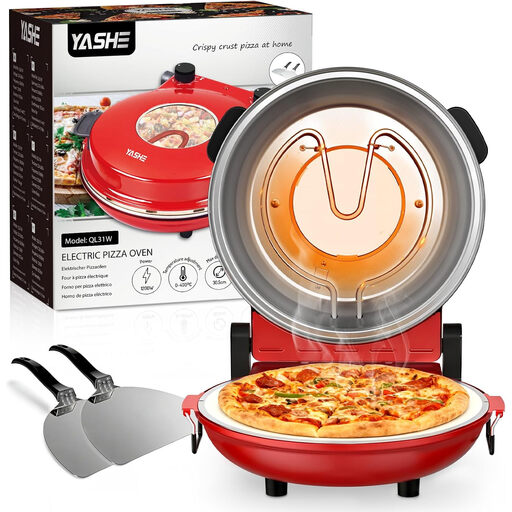 No image available
The product title lists top and bottom heat and a 30-cm ceramic stone. The stone’s surface area doesn’t prove that a baking dish will fit. Check the dish height, the oven opening and the model specifications.
 No image available
A freestanding mini oven if you don’t want to use a built-in space. Before buying, check the internal dimensions for your dish and the positioning instructions for the specific model.
The product title lists a temperature range of 100 to 250 °C and a crumb tray.
 No image available
According to the product information, this compact model is designed for 1–2 people. If you’re cooking for friends, take extra care to check the quantity you need and the dimensions of your dish.
The product title lists a pizza function and a temperature range of 100 to 230 °C.
No. One Leckerschmecker recipe uses 180 °C conventional top and bottom heat to pre-cook the aubergines, then bakes the filled rolls. If you’re following a different recipe or cooking on several trays, choose the cooking function, temperature and shelf positions according to the recipe and the oven instructions.
There’s no one-size-fits-all answer. Rommelsbacher refers users to the safety clearances in the operating instructions for the BG 1805/E. Always follow the requirements for the model you buy and take the available space into account.
They show the energy used per standard cycle for conventional heating and, where stated, fan-assisted cooking. They don’t tell you the electricity cost of a particular recipe. The German Environment Agency explains this basis for comparison. The European Commission lists small ovens as outside the scope described, so check the label for the specific model.
If you buy from a business seller at a distance, you generally have 14 days from delivery to cancel the purchase. Exceptions and possible return costs may apply. If the goods are faulty, you’re generally entitled to at least two years of statutory protection from the seller. Your Europe, the EU’s consumer portal, explains how these rights differ from a voluntary manufacturer’s guarantee.