
Lieferung heute & morgen

Qualitätsgarantie

Willkommens-Angebote freischalten: KOSTENLOSE Lieferung | Bis zu 80 % RABATT | Kostenlose 30-Tage-JoyPlus-Testphase
App herunterladen
Purchasing a new oven is a major decision for any kitchen. But the market is filled with technical jargon, marketing promises, and a bewildering array of models. Many buyers invest in features they never use or become frustrated with flaws that only become apparent during daily use. As your Joybuy Product Recommendation Officer, I'm here to help you navigate these pitfalls and make an informed choice.
Before you decide on a model, you should be aware of the three most common and costly mistakes:
To avoid a bad purchase, focus on the technical features that directly impact your cooking and baking habits.
The first decision concerns the design. A built-in oven is seamlessly integrated into a kitchen unit, offering a modern, uniform look. These appliances are typically designed for 60 cm wide niches. Pay meticulous attention to the exact niche dimensions (height, width, depth) in the product description.
A freestanding cooker with a ceramic hob is an all-in-one solution that combines an oven and a cooktop. These appliances are ideal if you're looking for a flexible solution or equipping an older kitchen without standardised built-in cabinets. The cavity volume, measured in litres, is also crucial. For singles and couples, around 50–60 litres is sufficient, while families are better served with a volume of 70 litres or more.
Modern ovens offer much more than just top and bottom heat. The most important function for most households is the fan or convection setting.
A clean oven is not just a matter of hygiene but also of functionality. An oven with a self-cleaning function can be a significant workload reduction.
Based on these objective criteria, we have identified a few models that are particularly well-suited for different user profiles.
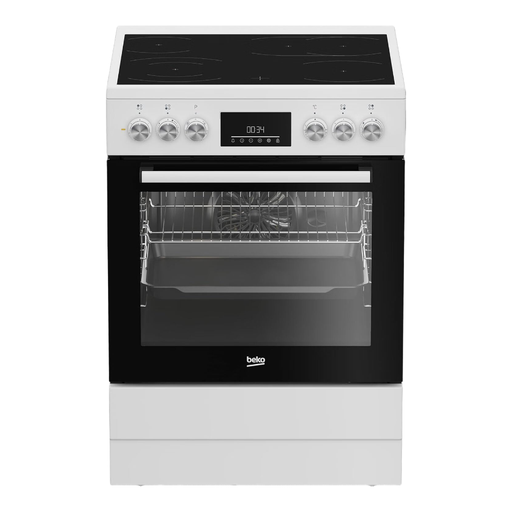
Why This Fits Their Persona: A practical all-in-one solution for daily family life. With a 72-litre cavity and an integrated ceramic hob, this appliance covers all basic cooking and baking needs without burdening your wallet with rarely used extras.
This model focuses on the essentials: 8 solid heating modes and a large capacity. The SteamShine function is an honest, steam-assisted cleaning aid (hydrolytic) that comes without the high cost of pyrolytic cleaning.
The combination of an oven and hob saves space and money. The large 72-litre cavity is ideal for roasts and multiple trays at once.
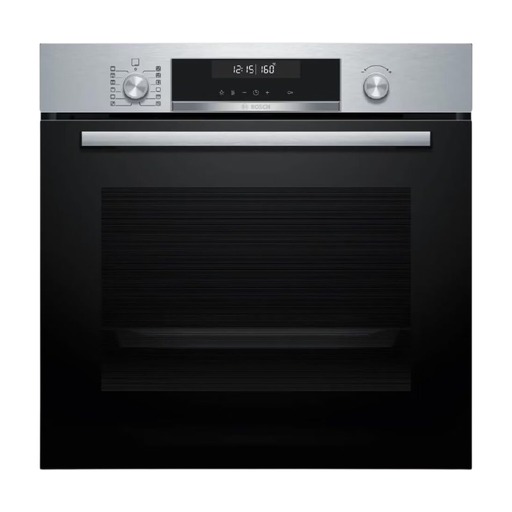
Why This Fits Their Persona: For anyone who bakes and cooks regularly and values perfect results and maximum convenience. This appliance offers advanced technology that noticeably simplifies everyday kitchen tasks.
This model offers true pyrolytic self-cleaning, thus avoiding the pitfall of weaker cleaning systems. The 30 AutoPilot programs are a practical aid, not a superfluous gimmick.
The combination of 3D Hot Air for even baking and the Air Fry function for crispy dishes offers great versatility. The pyrolytic cleaning ensures effortless cleanliness.
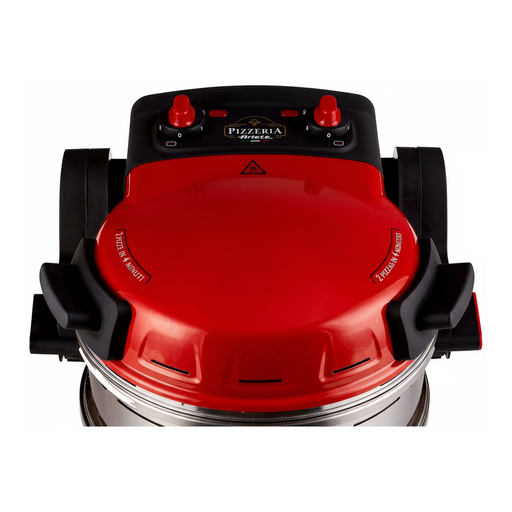
Why This Fits Their Persona: For true pizza enthusiasts who want to experience the taste of an authentic, stone-baked pizza at home. A standard oven can't compete.
This appliance is a specialised home pizza oven and doesn't try to be an all-rounder. It bypasses the disappointment of a lukewarm "pizza function" in conventional ovens by delivering extreme heat.
Reaches temperatures of up to 400°C and bakes a pizza in just 4 minutes on a refractory stone. The ability to bake two pizzas at once is an added bonus.
A good oven is only half the battle. For perfect results, you also need the right accessories. A high-quality cast iron casserole dish like the COOKER KING Chuanjia retains heat ideally for succulent roasts and stews. For cakes and desserts, a good bakeware set is essential, and for soufflés or crème br?lée, small, oven-safe ramekins like the DAFUCERAMIC Ramekins are the right choice.
We've compiled a full, up-to-date list of products that fully meet these strict selection criteria and UK safety regulations.
A pyrolytic cleaning cycle lasts about 1 to 3 hours and consumes between 3 and 6 kWh of electricity, depending on the model and duration. While this is more than during normal operation, you save on the cost of aggressive chemical cleaners and a lot of time. Modern appliances with an A+ energy efficiency rating are very economical in regular baking mode, so the extra consumption often balances out over the year.
With standard fan heat, a fan circulates the warmth generated by the top and bottom heating elements. With 3D Hot Air (or similar technologies like 4D Hot Air), an additional ring heating element is located directly around the fan. This heats the air before it is blown into the cavity. The result is an even faster and more uniform heat distribution on all levels of the oven.
The mechanical installation, i.e., sliding the appliance into the designated niche and screwing it in place, can be done by individuals with good DIY skills. However, the electrical connection is a different matter. Ovens typically require a high-power connection and must be professionally installed. For safety and insurance reasons, this work must be carried out by a qualified electrician. Improper connection can lead to appliance damage, fires, or electric shocks.