Start by choosing a recipe and measuring the outside of your tart tin. For a single tart, a suitable countertop oven may be just as good as a built-in oven. A built-in model is more likely to suit you if the cabinet space and connection are suitable, and you regularly use the larger oven cavity or multiple shelf levels. If you don’t have a suitable recess, a sufficiently large countertop oven is the more obvious choice. The key factors are the heating mode you need, whether your tin actually fits, and the connection and installation requirements of the model you choose.
Which oven suits you
Families baking with a large tart tin
If you’re baking for several guests, first check that your particular tin fits inside the usable oven cavity. Recipes from WDR and HIT, for example, use tart tins of different diameters, so measure your own tin rather than assuming they’re all the same size.
Bakers without space for a built-in oven
If you don’t have a suitable space for a built-in oven, a freestanding countertop oven could be an option. Compare the fit of your tin and the space available, and check that the model offers the heating mode your recipe needs. Rommelsbacher and Severin list conventional top-and-bottom heat for certain countertop ovens.
Regular bakers making several batches
If you’ll be doing more baking after the celebration, multiple shelf levels, cleaning and everyday energy consumption may matter more. The features worth having depend on how you actually use your oven; the Verbraucherzentrale also explains energy use per standard baking cycle.
What to look for when buying
Built-in oven
A good fit if: you have a suitable space for a built-in oven and want to use it for other baking, too.
Things to consider: the recess dimensions, connection and accessories you need must all be suitable. Features for baking on multiple levels don’t prove that a particular tart will turn out better.
Countertop or compact oven
A good fit if: you don’t have a suitable recess for a built-in oven, and your tart tin fits inside with the required clearance.
Things to consider: the stated tin size doesn’t confirm that the handles or height will fit. You’ll also need to check the space available and the installation requirements.
| What you need |
What to check when buying |
Who it matters most to |
| Heating mode for your recipe |
Compare the recipe instructions with the conventional top-and-bottom heat setting available on the specific model. |
If you’re following a particular recipe, the heating mode it calls for matters. Around 31% of consumers put the recipe’s heating mode first. |
| Tin and oven cavity |
Compare the outside diameter and height of your tin with the internal dimensions, shelf position and clearance from the heating elements. |
If your tin needs to fit with its rim or handles, the usable dimensions matter more than the capacity in litres alone. Around 31% of consumers prioritise whether their tin will fit. |
| Space and connection |
For built-in ovens, check the recess and appliance dimensions; for countertop models, compare the space available, installation requirements and connection type. |
If you’re choosing between a built-in oven and a countertop model, the available space and connection need to suit your kitchen. Around 23% of consumers give these requirements priority. |
| Cleaning and energy |
Compare the cleaning method and whether it needs wiping down afterwards, as well as the kWh per standard cycle for labelled appliances. |
If you’ll use the oven regularly after the celebration, cleaning and energy consumption may matter more than features for a single day of baking. Around 15% of consumers prioritise ongoing running costs and effort. |
Avoid common buying mistakes
-
Choosing based on litre capacity alone
The oven cavity capacity doesn’t tell you whether your tin, including its handles, will fit on the shelf or have enough clearance from the heating elements.
Measure the outside of your tin and compare its dimensions with the usable internal space and the installation guidance for the specific model.
-
Confusing steam cleaning with pyrolytic cleaning
These are different methods. Beko says its SteamShine steam-cleaning function may need to be followed by wiping the oven. AEG lists pyrolytic cleaning for the OU5PB40SM, which uses additional energy during the cleaning cycle.
Compare the cleaning steps for each model and consider whether the time and effort involved suit how you’ll use it.
-
Assuming a recipe or manufacturer claim guarantees a perfect bake
The tart recipes consulted use different temperatures and methods. A manufacturer’s claims about heat distribution aren’t an independent test using your recipe and tin.
Choose your recipe first, then follow its specific instructions for the heating mode and baking method.
Key brands and model examples
Bosch
Built-in ovens, including models with conventional top-and-bottom heat and additional fan-assisted cooking.
- Bosch lists conventional top-and-bottom heat and 3D Hotair for up to three shelf levels on the HBA514BS3.
- The manufacturer’s claim about heat distribution doesn’t prove a particular chocolate tart will turn out well; check separately that the oven fits your recess.
Rommelsbacher
Freestanding compact ovens, including a model that accommodates larger tart tins.
- Rommelsbacher lists a 42 l capacity, conventional top-and-bottom heat and baking tins up to 31.5 cm in diameter for the BG 1805/E.
- Check the handles and height of your tin, as well as the required clearances, against the instructions and your own tin.
Severin
Countertop ovens for a single tin, as long as its dimensions suit the model.
- Severin lists a 20 l capacity, conventional top-and-bottom heat and tins up to 30 cm in diameter for the TO 2067.
- No fan-assisted function is listed for this model. The stated diameter doesn’t confirm that every tin shape will fit.
Beko
Built-in ovens, including the BBIM12300X, with a large oven cavity and SteamShine cleaning.
- Beko lists a 72 l capacity and eight heating modes for this model, and describes AeroPerfect as a technology for distributing hot air.
- The manufacturer’s description isn’t an independent test of tart baking. Check the instructions to make sure the model offers the heating mode your recipe needs.
AEG
Built-in ovens with additional cleaning and multi-level cooking features.
- AEG lists a 72 l capacity and pyrolytic cleaning for the OU5PB40SM, along with a baking tray and combination shelf included.
- The manufacturer’s claims about fan-assisted cooking don’t demonstrate a particular advantage for chocolate tart. Check that the features suit your other baking plans.
Joybuy product selection
The Joybuy selection below includes built-in ovens and a freestanding cooker with an oven. Before choosing, check that the heating mode suits your recipe and that your tin will fit, along with the installation dimensions or space required.
 No image available
Bosch HBA571BB4 Series 2 built-in oven
Could suit a recipe that calls for conventional top-and-bottom heat; this heating mode is listed for the model.
71 l capacity; 30–275 °C; 3D Hotair and pyrolytic cleaning.
Built-in appliance: the stated recess width is 560–568 mm and the recess depth is 550 mm.
View at Joybuy
 No image available
Bosch HBG578ES3 Series 6 built-in oven
Conventional top-and-bottom heat is listed as a feature, so this model may suit a recipe that calls for this heating mode.
71 l capacity; temperature range 30–275 °C; 3D Hotair and pyrolytic cleaning.
Built-in appliance: the installation recess width is listed as 56–56.8 cm and the depth as 55 cm.
View at Joybuy
 No image available
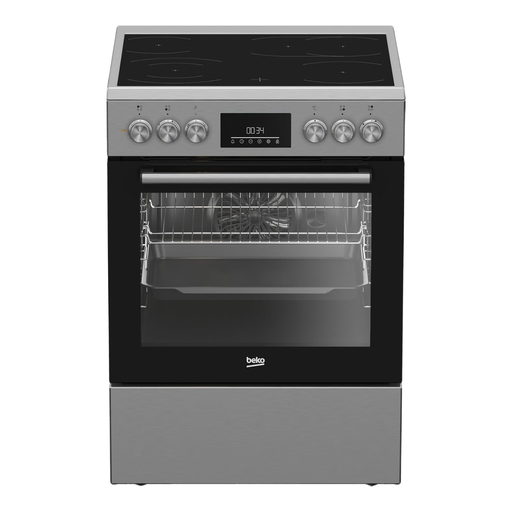
Beko FBM67320XS freestanding cooker
Could suit you if you’re looking for a freestanding cooker rather than a separate built-in oven; the description lists conventional heating.
72 l capacity; 60 cm; eight heating functions.
SteamShine steam cleaning: according to the description, the oven cavity should be wiped out once it has cooled. This is a freestanding cooker with a hob, so you’ll need a suitable space for it.
View at Joybuy
Frequently asked questions
Does the chocolate filling need to be baked?
No, it depends on the recipe. In the WDR recipe, the pastry case is baked at 160 °C using conventional top-and-bottom heat, then filled with ganache and chilled. The HIT recipe uses a different temperature and timing. Follow the heating mode and method in the recipe you’ve chosen.
Can I compare the energy ratings of built-in and countertop ovens directly?
Not across the board. The European Commission lists small ovens as an example of appliances excluded from the scope of oven energy labelling. For labelled appliances, compare the kWh per standard cycle. Don’t apply an energy rating to an unlabelled compact oven or treat it as the energy used to bake a single tart.
Can I alter the electrical installation myself for a new oven?
Under § 13 para. 2 NAV, work on the electrical installation downstream of the main service fuse may generally only be carried out by the network operator or an installation company listed in an installers’ register. The provision is published by the Federal Ministry of Justice. This doesn’t mean that simply plugging in every oven counts as such an alteration. Check the specific connection requirements before installation.
Who should I contact if I find a fault after buying?
Your statutory rights regarding faulty goods are generally against the seller; a voluntary guarantee is separate. The Verbraucherzentrale recommends also checking the warranty terms and spare parts availability for the specific appliance.


