Make-ahead lunch cook
You want to prepare several portions in one go and need enough tray space, as well as a reliable plan for cooling and taking them with you.


A mini oven may be enough if you’re making just a few stuffed mushrooms and are short on space. If you regularly prepare several portions for lunch on one tray, a built-in oven with a suitable capacity gives you more flexibility. The key factors are the usable tray area, the space available for installation or positioning, and ease of cleaning. No oven can replace prompt cooling and chilled transport for perishable food.
You want to prepare several portions in one go and need enough tray space, as well as a reliable plan for cooling and taking them with you.
You’re more likely to bake just a few stuffed mushrooms, so your main considerations are available space, usable capacity and positioning requirements.
You’ll use the oven for other meals too, so you’re comparing cleaning, energy information and features, rather than focusing only on cooking mushrooms.
A good fit if: You’re cooking smaller quantities and have a suitable spot, with the clearances specified in the instruction manual.
The trade-off: Capacity in litres alone won’t tell you how many stuffed mushrooms will fit on the usable tray.
A good fit if: You regularly prepare several portions and have a suitable kitchen cabinet space.
The trade-off: The capacity and extra features can be useful for larger batches, but the oven must fit the available cabinet space.
Start by comparing tray area and space requirements, then check cleaning and energy information against how you plan to use the oven.
| What matters | What to check when buying | Who should consider this? |
|---|---|---|
| Tray area and batch size | Check the usable tray dimensions and shelf positions for the specific model. | If I’m preparing several portions for lunch, the tray needs to offer enough usable space. That’s why around 33 % of consumers put batch size first. |
| Available space and type of oven | Check the mini oven’s external dimensions and clearance requirements, or the cabinet dimensions needed for a built-in model. | If worktop space is limited, I want to know in advance whether a freestanding appliance can fit safely or a built-in model will fit in my kitchen. Around 27 % of consumers prioritise available space. |
| Cleaning | Compare the cleaning methods and care instructions for the tray and wire rack for the specific model. | If you bake regularly, you’ll want to clean the oven cavity and accessories without unnecessary hassle. Around 20 % of consumers put cleaning first. |
| Energy consumption | For ovens with an energy label, compare kWh per standard cycle; don’t make blanket assumptions about small ovens just because they don’t have a label. | If I’m often preparing food ahead for weekdays, I want to compare energy information on a like-for-like basis. Around 20 % of consumers focus first on running costs. |
The German Consumer Advice Centre (Verbraucherzentrale) describes energy consumption per standardised baking cycle for conventional heating and fan-assisted cooking. The European Commission excludes small ovens from the scope of the energy labelling rules for domestic ovens shown here. A standard cycle doesn’t reflect the energy used to cook your particular batch of mushrooms.
The oven capacity doesn’t tell you how many stuffed mushrooms will fit, with enough space between them, on the tray you can actually use.
Compare the tray dimensions and interior space of the specific model with the portion size you have in mind.
Depending on the dimensions, you may need an additional tray or a different one that fits.
Rated power and consumption per standardised label cycle are different figures; neither calculates the energy used for your particular load.
Only compare energy information on a like-for-like basis, and don’t assume one type of oven will always be cheaper to run.
Harmful bacteria can multiply if food isn’t kept sufficiently chilled.
If the filling is perishable, plan how you’ll cool, refrigerate and transport it chilled before you start cooking.
Freestanding mini ovens for smaller batches. Severin lists a 20 l capacity, fan-assisted cooking and a timer for the TO 2068.
Compact freestanding ovens. Tristar lists a 10 l capacity and 800 W for the OV-3615, as well as baking, grilling and toasting functions.
Built-in ovens for larger batches. Siemens lists a 71 l capacity, fan-assisted cooking and an included baking tray for the HB314G0S3.
Built-in ovens with a range of features. Bosch lists 3D hot air and pyrolytic cleaning for the HBG378AS0.
Built-in ovens with extra features that vary by model. For the BP3400B, AEG lists a 71 l capacity, pyrolytic cleaning, SteamBake and built-in dimensions of 590 × 560 × 550 mm.
This selection includes built-in ovens, a freestanding cooker with an oven, and a mini oven to suit different batch sizes and available spaces.
 No image available
The large capacity and multi-level cooking may suit you if you’re preparing several portions for lunch.
71 l, 3D hot air and pyrolytic cleaning; cooking on up to three levels. Includes a universal tray.
 No image available
The 70 l capacity and fan-assisted cooking make this an option if you want to prepare several portions in a built-in oven.
70 l, 3 kW, fan-assisted cooking and grill; AquaClean steam cleaning and a timer are listed.
 No image available
If you’re preparing several portions, the 71 l capacity and multi-level cooking are useful features to consider.
71 l, 3D hot air, pyrolytic cleaning and ten heating functions; cooking on up to three levels. A baking tray and Air-Fry tray are listed.
 No image available
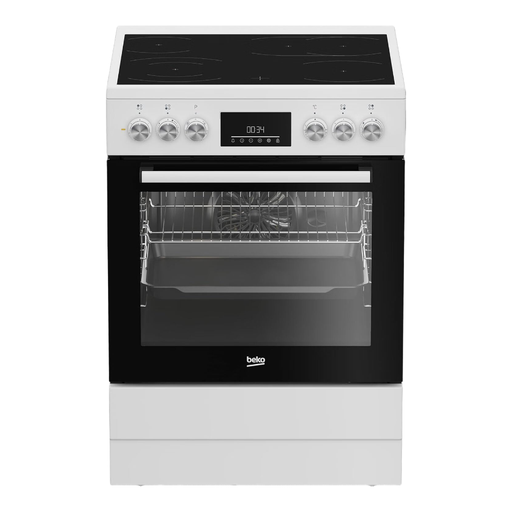
This freestanding cooker combines an oven and hob, and may be suitable for preparing several portions.
72 l, 60 cm, eight heating functions and fan-assisted cooking with a ring element; SteamShine steam cleaning and baking trays are listed.
 No image available
This compact, freestanding mini oven is an alternative for smaller quantities and limited space; check that the tray area suits your portions.
32 l, 1,600 W, timer and crumb tray; temperature settings from 100 to 250 °C. A baking tray and wire rack are listed.
Yes, as long as you handle leftovers hygienically and, if the filling is perishable, cool them promptly, store them in the fridge and keep them sufficiently chilled during transport. The German Federal Institute for Risk Assessment recommends eating leftovers within two to three days; this doesn’t mean they can be transported without refrigeration.
For a built-in oven, the required cabinet dimensions for the specific model are what matter. For a mini oven, you’ll also need to follow the positioning and safety instructions in the manual, as well as allowing space for the appliance itself. For example, AEG lists built-in dimensions of 590 × 560 × 550 mm for the BP3400B; these don’t apply to other appliances.
For the Severin TO 2068, the manufacturer’s instructions say to unplug the appliance and let it cool before cleaning. If you have a different model, check its own manual and the care instructions for its accessories.
The European Commission describes mandatory energy labelling for ovens and excludes small ovens from the scope shown. For appliances with an energy label, compare the energy class, oven capacity and kWh per standard cycle; the absence of a label on a mini oven isn’t proof of its efficiency.
For goods bought in the EU, the seller is responsible for the statutory guarantee. The EU’s Your Europe website states that the minimum period is two years from receipt of the goods. This is separate from any voluntary manufacturer’s warranty.