First, measure your baking dish, including its handles, and compare its dimensions with the oven’s usable interior and shelf height. A built-in oven could be suitable if the niche and connection are right; a mini oven could be an alternative if you don’t have space for a built-in model, provided the dish fits and the worktop space and clearance requirements are met. For a classic potato gratin, Dr. Oetker recommends conventional heat or fan-assisted cooking. Extra functions are mainly worth considering if you’ll use them for other dishes too.
Which oven might suit you?
Families with a large baking dish
If you want to cook enough gratin for everyone in one dish, first check its dimensions, including the handles, and the shelf height. Dr. Oetker’s recipe for four portions gives a dish with a diameter of around 28 cm as an example, but the right size depends on your dish and oven.
Homes without space for a built-in oven
A freestanding mini oven could work if you don’t have a suitable space for a built-in model. As well as room for the dish, allow for a sufficiently large worktop and the clearances specified in the instructions; Rommelsbacher says the feet of the BG 1805/E require a worktop at least 55 cm wide.
Regular oven users
If you use your oven for other dishes too, extra heating modes and a suitable cleaning function may be more important. The consumer advice centre recommends comparing energy consumption figures for the relevant heating mode as well.
What to consider when buying
Built-in oven
A good fit if: you have a suitable niche and want to use the oven for other dishes too.
Bear in mind: the niche dimensions and connection must be suitable for the appliance. The oven’s capacity alone doesn’t confirm that your dish will fit.
Freestanding mini oven
A good fit if: you don’t have a suitable space for a built-in model and your dish fits inside the oven’s usable cavity.
Bear in mind: you’ll need enough worktop space and clearance for ventilation. If the dish is too small, you may need to cook in batches.
When choosing an oven for a family-sized potato gratin, you can organise your buying priorities into four main areas.
| Priority |
What to check when buying |
Who it matters most to |
| Space for a family-sized gratin |
Measure the dish, including its handles and the height when filled; compare the measurements with the usable interior and shelf position. Dr. Oetker’s recipe for four portions gives a dish diameter of around 28 cm as an example. |
If I want to cook enough gratin for everyone in one dish, the actual fit matters more than the capacity in litres. Around 36% of consumers rank dish fit as their top buying priority. |
| Kitchen space and connection |
Check the appliance and niche dimensions, connection requirements and any model-specific clearance requirements. Rommelsbacher says the BG 1805/E needs a worktop at least 55 cm wide. |
If I need to choose between a built-in oven and a countertop model, I’ll first check what space and connection are actually available. Around 29% of consumers put kitchen space and connection first. |
| Heating mode and browning |
Compare the recipe instructions with the available heating modes and temperature range. For its specific recipe, Dr. Oetker recommends around 180 °C with conventional heat or 160 °C with fan-assisted cooking. |
If I want to follow the recipe as closely as possible and control the browning, I’ll check that the oven has the right heating modes. Around 21% of consumers prioritise control over following a recipe. |
| Energy use and cleaning |
For ovens with the relevant labelling, compare the kWh per standard cycle for the same heating mode; also consider the cleaning functions and how much energy they use. |
If I use the oven often, I want to weigh up energy consumption and cleaning effort against the benefits of extra features. Around 14% of consumers consider running costs and cleaning their top buying priority. |
Common misconceptions
-
The capacity in litres tells you whether a family-sized dish will fit
The oven’s capacity doesn’t tell you its usable width, depth or shelf height. So a dish with handles could be too large even if the capacity in litres looks suitable.
Measure the dish, including its handles and the height when filled, then compare the dimensions with the actual interior and shelf position.
-
Setting up a mini oven like a built-in model
Freestanding appliances need a suitable surface and the clearance specified in the instructions. Severin says the TO 2067 must not be installed inside a cabinet.
Check the instructions for the specific model and allow enough space for the appliance and its required clearances. Rommelsbacher says the feet of the BG 1805/E need a worktop at least 55 cm wide.
-
Assuming you need extra features for a good gratin
The recipe referenced by Dr. Oetker calls for conventional heat or fan-assisted cooking, not steam or pyrolysis. Pyrolysis is a cleaning function that uses electricity; it doesn’t offer a particular advantage for making gratin.
First check that your dish fits and that the oven has the heating mode required by your recipe. Then consider whether you’d use any extra features for other dishes or cleaning.
Brands to help you compare
Bosch
Built-in ovens; the HBA572BB4 is one example, with conventional heat, fan-assisted cooking and a 71 l cavity.
- Bosch lists pyrolytic and hydrolytic cleaning for this model.
- A telescopic rail can be retrofitted, but isn’t listed as included. Check that the niche and dish are a good fit; these features aren’t automatically available on other Bosch models.
Rommelsbacher
Freestanding mini ovens; according to the manufacturer, the BG 1805/E has a 42 l capacity, conventional heat and fan-assisted cooking.
- Rommelsbacher says it accommodates baking tins up to 31.5 cm in diameter and has a 120-minute timer.
- This doesn’t prove that every rectangular family-sized dish will fit. The appliance’s feet need a worktop at least 55 cm wide.
Severin
Mini ovens for freestanding use; Severin lists casseroles as one of the uses for the TO 2067.
- According to the manufacturer, the TO 2067 has a 20 l capacity and switchable conventional heat.
- Fan-assisted cooking isn’t listed for this model and the timer runs for 60 minutes. Check that your dish fits and confirm the model-specific clearance requirements.
AEG
Built-in ovens with extra features; according to AEG, the BP3400B combines a 71 l cavity with SteamBake and pyrolytic cleaning.
- AEG describes SteamBake as adding moisture when baking.
- This doesn’t prove there’s an advantage for potato gratin. Weigh up the extra features against your actual needs and check the built-in dimensions are right for your kitchen.
Joybuy products
The models below include built-in ovens and freestanding appliances for different kitchen spaces and ways of preparing gratin.
 No image available
Bosch HBA571BB4 Series 2 built-in oven, 71 l
Could suit recipes using conventional heat or fan-assisted cooking, provided the built-in niche and dish are a good fit.
71 l cavity; conventional heat and 3D fan-assisted cooking; five shelf positions; pyrolytic cleaning. Check the built-in dimensions and installation requirements before buying.
View at Joybuy
 No image available
Bosch HBG578ES3 Series 6 built-in oven
An option if you’re looking for a built-in oven with conventional heat and fan-assisted cooking, and you’ll also use its extra features.
71 l cavity; ten heating modes; 3D fan-assisted cooking; pyrolytic cleaning. The built-in dimensions must suit your kitchen.
View at Joybuy
 No image available
Woltu BF12sz mini oven, 32 l
Could be suitable if you’re looking for a freestanding appliance and your baking dish fits inside the oven.
32 l; temperature range 100–250 °C; 1,600 W; timer. Baking tray and rack listed as accessories. Check the worktop space and clearance requirements.
View at Joybuy
 No image available
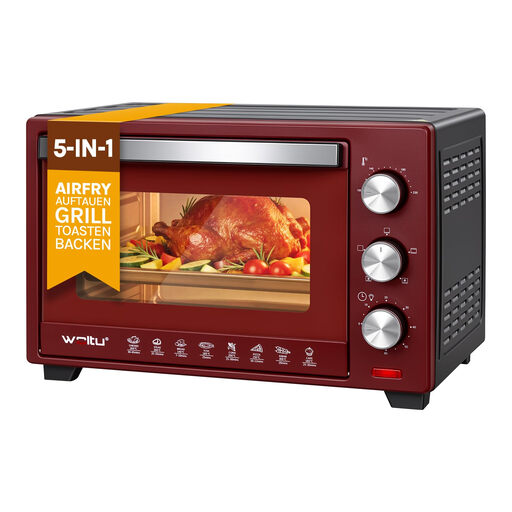
Woltu mini fan oven, 28 l
Described as suitable for a small family meal; check your dish’s dimensions and whether the stated use suits your recipe.
28 l; top heat, bottom heat and combined heating mode; temperature range 100–230 °C; 60-minute timer. Designed for countertop use.
View at Joybuy
 No image available
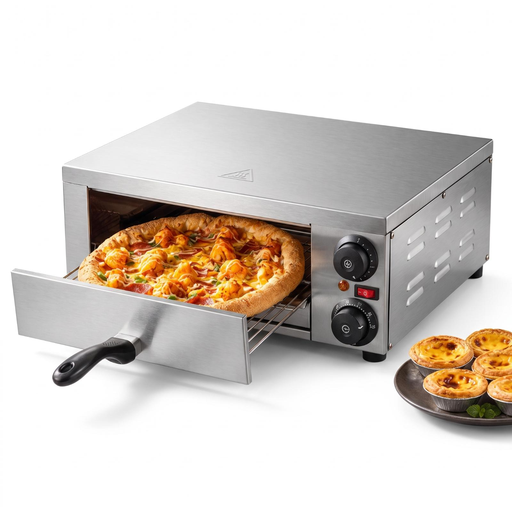
Stainless steel electric pizza oven, 2,000 W
According to the product description, it can also be used to briefly brown the top of casseroles, but not as a substitute for a longer gratin cooking time.
Temperature control; stated heating capacity up to 350 °C; timer up to 15 minutes. Dr. Oetker’s specific recipe gives a cooking time of around 45 minutes, so the timer alone won’t cover the full cooking time.
View at Joybuy
Frequently asked questions
Do I need a steam oven for potato gratin?
No, not for the classic recipe referenced here: Dr. Oetker recommends conventional heat or fan-assisted cooking. Check the instructions for any other recipes you use; AEG’s description of SteamBake refers to adding moisture when baking and doesn’t prove there’s an advantage for this gratin.
How can I set up a mini oven safely?
Follow the setup instructions for the specific model and leave enough space around the appliance. A countertop appliance isn’t automatically suitable for installation in a cabinet; Rommelsbacher says the feet of the BG 1805/E need a worktop at least 55 cm wide.
How do I compare the energy use of two ovens?
For appliances with the relevant labelling, compare the kWh figures per standard cycle for the same heating mode. The EU energy label lists conventional and fan-assisted cooking separately; an individual gratin cooking cycle may differ. The cost in pounds also depends on actual energy use and your electricity tariff.
What happens if an appliance develops a fault after purchase?
If you buy from a trader in the EU, EU consumer law provides at least two years of legal protection for faulty goods; the seller is generally your first point of contact. Any additional manufacturer’s guarantee offered doesn’t replace these rights.
Does a household oven in Germany need an energy label?
Energy labelling is required for household ovens covered by EU rules. The European Commission also lists exceptions, including certain small ovens and appliances with microwave heating. For these appliances, the absence of a label alone doesn’t prove a breach of the rules.


