First, measure your baking dish, including its handles, and check that it fits in the usable cooking space with the required clearance. A countertop oven is an option if you don’t have a suitable built-in space; for a large dish, a suitable built-in oven may offer more room. If you want a browned top, also check whether the specific appliance lets you use top heat or the grill – convection alone doesn’t tell you how long to cook it for or what the result will be.
Which oven is right for you?
Hosts with a large baking dish
If you want to serve the quantity you need in one dish, check its dimensions and the usable cooking space first – not just the capacity in litres. Rommelsbacher lists round baking tins up to 29 cm in diameter for the BGE 1580/E; Bosch gives the HBA571BB4 a usable capacity of 71 l.
Home cooks without space for a built-in oven
A countertop appliance could be an option if you don’t have a suitable space for a built-in oven. The location needs to work for the dish as well as the appliance, so follow the instructions for the model you choose.
Frequent oven users
If you use your oven regularly for a range of dishes, compare the available heating functions and cleaning options, as well as energy consumption per standard cycle for appliances covered by energy labelling. The German Environment Agency lists this consumption figure as part of the energy label for ovens within its scope.
What should you look for when buying?
Convection countertop oven
A good choice if: you don’t have a suitable built-in space and you’ve confirmed that your particular baking dish fits.
Bear in mind: a capacity in litres doesn’t prove that a rectangular dish, handles and all, will fit. You’ll also need to consider the space it takes up and the safety clearances specified for the model.
Built-in fan-assisted oven
A good choice if: you have a suitable built-in space and want room for a larger dish or extra food. Bosch lists the HBA571BB4 as having a usable capacity of 71 l, hot air and a full-width grill.
Bear in mind: check the recess measurements and installation documents against your kitchen before choosing a model.
Smaller convection countertop oven
A good choice if: a smaller baking dish will do and you have space for a freestanding appliance. According to the manufacturer, the Severin TO 2068 has a capacity of 20 l and convection.
Bear in mind: you may need to cook larger quantities in several batches; a pizza stone doesn’t prove that your baking dish will fit.
| What to consider |
What to look for |
Who should consider this? |
| Dish size and quantity |
Measure the dish, including its handles, and compare it with the usable cooking space and shelf positions. |
If I want to cook a meal for several people in one dish, the actual fit matters most to me. Around 36% of consumers put dish size and quantity first. |
| Heating functions |
Check whether convection, top heat and the grill can be selected separately or in combination. |
If you want the filling heated through and the top browned, check the heating functions on the specific model. Around 29% of consumers prioritise heating functions for browning. |
| Freestanding or built-in |
For built-in appliances, compare the recess measurements with the installation documents; for countertop appliances, check the set-up instructions in the manual. |
If there’s no suitable recess or worktop space is limited, I need to plan where to put the appliance and allow for the required clearances. Around 21% of consumers put space and installation first. |
| Energy use and cleaning |
For ovens covered by energy labelling, kWh per standard cycle can help you compare appliances. Also check the cleaning options for your chosen model. |
If I use the oven often, I want to weigh up its energy use and the cleaning involved in day-to-day use. Around 14% of consumers prioritise running costs and maintenance. |
Common buying mistakes
-
Assuming the capacity in litres guarantees a good fit
The cooking space capacity and a stated size for round baking tins don’t tell you whether a rectangular baking dish with handles will fit.
Measure your dish and compare its dimensions with the usable cooking space, shelf positions and guidance for the specific model.
-
Comparing energy labels for built-in and countertop ovens as if they were the same
The European Commission excludes small and portable ovens from the scope of EU energy labelling for household ovens. So if an appliance has no label, you can’t directly compare its energy use with that of a labelled built-in oven.
For labelled appliances, compare the kWh figures per standard cycle. Don’t treat figures based on different measurements as equivalent.
-
Checking only the appliance dimensions
A built-in appliance needs to fit the recess; a countertop appliance needs a suitable location and the clearances specified for that model.
Before you buy, check the installation diagram or the manual’s set-up and safety instructions.
Key brands at a glance
Rommelsbacher
A countertop oven option if your dish fits the specifications for the model you choose.
- Rommelsbacher lists a 30 l capacity, switchable convection and round baking tins up to 29 cm in diameter for the BGE 1580/E.
- The measurement applies to round tins; check separately whether a rectangular baking dish, handles and all, will fit.
Severin
A countertop oven option for a smaller dish and a suitable space.
- Severin lists a capacity of around 20 l for the TO 2068, with top and bottom heat and hot air available separately or in combination.
- The capacity in litres or the inclusion of a pizza stone doesn’t tell you whether a particular baking dish will fit.
Bosch
A built-in option, provided the recess and installation conditions suit the model you choose.
- Bosch lists a usable capacity of 71 l, hot air and a full-width grill for the HBA571BB4.
- Check the appliance dimensions and installation documents against your existing recess.
AEG
A built-in alternative with model-specific steam assistance.
- AEG lists a usable capacity of 72 l, hot air and SteamCrisp for the TR7PB63FSB.
- Steam assistance is an extra feature on this model. Check whether you’re likely to use it and whether the installation space is suitable.
Suitable appliances at Joybuy
This selection includes freestanding ovens and combination appliances with a baking function, suitable for cooking casseroles. Capacity and heating functions vary; check separately whether your particular dish will fit.
 No image available
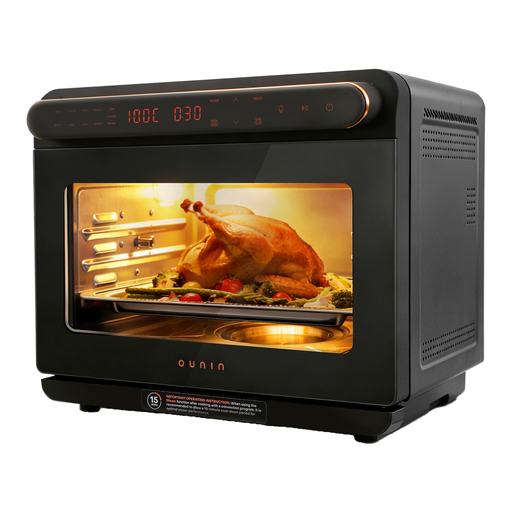
OUNIN 24-litre steam combination oven, 10-in-1
This combination appliance could be a good choice as a countertop oven if you’d like to use cooking functions beyond baking.
24 l capacity; Steam Bake and Steam Roast; 1-litre water tank; 304 stainless steel interior.
View at Joybuy
 No image available
WOLTU BF12sz mini oven, 32 l
A freestanding mini oven with baking and grilling functions could be a good fit if you don’t want a built-in model.
32 l capacity; 1.600 W; adjustable temperature from 100 to 250 °C; timer and crumb tray.
View at Joybuy
 No image available
WOLTU mini convection oven, 28 l
This freestanding convection oven is an option if you’re looking for a smaller countertop appliance with an adjustable temperature.
28 l capacity; top heat, bottom heat or combined heating modes; timer.
View at Joybuy
 No image available
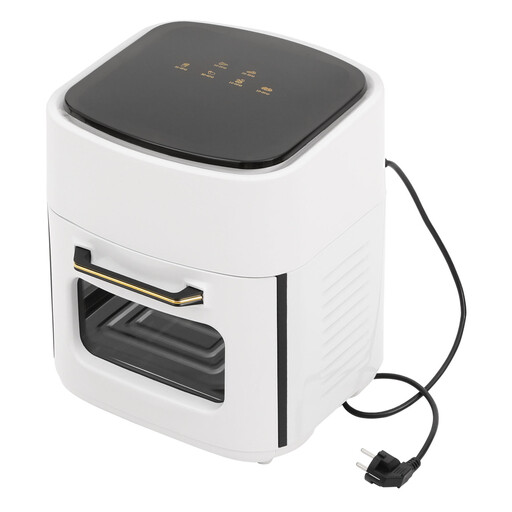
15-litre smart air fryer oven
This compact countertop appliance could be a good choice if you’re looking for a smaller model with baking and convection functions.
15 l capacity; 1.400 W; 360° convection heating; viewing window.
View at Joybuy
 No image available
OIMIS air fryer toaster oven, 30 l
This countertop appliance lists baking as one of its cooking functions, making it an option if you’d like to use several features.
30 l capacity; 1.800 W; 21 programmes; product name states that it fits a 13-inch pizza.
View at Joybuy
Frequently asked questions
Will 20 or 30 litres be enough for my baking dish?
The capacity alone won’t tell you. Measure the dish, including its handles, and compare it with the usable cooking space and shelf positions. Rommelsbacher lists round tins up to 29 cm in diameter for the BGE 1580/E; Severin’s mention of a 29 cm pizza stone doesn’t confirm that a baking dish of the same size will fit.
Can I use the recipe temperature as it is in a countertop oven?
Check the recipe and the manual for your specific model, and keep an eye on the casserole as it cooks. The dish size, depth of filling and heating function all affect how it cooks; convection alone isn’t enough to determine a generally applicable cooking time.
What does the EU energy label tell me about how much electricity my casserole will use?
For ovens covered by energy labelling, the label includes details such as cooking space capacity and energy use per standardised cycle for convection and conventional heating. The German Environment Agency points out that these figures can’t predict the energy use for your specific dish; according to the European Commission, small and portable ovens are outside the scope of this oven labelling.
What should I look for when buying an electric oven in Germany?
Check that the required CE marking is present, along with the necessary accompanying documents and safety information in German. The German Federal Network Agency lists these points when checking appliances and documentation for the German market.


