Baking for a large picnic
If you want to bake a larger dish in one go, compare its actual dimensions with the oven’s usable interior space. A capacity in litres alone won’t tell you whether your dish will fit, handles and all.


Start by choosing an oven type to suit the dimensions of your filled baking dish and the available built-in or countertop space. For larger dishes, consider a suitable built-in oven or a larger freestanding mini oven; for smaller dishes, a more compact freestanding model may also work. Dr. Oetker’s bread pudding recipe gives different settings for conventional heat and fan-assisted cooking, so check that your oven offers the cooking mode specified in the recipe. When making bread pudding with eggs and milk, also plan for thorough cooking, cooling and chilled transport.
If you want to bake a larger dish in one go, compare its actual dimensions with the oven’s usable interior space. A capacity in litres alone won’t tell you whether your dish will fit, handles and all.
If you don’t have a suitable built-in oven space, a freestanding mini oven could be an option. As well as allowing for the dish, make sure you have a suitable spot for the specific appliance.
If you’re making bread pudding with eggs and milk to take out with you, plan for thorough cooking, cooling and chilled transport as well as baking. The German Federal Institute for Risk Assessment and the Federal Office of Consumer Protection and Food Safety offer guidance on kitchen and food hygiene.
Suitable if: you have a suitable built-in oven space and want to use a larger dish or regularly cook larger quantities.
Things to weigh up: The oven space dimensions and connection must be suitable. A larger oven cavity doesn’t guarantee better baking results or lower energy use for a single portion.
Suitable if: you don’t have a built-in oven space but want to fit a larger dish in a freestanding appliance.
Things to weigh up: The appliance needs countertop space. Details about the maximum size of round dishes don’t automatically confirm that a rectangular dish will fit, handles and all.
Suitable if: a smaller dish and a suitable spot for the appliance will do.
Things to weigh up: You may need to bake larger picnic portions in several batches. Check the dimensions of your dish and the appliance’s specifications.
The consumer profiles below relate to choosing an oven for bread pudding for a picnic; each focuses on the buyer’s main consideration.
| Priority | What to look for when buying | Who it matters most to |
|---|---|---|
| Dish size and portion size | Measure the dish, handles and all, and compare its dimensions with the interior space, rack and shelf height of the specific model. | If I want to use a larger baking dish in one go, I’ll check that it fits in the oven first. Around 31% of consumers put dish size and portion size first. |
| Cooking mode for the recipe | Compare the cooking mode specified in the recipe with the modes actually available on the oven. Dr. Oetker’s specific recipe gives settings of around 200 °C for conventional heat or around 180 °C for fan-assisted cooking. | If my recipe specifies a particular cooking mode, I want to be able to select it on the appliance. Around 25% of consumers prioritise matching the recipe. |
| Countertop or built-in space | For built-in appliances, check the dimensions of the oven space; for freestanding models, check the appliance dimensions and the installation instructions. | If space is limited in my kitchen, I first need to check whether I have a suitable oven space or a safe place to position the appliance. Around 19% of consumers put available space first. |
| Preparing for a picnic | Plan for thorough cooking and a way to chill and transport the pudding while chilled; the oven setting alone doesn’t confirm the food’s core temperature. | If I want to take bread pudding with eggs and milk with me, I’ll plan for thorough cooking and chilling too. Around 13% of consumers prioritise safe preparation and transport. |
| Energy use and cleaning | If you use the oven regularly, compare the kWh figures per standard cycle and check the cleaning features of the specific model. The Verbraucherzentrale notes that standard cycles don’t reflect energy use for a particular recipe. | If I use the oven regularly, I’ll consider its stated energy use as well as how easy it is to clean. Around 12% of consumers put running costs and maintenance first. |
A capacity in litres won’t tell you whether the width and height of your dish, handles and all, will fit in the oven. A stated maximum size for round dishes doesn’t automatically apply to rectangular ones either.
Measure your dish and compare its dimensions with the usable interior space and shelf positions of the specific appliance.
When making bread pudding with eggs and milk, it’s also important to cook it thoroughly, cool it and keep it chilled while you’re out. The German Federal Institute for Risk Assessment recommends a core temperature of at least 70 °C for two minutes for dishes containing eggs. The Federal Office of Consumer Protection and Food Safety recommends eating cooked food as soon as possible or chilling it again quickly.
Plan how you’ll keep the pudding chilled during storage and transport before you start cooking, and follow the recommended temperature and time for thorough cooking.
The energy use figures on the energy label are based on standardised baking cycles. The dish, cooking mode and actual cooking time may differ from these.
If you use your oven regularly, compare the stated kWh figures for suitable models, but don’t use them to estimate the energy use for a single portion of bread pudding.
Built-in ovens for kitchens with a suitable oven space; the HBA234BB3 is one specific model to consider.
Built-in ovens with features that vary by model; the HB537GES3 is one specific example.
Freestanding mini ovens for kitchens without a suitable built-in oven space; the BG 1805/E is one specific example.
More compact freestanding ovens and toaster ovens; the TO 2068 is one specific model to consider.
This selection includes freestanding mini and countertop appliances, as well as built-in ovens for baking. Check the dish dimensions and available space against the specific model.
 Image unavailable
A freestanding baking option if you’re not looking for a built-in oven; check that your dish will fit in the usable interior space.
32 l, 1.600 W, timer, crumb tray and temperature settings from 100 to 250 °C; the product name states that it’s suitable for baking and grilling.
 Image unavailable
An option if you’re looking for a compact freestanding appliance for a smaller dish; compare the dish dimensions with the usable interior space first.
10 l, pizza function and temperature settings from 100 to 230 °C.
 Image unavailable
If a built-in option could work in your kitchen, check the oven space and connection beforehand, as well as whether your baking dish will fit.
78 l oven cavity, nine cooking functions and A+ energy rating according to the product name.
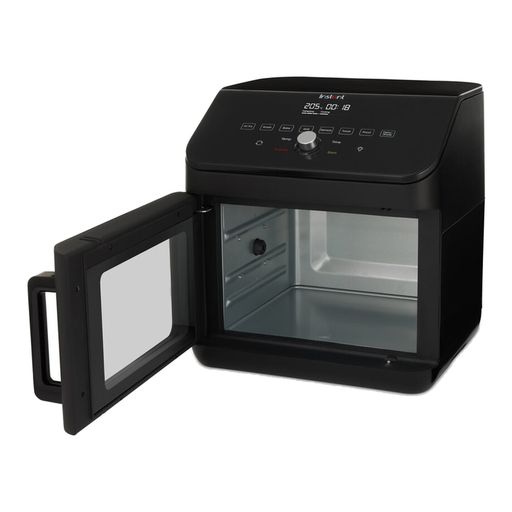 Image unavailable
A countertop appliance if you’re looking for an oven-style device for your worktop; check the dish dimensions and intended use against the product details.
13 l according to the product name.
 Image unavailable
A freestanding combination appliance if you’re looking for this type of device; check that the dish and intended baking function suit your recipe.
30 l, 1.800 W, 21 programmes, rotisserie and dehydrator function; the product name states that it’s suitable for a 13-inch pizza.
Follow the recipe you’re using and the cooking mode it specifies. Dr. Oetker’s specific recipe gives a temperature of around 200 °C for conventional heat or around 180 °C for fan-assisted cooking, with a cooking time of around 45 minutes. Other recipes or dishes may vary.
No. The German Federal Institute for Risk Assessment recommends a core temperature of at least 70 °C for two minutes for dishes containing eggs. The temperature inside the food is a more reliable guide than the oven temperature setting.
Make sure you can keep it chilled. The German Federal Institute for Risk Assessment recommends keeping perishable food chilled when you’re out and about too; the Federal Office of Consumer Protection and Food Safety advises eating cooked food as soon as possible or chilling it again quickly.
Follow the installation and connection instructions for the specific model. For the TO 2068, Severin advises unplugging the appliance before cleaning and allowing it to cool down; don’t immerse it in liquid.
For ovens, the label shows energy use for standardised baking cycles and the specified cooking modes. According to the Verbraucherzentrale, it isn’t a measure of the energy use or electricity cost for your particular dish and cooking time.