If you’re preparing several trays
If you’re baking a larger batch of biscuits together, check whether the oven is approved for use on several levels at once and whether suitable trays are available.


For a get-together where you’ll be baking lots of hazelnut biscuits, a built-in oven may be the better choice – provided the manufacturer explicitly confirms that you can bake on several levels at once and suitable trays will fit. The NDR says fan-assisted cooking can help when using several trays simultaneously. Even so, check the manufacturer’s specifications, tray dimensions and what’s included. If you don’t have space for a built-in oven, or you’re baking smaller batches, a freestanding mini oven may be enough. Also check the space available for the appliance, its stated consumption per cycle and how much cleaning it requires.
If you’re baking a larger batch of biscuits together, check whether the oven is approved for use on several levels at once and whether suitable trays are available.
A freestanding appliance could suit a smaller baking session. Compare its dimensions with the space available and check how much of the tray surface you can actually use.
If you’ll also use the oven day to day, its stated energy consumption and cleaning method may be important. When comparing models, check they use the same heating mode and find out how cleaning works on the specific model.
For a group baking session, weigh up the usable tray space, the room available, energy consumption and cleaning.
| What matters when buying | What to check | Who is this particularly important to? |
|---|---|---|
| Several trays | Check that the oven is approved for use on several levels at once, along with the tray dimensions and what’s included. The capacity in litres alone doesn’t tell you how many biscuit trays will fit. | When we’re getting several trays ready for a group baking session, I want to check that the levels and tray surfaces are suitable, rather than relying on the oven’s capacity. Around 42% of consumers say capacity for several trays is their main purchasing consideration. |
| Space and design | Measure the built-in space or the area where the appliance will stand, then compare it with the appliance’s dimensions. For a mini oven, also check the usable tray surface and the installation requirements. | If there’s no suitable space for a built-in oven, I want a freestanding option that fits the space available. Around 25% of consumers say a lack of space for a built-in oven is their main purchasing consideration. |
| Energy consumption | For ovens covered by energy labelling requirements, compare the kWh per cycle for the same heating mode. The Verbraucherzentrale and the European Commission explain these stated cycle values; they don’t necessarily reflect how you’ll use the oven. | If I use the oven regularly, I want to compare energy figures on a like-for-like basis. Around 17% of consumers put clear energy consumption figures first. |
| Cleaning | Check the cleaning method for the specific model: steam cleaning isn’t the same as pyrolytic cleaning. Also read the manufacturer’s instructions to see which parts need to be removed before cleaning. | If I want to keep cleaning to a minimum after baking, I want to know what each function actually makes easier and which parts still need to be cleaned by hand. Around 16% of consumers prioritise cleaning effort. |
A large capacity or several shelf levels doesn’t automatically mean the oven is suitable for baking several biscuit trays at once.
Check the internal tray dimensions, what’s included and the instructions for using several levels at the same time.
You may need to buy extra baking trays to make larger batches. Check what’s included before you buy.
The two methods differ in how they work and how much energy they use. For the AEG pyrolytic cleaning process described, removable parts should be taken out before you start.
Choose the method that suits how you use your oven and follow the cleaning instructions for the specific model.
Pyrolytic cleaning uses additional energy; removable trays and other parts may still need to be cleaned separately.
The figures on the EU energy label are based on set cycles. The amount you’re cooking and the actual baking time may differ.
Compare stated kWh figures only for the same heating mode and on the same basis. Don’t compare a mini oven’s rated power directly with an energy-label cycle.
Installation and removal of an old appliance are separate considerations. The requirements for statutory take-back under § 17 ElektroG don’t tell you whether removal or transport is included in the offer.
Before ordering, check the connection type, the services on offer and how the old appliance will actually be taken away.
Installation or take-back services may depend on the offer. Check what’s included in advance.
The models below illustrate different designs and features. The details apply to the specific product ranges mentioned and aren’t a blanket recommendation for the brand as a whole.
The HR776G1B1 built-in oven is an option if you’re considering steam support and other features alongside fan-assisted cooking.
The BPE53516AB built-in oven has a 65-l capacity and pyrolytic cleaning, making it an option if you’re weighing up this cleaning method.
The BBIM12300X built-in oven has a 72-l capacity and SteamShine steam cleaning.
The BBA285HU1I built-in oven is an option if you’re weighing up fan-assisted cooking, hydrolytic cleaning and telescopic rails.
The freestanding TO 2068 mini oven is worth considering for smaller batches if you don’t have space for a built-in oven.
This selection includes built-in ovens with fan-assisted cooking on several levels, as well as freestanding mini ovens for smaller baking sessions. Check the tray capacity and space requirements for each specific model.
 No image available
For a group baking session if you have a suitable space for a built-in oven and want to use several levels.
The description lists 3D hot air for up to three levels. It also specifies pyrolytic cleaning, an A+ energy efficiency rating and 0.69 kWh in fan mode.
 No image available
For anyone looking for a built-in oven with fan-assisted cooking and a specified cleaning function.
The description mentions simultaneous baking on several levels but doesn’t specify how many. It also lists AquaClean steam cleaning and an A energy efficiency rating.
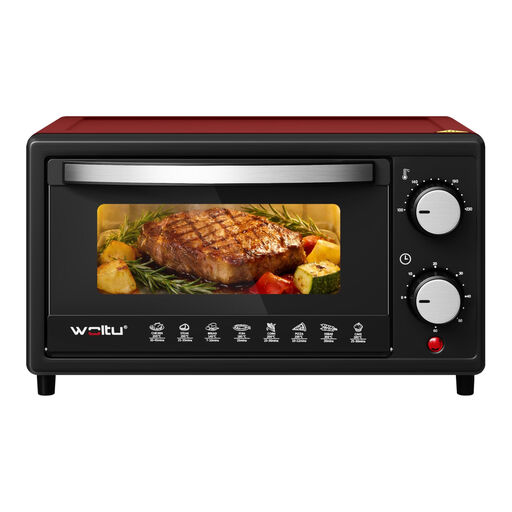 No image available
For a smaller baking session if you’re looking for a freestanding appliance rather than a built-in oven.
The description lists a 10 l capacity, a temperature range of 100–230 °C, a baking tray and a wire rack. It says the appliance is suitable for one or two people.
 No image available
A freestanding option if, according to the manufacturer, you can also bake on several levels.
The description lists a 28 l capacity, three heating modes, temperature control and a timer. A baking tray, wire rack and crumb tray are also included; the description says the appliance is suitable for three to four people.
 No image available
For a kitchen with suitable space for a built-in oven, if you’re looking for a larger capacity.
The description lists nine functions, hydrolytic cleaning, an A+ energy efficiency rating and 0.72 kWh in fan mode. It gives the required recess dimensions as 590 × 560 × 560 mm.
No. The four levels on the Severin TO 2068 are a manufacturer’s specification, not confirmation that four biscuit trays can be used at once. Check the instructions and suitable tray dimensions.
Look for an explicit statement from the manufacturer that you can bake on several levels at once. Also check the tray dimensions and what’s included. Fan-assisted cooking alone doesn’t confirm a specific number of trays or a particular baking result.
Compare the stated kWh per cycle only for the same heating mode and on the same basis. The Verbraucherzentrale and the European Commission explain these cycle values; they don’t measure the energy used for your specific recipe. Small ovens may fall outside the scope of EU energy labelling for domestic ovens.
For a built-in appliance, compare the recess dimensions with the oven’s measurements. For a freestanding oven, check that it fits the available space. Also check the connection requirements and, if you’re making changes to the electrical installation, arrange for the work to be carried out safely by a qualified professional.
Check in advance whether anyone has a hazelnut allergy, and take the ingredients and any shared equipment into account. The Federal Institute for Risk Assessment describes food allergies as an immune system overreaction to certain foods or their components. Choosing a particular oven won’t make a recipe containing hazelnuts allergen-free.