What should you consider when choosing an oven?
The LEBENSBAUM recipe uses a loaf tin and conventional top and bottom heat. So first check that your tin will fit, then choose an appliance type based on whether you have space for a built-in oven or a safe place to position a freestanding one.
| Buying priority |
What to check |
Who is it especially important to? |
| Loaf tin and heating function |
Check the tin’s dimensions, including handles and height; make sure there’s a suitable shelf position and conventional top and bottom heat if the recipe calls for it. |
If I’m using my loaf tin for the recipe, I want to be sure it will fit with its handles and the necessary clearance. Around 36% of consumers are likely to have this as their main priority. |
| Built-in or freestanding |
For a built-in oven, check the space dimensions and connection requirements; for a mini oven, check the surface it will sit on and the required clearances. |
If there isn’t a suitable built-in space, I need an appliance that can be positioned safely with the required clearances. This is likely to be the main concern for around 29% of consumers. |
| Portions per batch |
Check the usable shelf area and shelf positions against the tins and portion sizes you use. |
If I want to prepare several lunchbox portions or other dishes, the usable space is what matters to me. An estimated 21% of consumers have this as their main priority. |
| Energy use and cleaning |
For ovens with the relevant information, compare kWh per standard cycle and heating function; assess the cleaning features based on your needs. |
If I bake often, I want to keep an eye on energy use and cleaning effort. Around 14% of consumers are likely to prioritise these two things above all. |
Joybuy products for different kitchens
This selection includes built-in ovens and freestanding appliances with baking functions, including a pizza oven. For each model, check whether your loaf tin will actually fit and whether your kitchen is suitable for a built-in or freestanding appliance.
 No image available
Bosch HBA571BB4 Series 2 built-in oven, 71 l, 3D fan-assisted cooking
For a kitchen with a suitable built-in space, if you have other baking plans as well as your nut roast; check the space dimensions before buying.
The product name lists a 71 l capacity, 3D fan-assisted cooking and pyrolytic self-cleaning.
View at Joybuy
 No image available
Comfee built-in oven, 60 cm, 70 l
For a kitchen with a suitable built-in space if you need a built-in oven; check that the installation dimensions are suitable before buying.
The product name lists 3 kW, fan-assisted cooking, a grill and AquaClean steam cleaning.
View at Joybuy
 No image available
Bosch HBG578ES3 built-in oven, AirFry, 3D fan-assisted cooking
For a kitchen with a suitable built-in space; check the dimensions and plan the installation in line with the appliance information.
The product name lists a width of 60 cm, as well as AirFry and 3D fan-assisted cooking.
View at Joybuy
 No image available
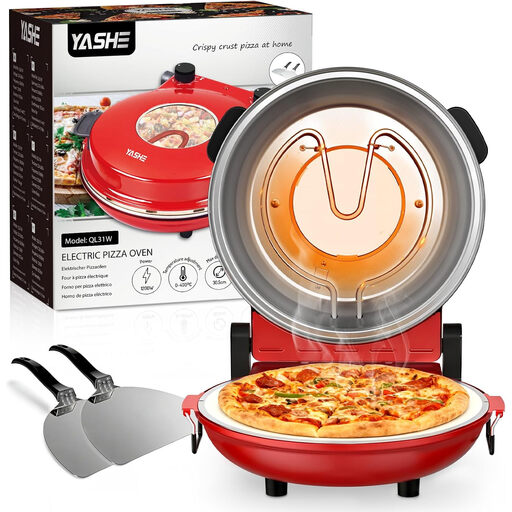
YASHE QL31W pizza oven, 1200 W, 30 cm ceramic stone
Designed as a freestanding appliance with top and bottom heat; being called a pizza oven doesn’t tell you whether your loaf tin will fit.
The product name lists a ceramic stone with a diameter of 30 cm and an integrated timer.
View at Joybuy
 No image available
WOLTU BF12sz mini oven, 32 l, 1600 W
A freestanding oven option if you have enough space and can meet the required clearances; check that your loaf tin fits inside this specific oven.
The product name lists a timer, a temperature range of 100 to 250 °C and a crumb tray.
View at Joybuy
Frequently asked questions about ovens and nut roast
Do I need a fan-assisted or steam function to make nut roast?
No, not for the recipe described by LEBENSBAUM: it calls for a loaf tin and conventional top and bottom heat. For a different recipe, follow its recommended heating function; extra features may be useful for other dishes or when cooking on several levels.
Can I put a mini oven on a narrow shelf?
Only if the location meets the requirements for that specific appliance. Check the instructions for the required clearances and allow for the casing and door; the external dimensions alone aren’t enough. For example, Severin’s appliance instructions specify clearances at the sides, at the back and above.
How should I plan nut roast for several working days?
As well as baking, plan for cooling and refrigerated storage. The German Federal Institute for Risk Assessment recommends cooling cooked leftovers to below +7 °C within a few hours, keeping them refrigerated and eating them within two to three days. If your lunchboxes need to be kept chilled, make sure they stay cool while you’re travelling too.
How do I compare the energy use of built-in and mini ovens?
For domestic ovens with the relevant energy label, you can compare the kWh per standard cycle and heating function shown on the EU label. Small and portable ovens fall outside the stated scope; without comparable measurements, you can’t assume a general cost saving when making your nut roast. The Verbraucherzentrale explains the standard cycles shown on the label.
Is a manufacturer’s guarantee the same as your statutory rights?
No. The Verbraucherzentrale distinguishes your statutory rights against the seller from a voluntary manufacturer’s guarantee, which comes with its own terms. If there’s a fault, the first step may be to have it put right, for example by repair or replacement.


