Bakers with limited worktop space
You’ll need to allow for the required ventilation clearances as well as space for the appliance itself. Rommelsbacher specifies 4 cm at the sides and 1 m above the BG 1055/E.


For longer or larger batches of puff pastry sticks, a freestanding mini oven could be a good option, provided you have enough room for the tray and the required safety clearances in your kitchen. An air fryer with a suitable baking function may be enough for a few pieces cut to fit. If you already have a full-size oven, you can use it to bake larger batches without finding space for another appliance. Before deciding what to buy, check the mains connection, CE marking, German safety information and the clearances specified in the documentation for the model you’re considering.
You’ll need to allow for the required ventilation clearances as well as space for the appliance itself. Rommelsbacher specifies 4 cm at the sides and 1 m above the BG 1055/E.
You want to space the pastry strips out on a tray, so check the usable baking area rather than just the oven capacity. REWE’s puff pastry sticks recipe uses a tray and a preheated fan oven.
You bake just a few pieces at a time, making them shorter if needed, and can compare an air fryer with a suitable baking function against a small tray oven. Bosch lists a basket and a small pastry programme for the MAF462C0.
| Buying criterion | What to look for | Who is it important to? |
|---|---|---|
| A safe place to position the appliance | Check the external dimensions and model-specific clearances against the space you have in mind; don’t assume the figures are the same for another model. | If I’m looking for a place for the appliance in a small kitchen, I also need to be able to leave the required clear space around it. Around 33% of consumers say a safe place to position the appliance is their top priority. |
| Baking area for pastry sticks | Check the usable tray or interior dimensions, shelf positions and available heating functions for the specific model. | If I want to bake several or longer sticks with space between them, the area of the baking surface matters to me. Around 27% of consumers say this is the deciding factor. |
| Small baking portions | Compare the basket or tray area with the length and number of pieces you plan to make. | If I usually bake only a few sticks, I want to know whether they’ll fit on the baking surface without having to make unnecessarily large batches. Around 20% of consumers say small individual batches are their top priority. |
| Cleaning and ongoing costs | Look for a removable crumb tray and available spare parts; only compare energy figures when they’re based on equivalent measurements. The Verbraucherzentrale recommends considering the appliance’s actual electricity consumption. | If I want to take the effort involved after baking and energy use into account, cleaning options and clear energy consumption figures are important to me. Around 20% of consumers put ongoing costs and effort first. |
The capacity in litres doesn’t tell you how long the pastry sticks can be to fit on the baking surface, or how much clearance the appliance needs where you plan to put it.
Check the interior and tray dimensions separately from the model-specific positioning instructions.
Too little usable space could mean extra batches; insufficient clearance could make your chosen spot unsuitable.
The VDE says that the standard supply in Germany is usually 230 V and 50 Hz. The location of the shop or the shape of the plug alone doesn’t prove that an appliance is suitable for your connection.
Check the voltage, frequency and plug type against the manufacturer’s documentation for the specific model.
The rated power isn’t the same as the energy used to bake a full batch. Nor can you make a direct comparison with energy figures for a different model used under different conditions.
Only compare figures based on the same measurement method, and take the baking process into account. The Verbraucherzentrale recommends looking at actual electricity consumption.
A stated basket capacity or small pastry programme doesn’t tell you how long individual pastry sticks can be.
Check the usable base area and compare it with the length and number of pieces you plan to bake.
Longer pieces may need to be cut down or baked in extra batches.
The BG 1055/E is a freestanding mini oven with an 18 l capacity and one tray.
The KB M19 is designed for smaller tray batches, while the KB M9 has a much smaller oven cavity.
The TO 2068 is a fan-assisted baking and toasting oven with a tray; check the tray size against the space you have available before choosing it.
The MAF462C0 is an air fryer that could be an alternative for small batches of pastries cut to fit.
The options below include freestanding mini ovens and air fryers for different batch sizes. The usable area, a suitable place to position the appliance and the documentation for the specific model remain key considerations.
 No image available
This freestanding mini oven could be an option if its usable baking area and safe positioning requirements suit the pastry sticks you want to make.
The product name lists a 32 l capacity, 1.600 W, a timer and a crumb tray.
 No image available
A small tray oven could suit compact batches, provided its actual interior and tray dimensions are large enough for the lengths you have in mind.
The product name lists a 10 l capacity, a pizza function and a temperature range of 100–230 °C.
 No image available
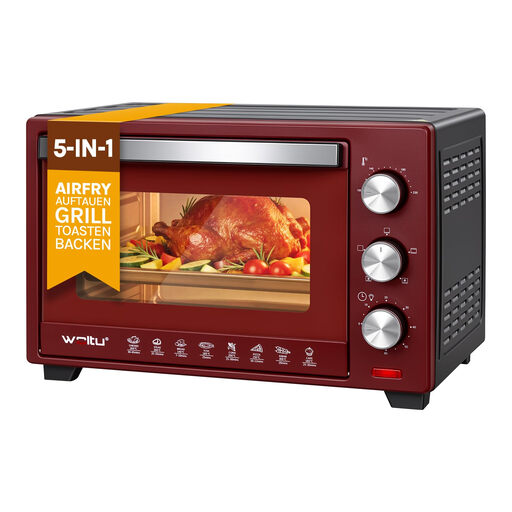
This oven could be suitable if its baking area and positioning clearances work for your kitchen and the batch you want to make.
The product name lists a 28 l capacity and a timer.
 No image available
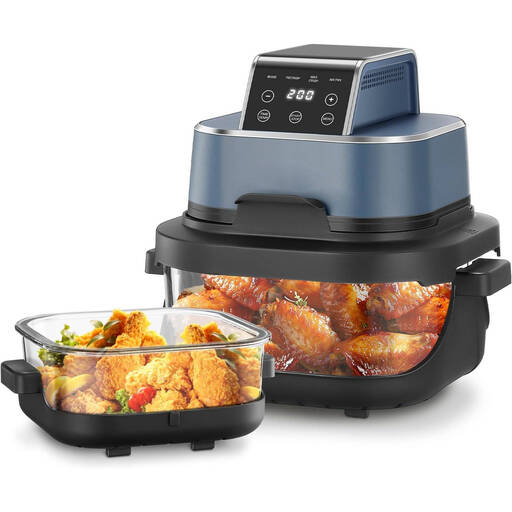
An air fryer with a baking programme could work for a few pieces, provided the containers’ usable area and shape suit the pastry sticks.
The product name lists a 4 l capacity and two glass containers.
 No image available
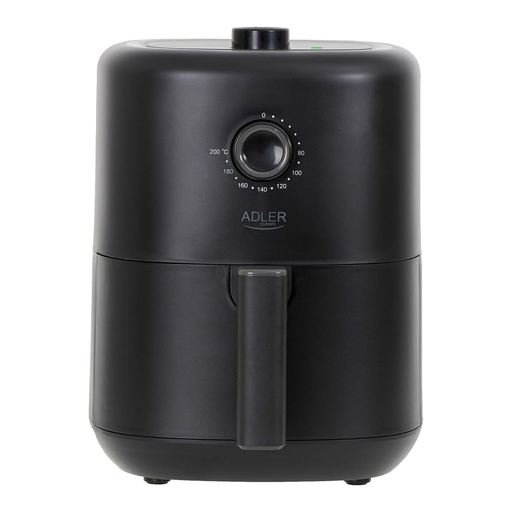
This appliance could be an option for a small batch, provided the baking area is large enough for the length and number of pieces you want to make.
The product name lists a 3 l capacity, 2.200 W and a temperature range of 80–200 °C.
Only if the instructions for the specific model say that it’s suitable for that location. Rommelsbacher explicitly says the BG 1055/E must not be built in and specifies 4 cm of clearance at the sides and 1 m above; these requirements don’t automatically apply to other appliances.
As an example, REWE’s puff pastry sticks recipe recommends baking in a preheated fan oven at 200 °C for 10–12 minutes. This isn’t a confirmed setting for every mini oven or basket-style appliance. Check the recipe quantities against your appliance’s instructions and keep an eye on how brown the pastry gets.
No. You need to consider the energy used and the time taken for a comparable baking process. The Verbraucherzentrale recommends considering actual electricity consumption; without the same measurement conditions, you can’t use this to determine whether one type of oven is cheaper to run.
Check the mains specifications, the intended plug type and the required safety information for the specific product. Appliances covered by the EU Low Voltage Directive must meet the relevant safety requirements and carry the CE marking. The Bundesnetzagentur also says its checks look for clear, easy-to-understand instructions in German.