
Lieferung heute & morgen

Qualitätsgarantie

Willkommens-Angebote freischalten: KOSTENLOSE Lieferung | Bis zu 80 % RABATT | Kostenlose 30-Tage-JoyPlus-Testphase
App herunterladen
A high-quality, oven-safe glass food container is more than just a vessel—it's a versatile tool for a modern, sustainable kitchen. It serves as a casserole dish, lunch box, and pantry container all in one. But the market is flooded with products whose promises often fall short in practice. Many buyers experience the disappointment of a "leak-proof" lid failing in their backpack or "oven-safe" glass shattering in the oven on its first use.
As your Joybuy Product Recommendation Officer, I'll help you recognise these pitfalls. We will focus on the crucial features that distinguish a good food container from a subpar one, ensuring your next investment is a long-lasting one.
Before you make a purchase, you should be aware of the typical weak points that often only become apparent after a few weeks of use:
To avoid the problems mentioned above, you should focus on three technical features during your selection. These define the durability and safety of your food container.
The deciding factor for an oven-safe glass food container is the material. Always look for the specification borosilicate glass. Unlike conventional soda-lime glass, borosilicate glass has a lower coefficient of thermal expansion. This means it is far less sensitive to sudden temperature changes. A borosilicate glass container can therefore be safely moved from the fridge to the microwave or (after a short acclimatisation period) into the oven without shattering. This property makes it a true glass casserole dish with a lid.
A reliable airtight glass container with a lid depends on two components: the locking mechanism and the seal.
The terms "oven-safe," "microwave-safe," and "freezer-safe" are only meaningful if the temperature limits are clearly defined.
Here are some recommendations tailored to different needs that meet the quality criteria mentioned above.
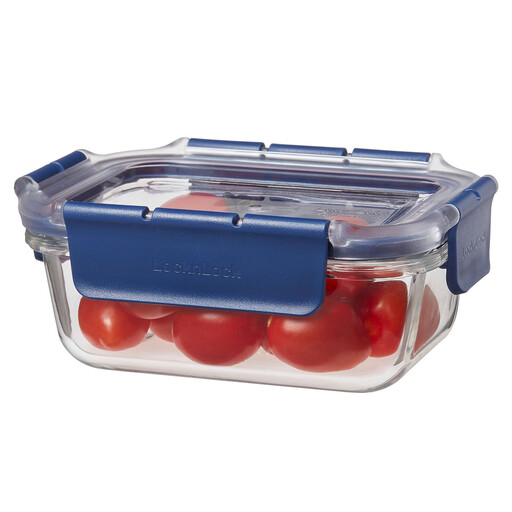
Why This Fits Their Persona: Ideal for single lunches, small portions of leftovers, or snacks. Its compact size is perfect for taking to work without taking up much space in your bag.
The lid is made of robust Tritan, which does not warp or stain. The patented 4-sided locking system ensures a proven leak-proof seal.
The borosilicate glass body is oven-safe up to 400°C (without the lid). The raised lid edge allows for stable stacking in the refrigerator.
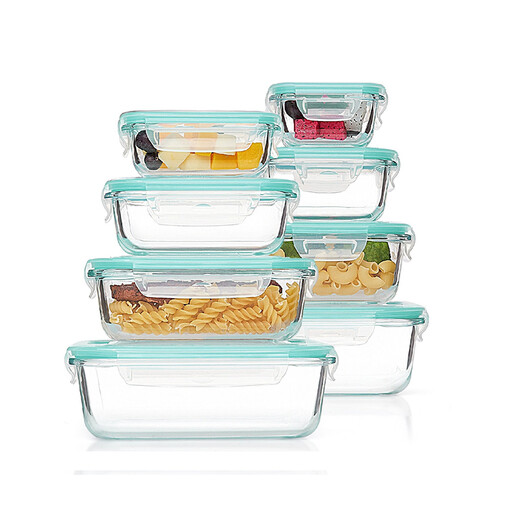
Why This Fits Their Persona: This set offers a comprehensive solution for preparing entire meals or storing a wide variety of ingredients. The eight different sizes (from 150 ml to 1040 ml) cover every need.
Instead of combining individual, mismatched containers, this set provides a unified system. All containers are made from the same high-quality borosilicate glass and have compatible locking lids.
A complete glass food container set for maximum flexibility in cooking and storage. The variety of sizes makes them ideal glass meal prep boxes.
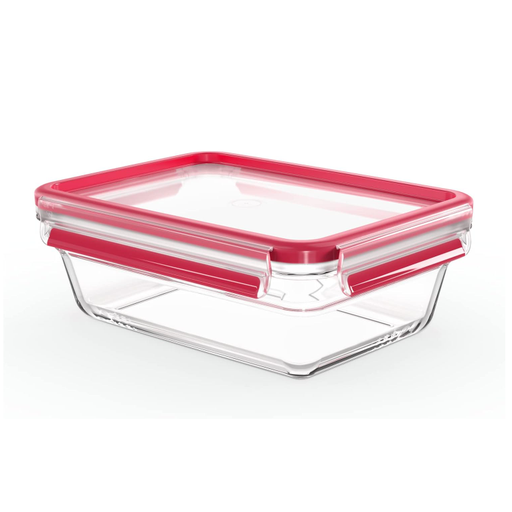
Why This Fits Their Persona: For those who want one container for everything: from baking a small casserole to storing leftovers. Its high heat resistance and special lid technology are designed for durability and performance.
According to the manufacturer, the seal is permanently fused to the lid. This prevents food residue and germs from getting trapped between the seal and the lid—a common hygiene problem.
Extremely high oven resistance up to 420°C and a special lid technology featuring German engineering for a completely tight and hygienic seal.
We have compiled a complete, up-to-date list of products that fully meet these strict selection criteria and the German safety regulations.
No, as a rule, you cannot. The oven-safe property refers exclusively to the borosilicate glass body. Plastic or bamboo lids are not designed for the high temperatures in an oven and would melt or warp. Always remove the lid before placing the container in the oven.
The main difference lies in the chemical composition and the resulting physical behaviour. Borosilicate glass contains boron trioxide, which gives it a very low coefficient of thermal expansion. This means it expands minimally when heated and contracts very little when cooled. This makes it extremely resistant to thermal shock—the cracking that occurs with rapid temperature changes. Regular soda-lime glass is far more susceptible to this.
Even with robust borosilicate glass, extreme temperature jumps should be avoided. Never place a hot container directly on a cold or wet surface, or into cold water. Instead, let it cool down on a wooden board or a trivet. Likewise, a container taken from the freezer should be allowed to thaw briefly at room temperature before being heated in the oven or microwave.