
Lieferung heute & morgen

Qualitätsgarantie

Willkommens-Angebote freischalten: KOSTENLOSE Lieferung | Bis zu 80 % RABATT | Kostenlose 30-Tage-JoyPlus-Testphase
App herunterladen
An oven-safe glass food container promises to make daily kitchen life much easier: cook, store, freeze, reheat, and serve—all in a single dish. But the market is flooded with products that don't live up to their claims in practice. Before you invest, it's crucial to understand the common weaknesses that often only become apparent after a few weeks of use.
As your Joybuy Product Recommendation Officer, I'm here to help you separate the good from the bad. We'll look at which features truly matter and how to identify containers that will serve their purpose for the long haul.
Many containers look identical at first glance, but the differences are in the details. These three problems are the most common sources of disappointment:
The good news is: these problems are avoidable if you know what to look for when you buy.
To avoid a bad purchase, you should check three core parameters. These define the quality and versatility of your future glass storage containers.
The most important criterion for an oven-safe food container is the material. Make sure to look for the term borosilicate glass.
A good container is only as good as its lid. Here are the crucial components:
A high-quality glass food container should safely perform multiple functions. Look for clear manufacturer specifications on the following properties:
Here are some recommendations tailored to the needs of different users that meet the quality criteria mentioned above.
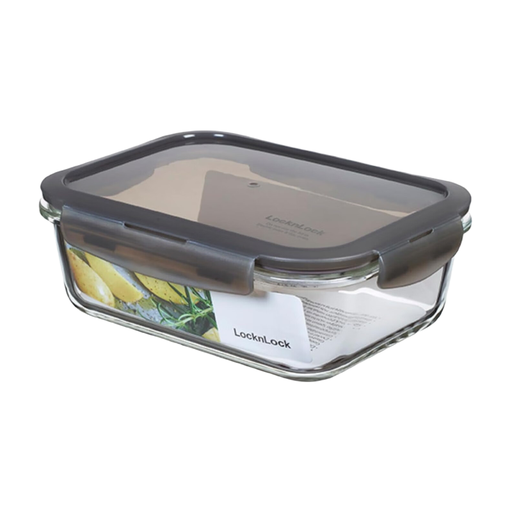
Why This Fits Their Persona: Ideal for those just starting with meal prepping. The 1-litre volume is perfect for a full meal. The container is versatile enough for lunch at the office, freezing leftovers, or a small lasagna in the evening.
The container is made of genuine borosilicate glass, which is oven-safe up to 400°C according to the manufacturer, minimizing the risk of thermal shock. The 4-sided locking system with a silicone seal reliably prevents leaks.
Highly versatile (oven, microwave, freezer, and dishwasher safe). The proven locking system ensures durable, leak-proof use.
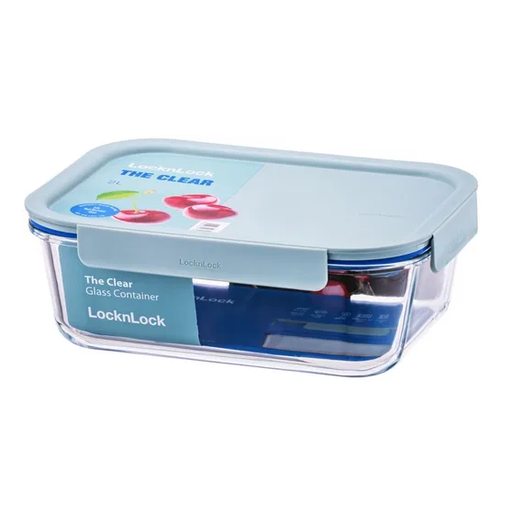
Why This Fits Their Persona: With a 2-litre capacity, this container is ideal for family-sized portions, weekend batch cooking, or as a casserole dish. It reduces washing up, as you can serve directly from the oven and store leftovers in the same container.
The container is made of heat-resistant glass designed for oven use. The silicone seal provides an airtight closure that keeps even large quantities of food fresh and prevents odour transfer in the fridge.
Large volume for versatile use, from baking to storing. The rectangular design optimises space in the fridge and kitchen cabinets.
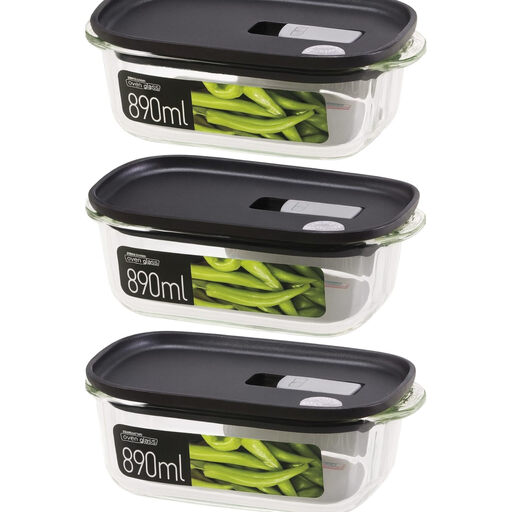
Why This Fits Their Persona: This set is the foundation for an organised meal prep system. Three identical containers allow for preparing multiple meals at once. The integrated steam vent in the lid is a clear efficiency feature for reheating in the microwave.
As a coordinated glass food container set, it solves the problem of poorly stacking, mismatched containers. The lids are equipped with a steam vent, which prevents improper use in the microwave (with a sealed lid).
Systematic meal prepping with uniform containers. The steam vent in the lid allows for convenient and safe reheating in the microwave without having to remove the lid.
We have compiled a complete, up-to-date list of products that fully meet these strict selection criteria and safety regulations.
1. Can the plastic lid go in the oven or microwave? No. Plastic lids are generally not oven-safe. The lid must always be removed before heating in the oven. For the microwave: either remove the lid completely or, if available, open a steam vent. Otherwise, a dangerous amount of pressure can build up from the steam, or the lid could melt.
2. What exactly is the advantage of borosilicate glass over regular glass? The key advantage of borosilicate glass is its high resistance to thermal shock. It expands minimally when heated, allowing it to withstand sudden temperature changes without shattering. Regular soda-lime glass would likely crack or break under the same conditions (e.g., pouring hot food into a cold container).
3. How do I properly clean the silicone seal in the lid? For hygienic cleaning, the silicone seal should be regularly removed from the lid. Wash the seal and the groove in the lid by hand with warm water and dish soap, or place both in the dishwasher (if approved by the manufacturer). Let all parts air dry completely before reinserting the seal. This effectively prevents the build-up of mould and unpleasant odours.